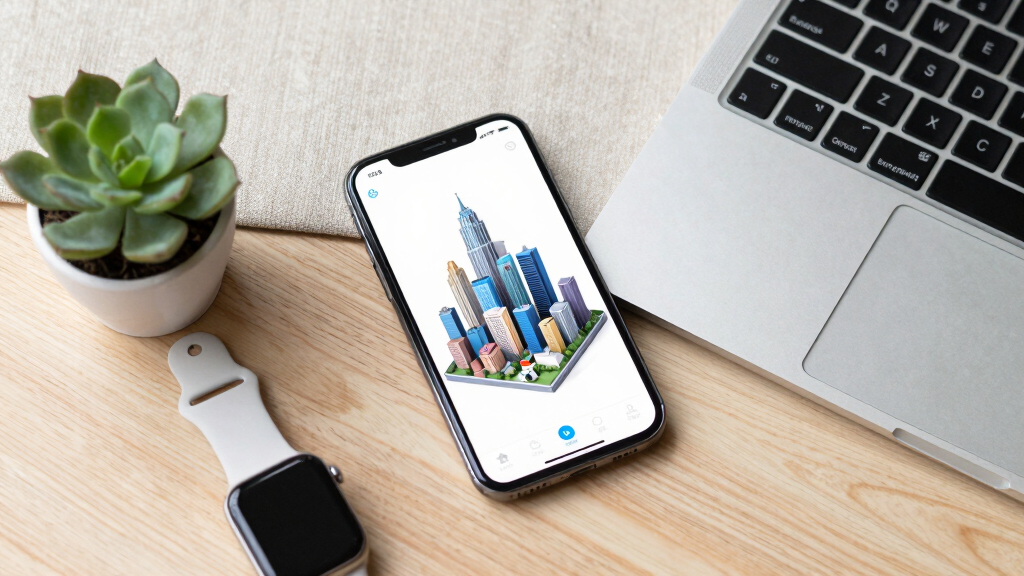

📊 Full opportunity report: The City That Watches Itself: The Living Digital Twin, And The God’s-Eye View We’re Building on ThorstenMeyerAI.com — validation score, market gap, and execution plan.

Get business pricing on office and shipping supplies
- Business-only prices and quantity discounts
- Tax-exempt purchasing
- Multiple users, one account, clear invoices
TL;DR
Cities are creating dynamic digital twins that mirror real-time conditions using advanced sensors and AI. These tools enhance urban planning but also introduce significant surveillance risks. The development is ongoing and its full implications are still emerging.
Cities are increasingly developing real-time digital twins, virtual models that mirror urban environments with live data feeds from sensors, satellites, and AI analysis. This technology enhances urban planning and management but also raises concerns about surveillance and data sovereignty, making it a significant development in smart city infrastructure.
The concept of a digital twin involves creating a dynamic, three-dimensional virtual replica of a city that integrates data from IoT sensors, satellite imagery, GIS, and utility networks, updating second by second. Notable examples include Singapore’s Virtual Singapore, Helsinki, and Las Vegas, which use these models for operational planning and efficiency gains. Singapore reports saving tens of millions annually through optimized infrastructure planning.
The recent technological convergence includes Wide-Area Motion Imagery (WAMI) sensors that track every vehicle and pedestrian, archive movements, and allow for rewindable, detailed analysis. When fused with synthetic-aperture radar and other sensors, these models become comprehensive, capable of functioning in all weather and at all times, filling previous gaps in surveillance and data collection.
The breakthrough is driven by advanced AI models (like GPT-5.6), which can interpret heterogeneous data streams, recognize patterns, and respond to natural language queries. This transforms the digital twin from a static map into an interactive tool that can assist in understanding city operations or simulate scenarios such as infrastructure failures. However, this development raises questions about data control, sovereignty, and potential misuse.
The city that watches itself: the living digital twin, and the god’s-eye view we’re building
Soon most cities will exist twice — once in concrete, once as a live data model you can rewind, simulate, and question in plain language. Persistent sensing + frontier AI turn the planner’s digital twin into an oracle. The most useful thing we’ve built — and the most powerful surveillance instrument. Both at once.
- Plan better — cities & rural: traffic, zoning, energy, land use
- Emergency response — route crews, one live picture, ~50% faster
- Disaster resilience — simulate, track live, assess damage in hours
- Mass surveillance — track everyone, retroactively, forever
- Pattern-of-life — AI links movements, infers associations
- Social control — no warrant, no suspicion (cf. Baltimore, 2021 ruling)
We’re building a city that watches itself, remembers everything, and can be asked anything. The technology won’t choose between saving lives and ending privacy — we will, through the rules we write now, while the twin is still under construction and the defaults haven’t yet hardened into permanence. WAMI and the living twin open our lives to a view from the heavens that, from the dawn of civilization until a heartbeat ago, was reserved for gods and stars. The question is no longer whether we can see everything — it’s who gets to look, and who watches the watchers.
Implications for Urban Planning and Surveillance
The development of real-time digital twins offers benefits such as improved city planning, resource management, and infrastructure maintenance. Cities can simulate and evaluate projects virtually before implementation, which can help reduce costs and prevent errors. Nonetheless, the same technology also enhances surveillance capabilities, raising concerns related to privacy and data sovereignty. Policymakers need to consider safeguards to prevent misuse or external control over these systems.
IoT sensors for smart city infrastructure
As an affiliate, we earn on qualifying purchases.
As an affiliate, we earn on qualifying purchases.
Evolution and Current State of Urban Digital Twins
The concept of digital twins originated as static models used for planning purposes, with Singapore developing a comprehensive, live version following severe flooding in 2012. Today, cities like Helsinki and Las Vegas operate operational digital twins that support daily management and strategic planning. The recent integration of WAMI sensors and advanced AI signifies a significant technological advancement, transforming these tools into real-time, interactive environments. This progress is driven by developments in AI models capable of processing large, diverse data streams.
This evolution occurs amid ongoing discussions about data sovereignty, privacy, and external control, especially as some cities depend on foreign AI providers for their twin systems. The dual-use nature of this technology means it can serve both civic functions and surveillance purposes.
“The digital twin is transforming how cities plan and operate, turning static maps into living, breathing models that can be queried in natural language.”
— Dr. Lisa Chen, Urban Data Scientist
Unresolved Questions About Data Control and Privacy
It remains uncertain how cities will regulate access to these comprehensive models, particularly concerning data privacy, sovereignty, and potential misuse by external entities. The control mechanisms—whether managed locally or by foreign providers—are still under discussion. Additionally, the long-term implications of such pervasive surveillance are not yet fully understood, including potential impacts on civil liberties and governance.
Future Developments and Policy Challenges for Digital Twins
Future efforts will likely focus on establishing regulatory frameworks for data governance, privacy protections, and sovereignty. Technological advancements are expected to make digital twins more detailed and interactive, possibly incorporating predictive AI for autonomous decision-making. Policymakers and city officials will need to balance the benefits of improved urban management with safeguards against misuse and external influence, while public discourse and legal measures will shape the deployment of these systems in the coming years.
Key Questions
How do digital twins improve city planning?
They enable virtual simulation of projects, allowing analysis of potential impacts in real time and helping optimize resource allocation, which can reduce costs and errors before physical implementation.
What are the privacy concerns associated with digital twins?
The detailed, real-time data collection and analysis can pose risks related to surveillance, data security, and loss of control, especially if external providers are involved.
Are all cities using this technology?
Currently, only a limited number of cities such as Singapore, Helsinki, and Las Vegas operate advanced operational digital twins; broader adoption is still in progress.
Who controls the data in these digital twins?
Control varies depending on the city; some manage their own systems, while others rely on foreign AI providers, raising questions about data sovereignty and security.
What are the risks of relying on AI for city management?
Potential risks include errors in AI interpretation, external manipulation, and reduced human oversight, which could affect critical infrastructure and civil liberties.
Source: ThorstenMeyerAI.com
Fall Picks
fall essentials
As an affiliate, we earn on qualifying purchases.