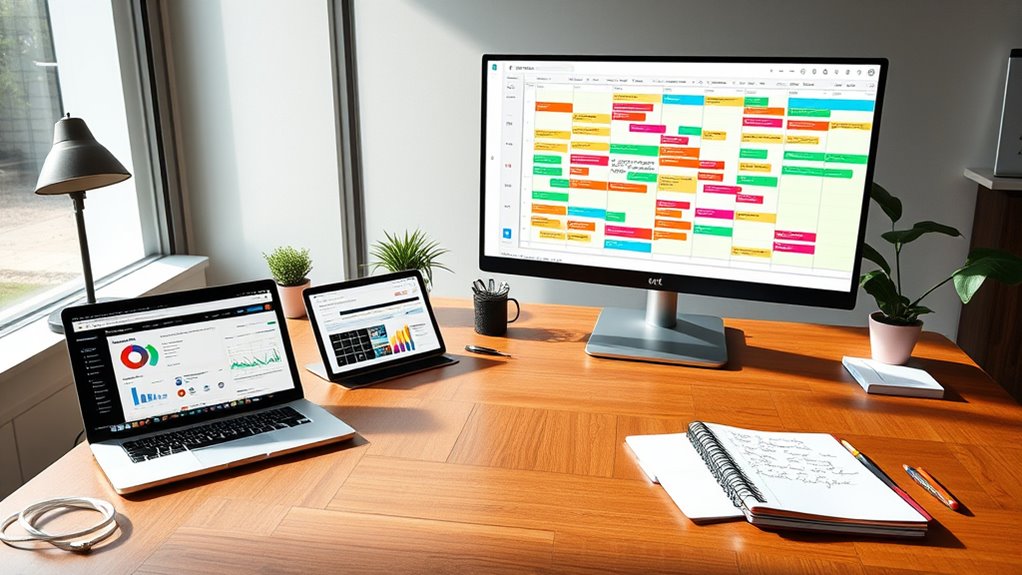

To build a content calendar that syncs email, social media, and SEO, start by outlining your key themes and publication dates. Use tools with integrations to keep content consistent across channels and optimize for search terms. Schedule emails and social posts around audience activity to boost engagement and incorporate SEO insights to enhance visibility. By aligning these elements, you create a streamlined strategy that maximizes impact—and exploring further reveals how to get it precisely right.
Key Takeaways
- Develop a unified content calendar that aligns themes and publication dates across email, social media, and SEO strategies.
- Use integrated tools to automate content updates and ensure consistency across all channels.
- Incorporate SEO insights and keyword data into scheduling to boost organic visibility and relevance.
- Leverage social analytics to identify optimal posting times and refine content for better engagement.
- Automate follow-up and targeted campaigns to maintain engagement and support the customer journey seamlessly.
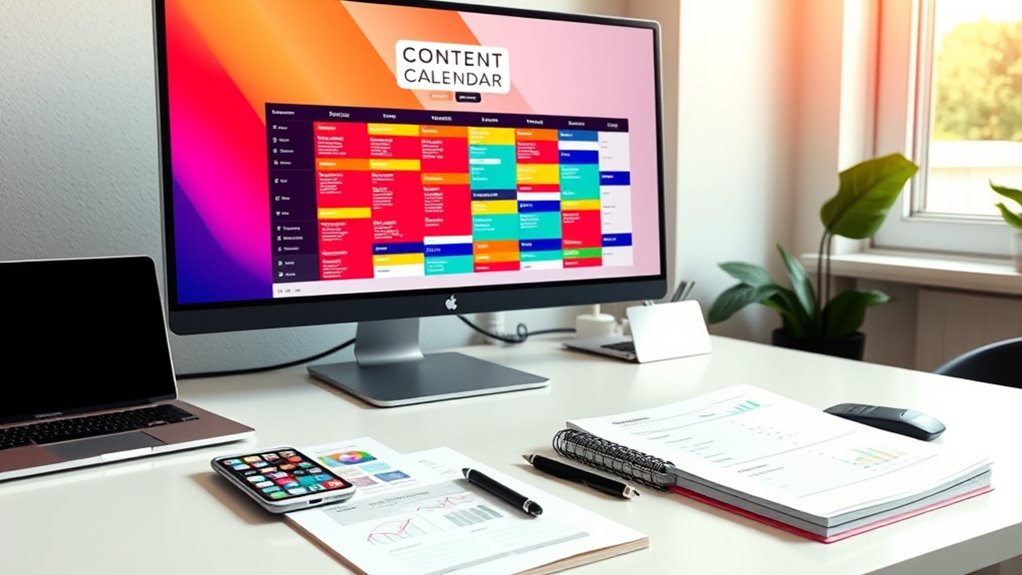
Keeping your content organized across multiple channels can be challenging, but syncing your content calendar with email, social media, and SEO tools streamlines the process. When you align your scheduling efforts, you ensure that your messaging remains consistent and timely across platforms. This coordination helps you leverage email automation effectively, allowing you to set up targeted campaigns that trigger based on your content calendar. For example, you can plan a blog post to go live, then automatically send follow-up emails to your subscribers, nurturing leads without manual intervention. Email automation saves you time while maintaining engagement, so your audience always receives relevant content at the right moment.
Align your content schedule across channels for consistent, timely messaging and automated nurturing.
At the same time, integrating your content calendar with social analytics tools provides valuable insights into how your posts are performing. By monitoring engagement metrics—likes, shares, comments—you can fine-tune your social media strategy in real-time. Social analytics help you identify what resonates with your audience and when they’re most active, enabling you to schedule posts for maximum visibility. When your calendar reflects these insights, you avoid guesswork and ensure that your social media efforts are data-driven. This synchronization also allows you to plan campaigns that support your SEO goals, such as promoting blog content or landing pages, driving traffic and backlinks.
Creating a unified content calendar that incorporates email, social, and SEO elements requires a strategic approach. Start by mapping out your key content themes and publication dates. Use tools that offer integrations with email marketing platforms and social media management tools, so updates are seamless. As you plan, consider how each piece of content supports your overall marketing funnel—whether it’s raising awareness, nurturing leads, or converting customers. This holistic view guarantees that your messaging is coherent and that each channel amplifies your efforts.
Moreover, syncing your calendar with SEO tools helps you optimize content for search engines. You can schedule blog posts and on-page updates around keyword research and trending topics, improving your rankings and organic reach. When your content calendar aligns with SEO insights, you’re better positioned to publish high-impact content consistently. Over time, the combination of email automation, social analytics, and SEO data creates a feedback loop that enhances your content strategy, making it more effective and efficient.

MASTERING HUBSPOT AS A BUSINESS TOOL: Learn CRM, Marketing Automation, and Sales – Manage Leads, Campaigns, and Customer Relationship
As an affiliate, we earn on qualifying purchases.
As an affiliate, we earn on qualifying purchases.
Frequently Asked Questions
How Often Should I Update My Content Calendar for Optimal Results?
You should update your content calendar at least once a month to keep your content fresh and aligned with your goals. Regular content review helps you identify what’s working and what needs adjustment, ensuring your scheduling frequency stays effective. By consistently revisiting and refining your calendar, you optimize your email, social, and SEO efforts, maintaining engagement and maximizing results. Don’t wait too long—staying proactive keeps your strategy sharp.
What Tools Are Best for Integrating Email, Social, and SEO Data?
You should use analytics tools like Google Analytics or SEMrush to track your email, social, and SEO data. Integration platforms such as Zapier or HubSpot help connect these channels seamlessly. These tools allow you to automate data sharing, monitor performance, and optimize your content calendar. By combining analytics insights with integration platforms, you’ll guarantee your email, social, and SEO efforts stay aligned and drive better results.
How Can I Track the Success of My Synchronized Content Campaigns?
You can track your synchronized content campaigns by utilizing analytics tracking tools that monitor campaign metrics across email, social media, and SEO channels. Focus on key KPIs like open rates, click-through rates, engagement, and conversions. Regularly review these metrics to gauge performance, identify what’s working, and optimize your strategy. This approach guarantees you have clear insights into your campaign success and helps you make data-driven adjustments.
What Are Common Challenges in Syncing Email With Social Media and SEO?
You might face challenges like ensuring audience segmentation aligns across channels, which is essential for effective content personalization. Coordinating messaging consistency between email, social media, and SEO can be tricky, leading to disjointed campaigns. Additionally, tracking performance across platforms requires integrated tools to manage analytics. Without proper synchronization, your efforts could become fragmented, reducing engagement and impact. Focus on aligning audience segmentation and customizing content to overcome these hurdles.
How Do I Prioritize Content Topics Across Different Channels Effectively?
Think of your content as a garden, where each plant needs the right sunlight. Prioritize topics by establishing a content hierarchy, ensuring your most essential messages get attention first. Use audience segmentation to understand what each group values, then tailor your content accordingly. This approach helps you focus on high-impact topics across channels, making your efforts more effective and ensuring your message reaches the right people at the right time.

Social Media Analytics Strategy: Using Data to Optimize Business Performance
As an affiliate, we earn on qualifying purchases.
As an affiliate, we earn on qualifying purchases.
Conclusion
By syncing your email, social, and SEO efforts with a well-planned content calendar, you boost engagement and maximize reach. Did you know businesses that coordinate their marketing channels see a 30% increase in conversion rates? When you align your messaging across platforms, you create a seamless experience that resonates with your audience. Stay consistent, plan ahead, and watch your visibility grow—your integrated approach is the key to marketing success.

SEMrush for SEO: Learn to Use this Tools for For Keyword Research, Content Strategy, Backlinks, Site Optimization and Audits
As an affiliate, we earn on qualifying purchases.
As an affiliate, we earn on qualifying purchases.

Yearly Business Planner for Female Entrepreneurs – Digital Goal, Blog, Social & Content Calendar Organizer + Audio Training System
Your Business, Beautifully Planned – Map out your online success with this all-in-one business notebook planner built exclusively…
As an affiliate, we earn on qualifying purchases.
As an affiliate, we earn on qualifying purchases.