

🔍 Read the full analysis: 9 Best Wi-Fi 7 Routers For A Faster Home Internet Experience In 2027 on ThorstenMeyerAI.com

Get business pricing on office and shipping supplies
- Business-only prices and quantity discounts
- Tax-exempt purchasing
- Multiple users, one account, clear invoices
TL;DR
A comparison from ThorstenMeyerAI.com names the TP-Link Archer BE550 its best overall pick among nine Wi-Fi 7 routers, citing its tri-band design and practical wired connections. The list also includes simpler dual-band models and the premium quad-band ASUS ROG Rapture GT-BE98 Pro; actual benefits depend on a home’s layout, internet service and compatible devices.
ThorstenMeyerAI.com has compared nine Wi-Fi 7 routers, naming the TP-Link Archer BE550 its best overall choice for its balance of tri-band wireless capacity and wired connections. The ranking also highlights a premium quad-band option and several simpler dual-band models, but it does not establish that any router will deliver a particular speed in a reader’s home.
The comparison’s top pick is the Archer BE550, which the source says combines three Wi-Fi bands with a practical selection of wired connections. The ASUS ROG Rapture GT-BE98 Pro is presented as a specialist choice for demanding networks, pairing four bands with gaming-oriented controls. The source cautions that its capacity and added complexity may exceed what many households need, a consideration also covered in this Wi-Fi 7 router guide.
The other seven routers named are the TP-Link Archer BE230, Archer BE400, ASUS RT-BE82U, NETGEAR RS90, NETGEAR RS140, NETGEAR BE9300 and TP-Link BE600. The BE230, BE400, RT-BE82U, RS90 and RS140 are grouped as dual-band alternatives for more straightforward setups. The BE9300 and BE600 are tri-band models to compare with the BE550, depending on household needs.
The source says its ranking considers band configuration, wired ports and feature sets, alongside the complexity of setup and network planning. It favors the BE550 for broad usefulness, rather than ranking solely by headline speed or gaming features. The material does not provide a test methodology, prices, measured speeds or a detailed specification table for each model.
The 9 picks
- 1
 ASUS ROG Rapture GT-BE98 Pro Quad-Band WiFi 7 Gaming RouterView on Amazon →
- 2
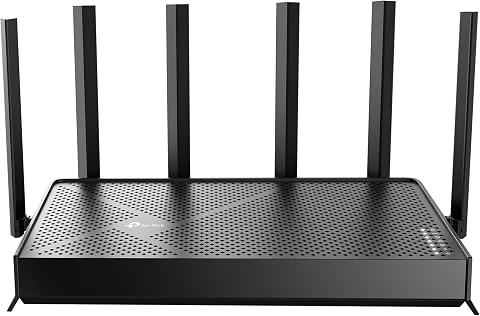 TP-Link Archer BE600 Tri-Band Wi-Fi 7 RouterView on Amazon →
- 3
 NETGEAR Nighthawk BE9300 Tri-Band WiFi 7 RouterView on Amazon →
- 4
 TP-Link Archer BE550 Tri-Band Wi-Fi 7 RouterView on Amazon →
- 5
 NETGEAR Nighthawk RS140 Dual-Band WiFi 7 RouterView on Amazon →
- 6
 ASUS RT-BE82U Dual-Band Wi-Fi 7 RouterView on Amazon →
- 7
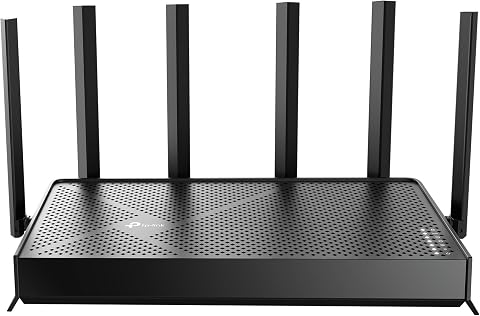 TP-Link Archer BE400 BE6500 Dual-Band Wi-Fi 7 RouterView on Amazon →
- 8
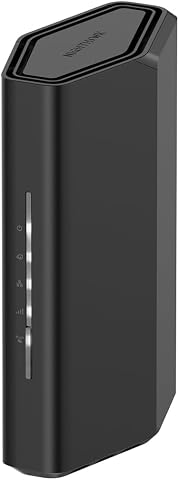 NETGEAR Nighthawk RS90 WiFi 7 Dual-Band RouterView on Amazon →
- 9
 TP-Link Archer BE230 Dual-Band Wi-Fi 7 RouterView on Amazon →
Choosing Bands and Ports for Your Home
The comparison matters because Wi-Fi 7 is a standard, not a guarantee of faster service everywhere. The source says a router’s usefulness depends on the devices connecting to it, the home’s construction and layout, and the speed of the internet service. Older Wi-Fi clients can connect, but will not gain every Wi-Fi 7 capability.
Band count is one way of distributing wireless traffic, not a direct promise that every device will be faster. A tri-band model may offer more flexibility for many active clients, while a dual-band router may suit a smaller network. Likewise, wired ports matter to people connecting computers, consoles, storage or access points. A router purchase should address the household’s actual bottleneck—not just a headline specification.
Popular right now

De'Longhi Magnifica Duo Fully Automatic Espresso Machine with Milk Frother, Silver

LG 85-Inch QNED84B Mini LED 4K Smart TV (2026)

Ninja Foodi Air Fryer, 8 Qt DualZone, 6-in-1, Grey, DZ201
As an affiliate, we earn on qualifying purchases.
How the Nine Models Compare
The source divides the choices by intended network scale. The Archer BE550 is the broad-use pick; the GT-BE98 Pro is aimed at households seeking quad-band capacity and gaming controls. The BE9300 and BE600 offer tri-band alternatives, while five named models are described as dual-band options for simpler needs.
Its selection advice is to check which Wi-Fi standards household devices support, map wired equipment and compare port speeds with the internet plan. It also advises planning for coverage: walls, floors, neighboring networks and router placement can affect signal. Where a dead zone is the central problem, mesh or access-point expansion may deserve attention before buying a router for higher advertised throughput.
“The Archer BE550 earns the overall lead by pairing tri-band Wi-Fi 7 with a practical feature mix.”
— ThorstenMeyerAI.com comparison
Real-World Speed and Testing Details
The source material does not state when the comparison was published, list prices, or provide measured performance results. It also does not describe controlled testing conditions or give detailed port specifications for every model. The ranking should therefore be read as an editorial comparison, not a guarantee that the BE550 will outperform the others in a particular home.
It remains unclear how any of the routers would perform across specific floor plans, building materials, client devices or internet plans. The source itself notes that those factors affect results. Product availability and prices may also vary; the supplied material does not confirm those details for 2027.
Check Your Network Before Buying
Readers comparing the nine models should first list the devices they use most, identify the rooms with weak coverage, and note every wired connection they need. They can then compare the routers’ current specifications and prices against those requirements, including whether the devices can use Wi-Fi 7 features and whether the internet plan or wired equipment would limit performance.
The source provides no scheduled follow-up tests or future product announcements. Its comparison may need to be revisited as models, prices and availability change. Until then, the most useful next step is to match a router’s documented features to the home’s layout and equipment rather than treating the ranking as a promise of a particular result.
Key Questions
Which router does the comparison rank first?
ThorstenMeyerAI.com names the TP-Link Archer BE550 its best overall pick, citing its tri-band design and useful mix of wired connections. That is the source’s editorial judgment, not a guarantee of best performance in every home.
Is the quad-band ASUS GT-BE98 Pro right for every household?
No. The source describes the ASUS ROG Rapture GT-BE98 Pro as a premium, gaming-focused option for demanding setups and says many homes may not need its capacity or added complexity.
Will a Wi-Fi 7 router speed up older devices?
Older devices can connect to a Wi-Fi 7 router, but they do not gain all of the standard’s features. The source says benefits depend on compatible client devices and internet service, among other factors.
Does a tri-band router always provide faster Wi-Fi?
No. The source presents additional bands as a way to distribute wireless capacity, not a direct speed guarantee. The right choice depends on active client load, devices and network layout.
What should buyers check before choosing one of the nine?
Check supported Wi-Fi standards on your devices, the router’s wired ports, the internet plan, and coverage needs in the home. If the main issue is a distant room or dead zone, consider router placement and mesh or access-point options as well as advertised throughput.
Source: ThorstenMeyerAI.com