📊 Full opportunity report: How An OCR Scanner Can Support Small Office Filing on IdeaNavigator AI — validation score, market gap, and execution plan.

Get business pricing on office and shipping supplies
- Business-only prices and quantity discounts
- Tax-exempt purchasing
- Multiple users, one account, clear invoices
TL;DR
A proposal for small nonprofits, clinics and law offices recommends piloting a phone-based OCR tool that names and classifies scanned documents before saving searchable PDFs. The suggested test is a one-week trial at five offices, with 200 documents scanned at each site; no pilot results or product performance data are provided.
IdeaNavigator AI has proposed testing an OCR filing tool with five small offices, each scanning a backlog of 200 documents during a one-week pilot. The concept is aimed at small nonprofits, clinics and law offices that need searchable records but may lack dedicated IT staff; the proposal describes a test plan, not a launched product or proven results.
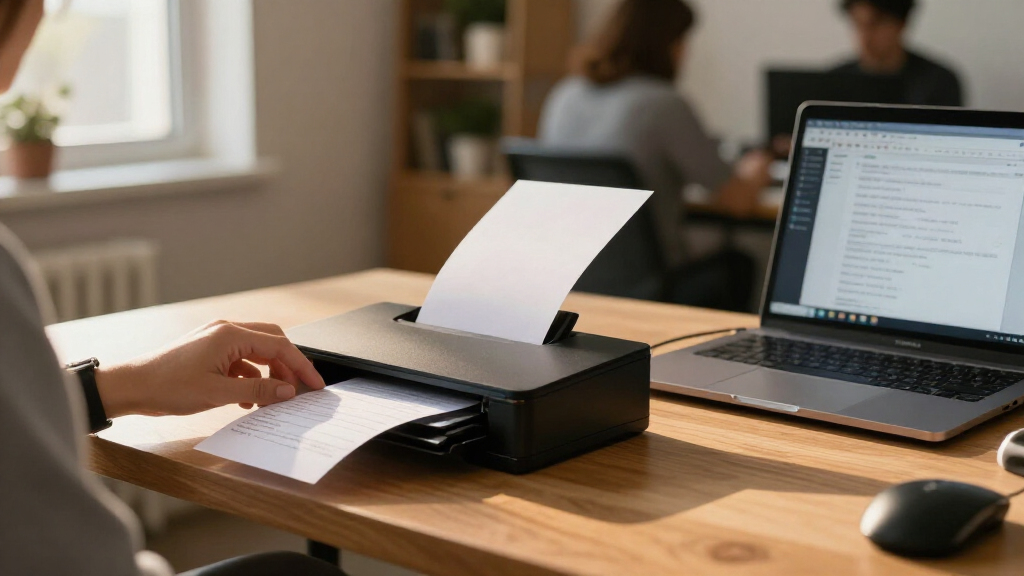
The proposed app would let an employee photograph paper documents with a phone, then use optical character recognition (OCR) to read the text. It would suggest a document category and filename, then save each item as a searchable PDF in a shared folder. An invoice, for example, could be labeled with its type, date and vendor, according to the concept description.
The problem identified is that small offices can accumulate intake forms, invoices and records in filing cabinets, while basic scanning apps may save unsorted images without useful names or extracted information. The proposed tool is intended to reduce the manual work between scanning a page and placing it in a usable digital filing system.
To test the idea, the proposal recommends a one-week pilot at five offices, with each site processing a real backlog of 200 documents. The suggested measures are the tool’s correct auto-classification rate and whether participating offices would pay per seat. No accuracy target, pricing amount, pilot participants or findings are provided.
Less Manual Filing, If It Works
For a small office, searchable digital records could make it easier to locate an invoice or form without searching through paper folders or batches of unlabeled scans. Automating suggested names and categories could also reduce the time staff spend on routine filing, though the proposal does not quantify current workloads or expected time savings.
The practical value would depend on more than whether the app can read text. Staff would need to check that documents are assigned to the right categories, filenames are useful and the shared folder preserves appropriate access controls. In a clinic or law office, misfiled or improperly exposed records could create serious operational and privacy concerns. The concept does not specify security features, retention rules or how errors would be corrected.
The pilot’s willingness-to-pay measure matters because a technically workable tool may still be difficult to sell if offices find existing scanners adequate or the subscription costs more than the time it saves. The proposed per-seat subscription, with a page limit and charges for additional volume, is a business model to test, not an announced price or established customer offer.
OCR document scanner app for small offices
As an affiliate, we earn on qualifying purchases.
As an affiliate, we earn on qualifying purchases.
The Proposed Scanning Workflow
The idea is framed for organizations with limited administrative capacity and substantial paper records, rather than large enterprises with dedicated records-management teams. It identifies on-device and API-based OCR, along with layout-aware software, as technologies that may support automated reading and sorting. The description says these tools are now cheap and accurate enough for this type of workflow, but provides no benchmarks or cost comparisons to substantiate that assessment.
The proposed workflow links several steps that are often separate: capturing a page, extracting text, suggesting its category and filename, and storing it as a searchable file. That is different from simply creating an image of a document. The idea’s first test is deliberately bounded: a small number of offices, a short trial and a fixed number of existing documents, rather than a broad deployment or a claim that filing can be fully automated.
Accuracy, Security and Costs
No pilot has been reported, so the tool’s classification accuracy, ability to handle varied document layouts and performance on photographed pages remain unknown. The proposal does not say what counts as a correct classification, how staff would review uncertain scans or what level of human correction would be needed.
It also leaves open how sensitive records would be protected, whether processing would happen on a device or through an external service, and what integrations the shared-folder workflow would support. Pricing is not specified; the page-volume cap and overage charges are only suggested elements of a subscription model. No evidence is presented on customer demand, savings or the cost of operating the service.
Pilot Results Would Test Demand
The next step described is recruiting five small offices for a one-week trial and asking each to scan 200 documents from a real backlog. A useful report of the results would need to explain how classification accuracy was measured, how often employees corrected suggested names or categories, and whether document types or office settings affected performance.
The trial would also need to test willingness to pay per seat and clarify expected page volumes before the proposed subscription model could be evaluated. Until those results, pricing details and privacy arrangements are available, the idea remains a product proposal to validate, not evidence that OCR filing has solved small-office records management.
Source: IdeaNavigator AI
Key Questions
What would the proposed OCR scanner do?
It would read text from phone-captured documents, suggest a document type and filename, and save searchable PDFs in a shared folder.
Who is the tool intended for?
The proposal targets small nonprofits, clinics and law offices with substantial paper filing and limited IT support.
Has the tool been tested?
No test results are included. The proposal recommends a one-week pilot at five offices, with 200 documents scanned at each site.
How would the pilot evaluate the idea?
It would measure the rate of correct automatic classification and whether participating offices would pay per seat. The proposed plan does not define an accuracy threshold or provide pricing.
What remains unknown about the service?
Its real-world accuracy, security controls, integrations, pricing and ability to reduce staff workload have not been established in the proposal.
Source: IdeaNavigator AI
Fall Picks
fall essentials
As an affiliate, we earn on qualifying purchases.