

Email marketing automation software can help teams send timely messages, nurture leads, and retain customers, but the right choice depends on your strategy and platform needs. Among these six guides, Email Marketing Mastery is the best overall starting point because it covers list building, campaigns, and automated follow-ups in one practical path. Email Marketing with Mailchimp 2025 is the more focused choice for readers seeking platform-specific direction, while The SaaS Email Marketing Playbook centers on recurring revenue and retention. The main tradeoff is between broad, reusable marketing principles and narrower guidance tied to a platform or business model. Read on for the full comparison and a guide to choosing the resource that fits your work.

Get business pricing on office and shipping supplies
- Business-only prices and quantity discounts
- Tax-exempt purchasing
- Multiple users, one account, clear invoices
Key Takeaways
- Email Marketing Mastery earns the best overall role by connecting list growth, campaign writing, automation, and business growth in one guide.
- Email Marketing with Mailchimp 2025 is the clearest fit for readers committed to Mailchimp, while its platform focus makes it less useful as a vendor-neutral reference.
- The SaaS Email Marketing Playbook stands apart by focusing on recurring revenue, lead conversion, and customer retention rather than general campaign practice.
- Email Marketing Rules takes a best-practices approach, making it more suited to refining subscriber experience than learning a complete automation workflow.
- The two Email Marketing Demystified titles share a fundamentals-oriented focus; readers should compare edition and topic coverage before choosing between them.
| Email Marketing Rules: 184 Best Practices to Optimize the Subscriber Experience and Drive Business Success |  | Best for Subscriber Experience | ASIN: B0BW23B5JG | Format: Book; format not specified | Stated best practices: 184 | VIEW LATEST PRICE | See Our Full Breakdown |
| Email Marketing Mastery: A Practical Guide to Building Email Lists, Writing High-Converting Campaigns, Automating Follow-Ups, and Growing Your Online Business | 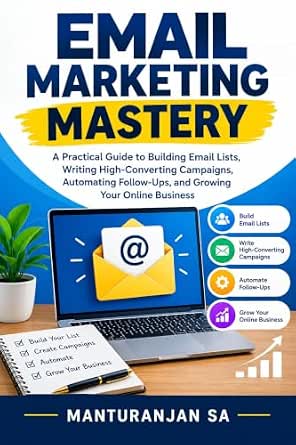 | Best for End-to-End Automation Basics | ASIN: B0HLQBQ3X3 | Format: Book; format not specified | Primary audience: Online business owners | VIEW LATEST PRICE | See Our Full Breakdown |
| Email Marketing with Mailchimp 2025 |  | Best for Mailchimp-Focused Lead Nurturing | ASIN: B0DN6MXPW2 | Format: Book; format not specified | Platform focus: Mailchimp | VIEW LATEST PRICE | See Our Full Breakdown |
| Email Marketing Demystified (Third Edition) |  | Best for List Growth and Sales Copy | ASIN: B0BN4PSTGR | Format: Book; format not specified | Edition: Third Edition | VIEW LATEST PRICE | See Our Full Breakdown |
| Email Marketing Demystified: Build a Mailing List, Write Copy That Converts, and Generate More Sales |  | Best for Straightforward Email Marketing Fundamentals | ASIN: B015F6ZZC6 | Format: Book; format not specified | Series: Internet Business Series | VIEW LATEST PRICE | See Our Full Breakdown |
| The SaaS Email Marketing Playbook: Convert Leads, Increase Customer Retention, and Close More Recurring Revenue With Email |  | Best for SaaS Retention Strategy | Format: Book | Subject: Email marketing for SaaS businesses | Stated focus: Lead conversion, customer retention, and recurring revenue | VIEW LATEST PRICE | See Our Full Breakdown |
| email marketing automation software | ASIN | Format |
|---|---|---|
| Email Marketing Rules: 184 Bes | B0BW23B5JG | Book; format not specified |
| Email Marketing Mastery: A Pra | B0HLQBQ3X3 | Book; format not specified |
| Email Marketing with Mailchimp | B0DN6MXPW2 | Book; format not specified |
| Email Marketing Demystified | B0BN4PSTGR | Book; format not specified |
| Email Marketing Demystified: B | B015F6ZZC6 | Book; format not specified |
| The SaaS Email Marketing Playb | 177807409X | Book |
More Details on Our Top Picks
Email Marketing Rules: 184 Best Practices to Optimize the Subscriber Experience and Drive Business Success
Email Marketing Rules is the most explicitly focused choice here for readers who want to improve how subscribers experience their email program. Its title promises 184 best practices, making it a potential reference for reviewing campaign and automation decisions rather than a step-by-step guide to one platform. Compared with Email Marketing Mastery, which spans list building, campaign writing, and follow-up automation, this book puts subscriber experience and business practices at the center. That focus may suit marketers refining an existing program, but the supplied description does not identify particular automation tools, workflows, or examples, so I would not treat it as software training. It also provides no details on the practices themselves, leaving the depth and practical coverage unclear. Choose it for a broad best-practice lens; skip it if you need instructions for building automations inside a specific service.
Pros:- The title specifies 184 best practices, suggesting a reference-oriented format.
- Subscriber experience is a stated focus, useful for evaluating how campaigns serve readers.
- Connects email practices with business success rather than describing software features alone.
Cons:- The supplied description does not identify any specific automation workflows or software platforms.
- No further detail is provided to verify the guide’s depth, examples, or intended skill level.
Best for: Email marketers with an existing subscriber program who want a broad checklist for improving subscriber experience and business practices.
Not ideal for: Beginners seeking step-by-step instructions for configuring automation workflows in a named email platform.
- ASIN:B0BW23B5JG
- Format:Book; format not specified
- Stated best practices:184
- Primary focus:Email marketing best practices
- Subscriber focus:Optimizing the subscriber experience
- Business focus:Supporting business success
Our verdict“Choose this guide for a subscriber-experience-focused reference, not for platform-specific automation setup.”
Email Marketing Mastery: A Practical Guide to Building Email Lists, Writing High-Converting Campaigns, Automating Follow-Ups, and Growing Your Online Business
Email Marketing Mastery is the broadest fit for an online business owner who wants one guide spanning list growth, campaign writing, and automated follow-ups. That combination makes it more directly relevant to automation than Email Marketing Demystified (Third Edition), whose supplied description emphasizes mailing lists, copy, and sales without naming follow-up automation. The title frames automation as one part of a wider marketing process, which can help readers connect signup activity and campaign content to ongoing follow-up. The tradeoff is limited software detail: the description does not name a platform, workflow types, or technical setup steps. Its promise of high-converting campaigns also does not come with further information on examples or evidence. I would pick it for a general online-business learning path, but choose a platform-specific resource if the immediate goal is to configure an automation builder.
Pros:- Covers list building, campaign writing, and follow-up automation in one guide.
- Connects email activity to online business growth.
- The title presents automation as part of a broader campaign process.
Cons:- The supplied description names no email marketing platform or setup instructions.
- No details are provided about specific automation examples or the guide’s depth.
Best for: Online business owners who need a single introductory guide to list building, campaign writing, and automated follow-up.
Not ideal for: Marketing operations specialists who need detailed instructions for triggers, integrations, segmentation, or a specific automation platform.
- ASIN:B0HLQBQ3X3
- Format:Book; format not specified
- Primary audience:Online business owners
- List building:Covered
- Campaign writing:High-converting campaigns
- Automation topic:Automating follow-ups
- Business objective:Growing an online business
Our verdict“Pick this for a general online-business introduction to email automation alongside list growth and campaign writing.”
Email Marketing with Mailchimp 2025
Email Marketing with Mailchimp 2025 is the clearest choice for readers who have already settled on Mailchimp and want guidance framed around lead generation, subscriber nurturing, and conversions. That platform focus separates it from Email Marketing Mastery, which covers follow-up automation but does not name a service. For a buyer choosing software, the distinction matters: this guide may help connect marketing goals to Mailchimp, while the broader books offer less platform-specific direction. The supplied description also mentions cold emailing, so readers should check whether that approach fits their audience and compliance practices before relying on it. There is no information about the guide’s depth, actual Mailchimp automation instructions, or how its 2025 material handles product changes. I would shortlist it for a Mailchimp user, but not as a neutral comparison of automation platforms.
Pros:- Names Mailchimp as its platform focus, unlike the general guides in this group.
- Covers lead generation and subscriber nurturing.
- Links email activity to conversion improvement.
Cons:- The supplied details do not establish how deeply it covers Mailchimp automation features.
- Cold emailing is included, which may not suit every audience or outreach policy.
- No further description is available to evaluate examples or coverage of platform changes.
Best for: Small-business marketers and creators already using Mailchimp who want a platform-focused guide to lead generation and subscriber nurturing.
Not ideal for: Buyers comparing multiple email automation platforms or readers who need verified, detailed instructions for specific Mailchimp workflows.
- ASIN:B0DN6MXPW2
- Format:Book; format not specified
- Platform focus:Mailchimp
- Edition year in title:2025
- Lead generation:Covered
- Subscriber nurturing:Covered
- Additional topic:Cold emailing
- Stated objective:Improving conversions
Our verdict“Choose this if Mailchimp is already your platform and you want a guide centered on leads and nurturing rather than software comparisons.”
Email Marketing Demystified (Third Edition)
Email Marketing Demystified (Third Edition) is aimed at readers who want to grow a mailing list, write persuasive messages, and generate sales. Its three stated themes provide a straightforward marketing foundation, but the description does not call out automated follow-ups or a particular software platform. That makes it less directly suited to automation setup than Email Marketing Mastery, which explicitly includes follow-up automation. The edition label distinguishes it from the similarly titled Email Marketing Demystified: Build a Mailing List, Write Copy That Converts, and Generate More Sales, but the supplied data does not explain what changed between editions. I would treat this as a guide to audience growth and email copy rather than a technical automation manual. The lack of detail on workflows, tools, and examples makes it harder to judge how far it can take readers beyond the fundamentals.
Pros:- Covers mailing-list growth and persuasive email copy.
- Ties email marketing to generating sales.
- The third-edition designation makes the edition clear in the product title.
Cons:- The supplied description does not mention automation workflows or software tools.
- No details explain how this edition differs from the similarly titled earlier book.
- The available information does not establish the guide’s depth or practical examples.
Best for: Small-business owners who want guidance on growing an email list and writing sales-oriented campaigns before adding automation.
Not ideal for: Readers whose main need is building automated sequences or learning a specific email marketing platform.
- ASIN:B0BN4PSTGR
- Format:Book; format not specified
- Edition:Third Edition
- Mailing-list growth:Covered
- Email copy:Effective email copy
- Stated business objective:Generating more sales
Our verdict“Choose this for list-building and sales-copy fundamentals, but favor Email Marketing Mastery for explicitly stated follow-up automation.”
Email Marketing Demystified: Build a Mailing List, Write Copy That Converts, and Generate More Sales
Email Marketing Demystified: Build a Mailing List, Write Copy That Converts, and Generate More Sales presents a clear fundamentals path: attract subscribers, write sales-focused copy, and use email to support revenue. The supplied data also places it in the Internet Business Series, giving it a broader business context than Email Marketing with Mailchimp 2025, which is tied to a named platform. That makes this book a more general choice for readers who have not picked their software yet, though its description says nothing about automation sequences or platform setup. Compared with the Third Edition of Email Marketing Demystified, the topics are closely aligned; the available information does not show whether their coverage differs. I would choose it for a basic marketing framework, not for advanced automation planning. Limited product details also leave the guide’s depth and current software relevance unknown.
Pros:- Covers list building, conversion-focused copy, and sales in one guide.
- Its general approach is not tied to a named email platform.
- Identified as part of the Internet Business Series.
Cons:- The supplied description does not mention automation sequences or software setup.
- No further description is available to assess depth or current platform relevance.
- Its topic overlap with the Third Edition makes the difference between the two unclear.
Best for: New online-business owners who want basic guidance on list growth, conversion-focused copy, and email-driven sales before selecting a platform.
Not ideal for: Experienced marketers seeking current, platform-specific automation instructions or detailed workflow examples.
- ASIN:B015F6ZZC6
- Format:Book; format not specified
- Series:Internet Business Series
- Mailing-list growth:Covered
- Email copy:Copy that converts
- Stated business objective:Generating more sales
Our verdict“Pick this for general email marketing fundamentals before choosing software, not for hands-on automation guidance.”
The SaaS Email Marketing Playbook: Convert Leads, Increase Customer Retention, and Close More Recurring Revenue With Email
I’d place this book on the strategy side of an email automation shortlist: its focus is using email to convert leads, retain customers, and grow recurring revenue specifically for SaaS businesses. That makes it more targeted than Email Marketing Mastery, whose title promises broader guidance for online businesses. The SaaS focus may help founders and lifecycle marketers connect email programs to subscription outcomes rather than treat campaigns as isolated sends. But the available product details do not establish that it covers particular automation platforms, workflow setup, integrations, or technical implementation. Compared with Email Marketing with Mailchimp 2025, this is not the clearer choice for platform-specific instruction. I’d choose it for SaaS-oriented planning, and skip it if I need a verified, hands-on guide to building automations in a particular tool.
Pros:- Focuses specifically on email marketing for SaaS businesses.
- Connects email goals to lead conversion and customer retention.
- Includes recurring revenue growth in its stated scope.
Cons:- Available details do not identify supported automation platforms or technical setup instructions.
- The description does not specify the book’s methods, examples, or level of detail.
- Its SaaS focus may be less relevant to creators, retailers, and other non-subscription businesses.
Best for: SaaS founders and lifecycle marketers seeking email strategy centered on lead conversion, customer retention, and recurring revenue.
Not ideal for: Readers who need step-by-step instructions for configuring automation workflows in a named email platform, since the available details do not confirm platform coverage or implementation guidance.
- Format:Book
- Subject:Email marketing for SaaS businesses
- Stated focus:Lead conversion, customer retention, and recurring revenue
- Intended business type:SaaS
- Automation platform:Not specified in the available product details
- Technical setup coverage:Not specified in the available product details
- ASIN:177807409X
Our verdict“Choose this book for SaaS-focused email strategy, but pick a platform-specific guide if your main need is automation setup.”

How We Picked
I ranked these books by how directly their stated coverage helps readers plan and improve email automation: building lists, writing campaigns, setting up follow-ups, and linking email activity to business goals. I also weighed audience fit, practical scope, platform dependence, and how readily the guidance can carry across tools. Since these are books rather than software products, the roundup evaluates their value as learning resources for selecting and using automation software; it does not claim to compare live platform features.
Email Marketing Mastery ranks first for its broad, connected scope. The Mailchimp guide and SaaS playbook follow as stronger specialist choices for distinct needs, while the rules and Demystified titles are more focused on best practices or fundamentals. The two Demystified books have overlapping positioning, so I distinguish them by the details in their titles and recommend checking their edition and contents before buying rather than assuming they are interchangeable.
| email marketing automation software | Format |
|---|---|
| Email Marketing Rules: 184 Bes | Book; format not specified |
| Email Marketing Mastery: A Pra | Book; format not specified |
| Email Marketing with Mailchimp | Book; format not specified |
| Email Marketing Demystified | Book; format not specified |
| Email Marketing Demystified: B | Book; format not specified |
| The SaaS Email Marketing Playb | Book |
Factors to Consider When Choosing Email Marketing Automation Software
Choosing an email automation resource is not the same as choosing the software itself. I would start with the work you need to do, then match the guide to your platform plans, audience, and level of experience. These factors can help you avoid buying a book that teaches useful marketing principles but leaves your actual setup questions unanswered.
Match the Guide to Your Automation Task
Write down the first workflow you want to improve, such as a welcome series, a lead-nurture sequence, or a customer re-engagement campaign. A guide focused on list building and follow-ups can help with the sequence logic, while a best-practices reference may help refine consent and subscriber experience. Avoid choosing a resource only because it promises business growth; broad goals may not answer the operational question you have today. Look for coverage of triggers, timing, audience segments, and the message sequence itself. If your task is narrow, a focused guide can be more useful than a broad introduction. If you are still defining your strategy, a resource spanning several parts of email marketing may provide a better foundation.
Decide How Much Platform-Specific Help You Need
A platform-specific guide can make interface instructions and tool terminology easier to follow, especially when you are setting up your first workflow. That detail has a tradeoff: software menus and features can change, and platform-specific advice may not transfer cleanly if you switch providers. Before buying, check the publication date and whether the book teaches durable principles alongside button-by-button directions. If you have not selected a provider, start with vendor-neutral learning and compare platforms separately. If your team has already standardized on a tool, focused guidance may save time. Do not mistake a platform tutorial for a full evaluation of competing software.
Check Whether the Audience Matches Your Business
Email programs differ by business model, so a guide written for SaaS teams may emphasize onboarding, product adoption, and retention rather than retail promotions or creator newsletters. That focus can be valuable when recurring revenue and customer lifecycle messaging drive your goals. For another kind of organization, the examples may require substantial adaptation. Review the intended audience and outcomes before treating any playbook as a universal template. A useful guide should help you translate its methods to your customer journey, not just copy its sample messages. Match the resource to your business before judging its depth.
Look for Strategy as Well as Copywriting
Strong email results depend on more than persuasive subject lines. Automation also needs clear audience rules, a sensible message cadence, relevant triggers, and a plan for what happens when a subscriber does not respond. A book centered on writing can improve campaign quality but may not explain how to structure a complete workflow. Conversely, process guidance without attention to message relevance can produce technically sound but unhelpful emails. Check that the resource covers both the communication and the logic behind sending it. This balance matters most when you are building sequences rather than sending occasional campaigns.
Treat Subscriber Trust as a Design Requirement
Automation can make communication timely, but it can also magnify mistakes by sending the wrong message to many people. Consider whether your learning resource addresses permission, segmentation accuracy, frequency, and a clear way to manage preferences. Do not build a workflow merely because the software allows it; each message should have a reason to reach that recipient at that moment. Plan how you will handle outdated data and people who have already completed the intended action. These decisions affect both reader experience and the quality of your list. A sound strategy gives subscribers useful control instead of treating automation as a shortcut around relevance.
Separate Learning Material From Software Selection
A book can teach campaign planning without proving that a particular software product fits your organization. Before committing to a platform, map your required integrations, data sources, reporting needs, user access, and migration constraints. Then verify those requirements against current vendor documentation and a hands-on evaluation; printed guidance may not reflect recent product changes. Avoid selecting software based on a single feature or tutorial. Consider who will maintain workflows after launch and how easily the team can revise them. The best learning resource supports a better decision, but it cannot replace checking the software against your actual operating needs.
Frequently Asked Questions
Should I read a general email marketing guide before choosing an automation platform?
That can help if you have not yet defined your audience, messages, or workflow goals. General guidance can clarify what you want automation to accomplish before software features shape the plan. Still, do not delay platform research if you already have firm requirements such as integrations or data handling needs. Compare those needs against current vendor information, since a book may not reflect recent changes. A practical sequence is to define one priority workflow, learn the fundamentals, then assess platforms against that workflow.
Is a Mailchimp-specific guide useful if I may change platforms later?
It can help you learn Mailchimp’s approach if that is the tool you currently use or expect to adopt. The limitation is that interface instructions and platform-specific terminology may not transfer to another provider. For flexibility, pair platform guidance with broader learning about segmentation, triggers, timing, and message design. Before relying on instructions, check that the edition matches the current software experience. If a switch is likely soon, prioritize principles that apply across services and consult current documentation for setup steps.
Which kind of guide is best for a SaaS company focused on retention?
A SaaS-focused playbook is a natural match when your main challenges involve onboarding, product engagement, renewals, or recurring revenue. Its business-model focus may offer more relevant framing than a general email guide. However, check whether it addresses the specific lifecycle stage you need to improve rather than assuming every SaaS workflow is covered. You will also need to adapt examples to your product data, customer segments, and consent practices. Use it as strategic guidance, then verify that your chosen software can support the events and integrations your workflows require.
Can a book teach me how to set up automation in current software?
A book can explain workflow concepts and may give tool-specific instructions, but software interfaces and feature sets can change. Treat detailed setup steps as a starting point, not a guarantee that every menu or capability remains current. Check the publication date and compare instructions with the provider’s latest documentation. For a live workflow, test triggers and message timing with a small internal or controlled audience before broad use. This approach lets you benefit from structured learning while checking the details against the software you actually operate.
How should I choose between the two Email Marketing Demystified books?
Start by comparing their publication details, table of contents, and intended audience rather than assuming the titles signal identical coverage. The Third Edition title suggests an edition-based reference, while the other emphasizes list building, copy, and sales outcomes. Check which one offers more relevant coverage of automation for your current goal. If you need broader workflow planning, compare both against a guide that explicitly covers automated follow-ups. When available, use the contents and sample pages to identify overlap before purchasing.
Conclusion
For a single starting point, I recommend Email Marketing Mastery as the best overall resource because its stated scope links list building, campaigns, follow-ups, and business growth. Readers seeking the best value in breadth can start there rather than combining several narrowly focused guides. For beginners, Email Marketing Demystified is a fundamentals-led option, while Email Marketing Rules suits marketers who want to refine subscriber experience and practices. The best premium-style specialist pick for SaaS needs is The SaaS Email Marketing Playbook; choose it when retention and recurring revenue are central. If you already use Mailchimp, the platform-specific guide is the clearest fit. These books help shape your approach, but I would verify current platform capabilities separately before choosing the software itself.