Finding the right condenser microphone for voiceovers can be challenging, as it involves balancing sound quality, ease of use, and budget. The RØDE NT1 5th Gen stands out as the overall best choice for its exceptional clarity and low noise floor. For those on a tighter budget, the Tonor TC-777 offers impressive performance with simple setup, while the Audio-Technica AT2035 provides a professional-grade option for serious creators. Most voiceover microphones face tradeoffs between sound fidelity and ease of use, especially when considering USB versus XLR connectivity. Continue reading for a detailed breakdown of these and other top options to find the best fit for your voiceover needs.

Get business pricing on office and shipping supplies
- Business-only prices and quantity discounts
- Tax-exempt purchasing
- Multiple users, one account, clear invoices
Complete the kit

Key Takeaways
- XLR microphones generally deliver higher audio quality but require additional equipment like audio interfaces.
- USB microphones are more beginner-friendly and often come with all-in-one setups, making them ideal for newcomers.
- Budget options like the Tonor TC-777 can produce surprisingly good sound but may lack advanced features or premium build quality.
- Professional-grade mics such as the RØDE NT1 or Audio-Technica AT2035 excel in noise reduction and clarity, suited for high-end projects.
- Build quality and included accessories (pop filters, shock mounts) significantly impact long-term usability and sound isolation.
| MAONO A04 Gen2 XLR/USB Condenser Microphone Kit for PC Podcast Recording |  | Best Overall Versatility for Content Creators | Connectivity: XLR and USB | Sampling Rate: 192kHz/24bit | Frequency Response: 30Hz-16kHz | VIEW ON AMAZON | See Our Full Breakdown |
| RØDE NT1 5th Gen Studio Condenser Microphone, XLR + USB-C, Black |  | Best for Ultra-Low Noise Professional Recording | Connectivity Technology: USB, XLR | Polar Pattern: Unidirectional | Audio Sensitivity: 30 db | VIEW ON AMAZON | See Our Full Breakdown |
| Tonor TC-777 Podcast Microphone, USB Condenser Mic with Tripod Stand and Pop Filter | 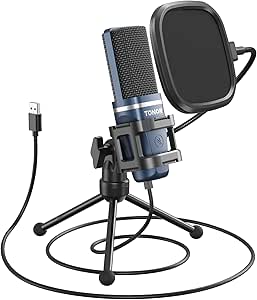 | Best Budget-Friendly Starter for Beginners | Pickup Pattern: Cardioid | Connectivity: USB 2.0 | Compatibility: Windows, Mac, PS4, PS5 | VIEW ON AMAZON | See Our Full Breakdown |
| Shure SM4 XLR Studio Condenser Microphone Kit for Recording |  | Best for Durable, High-Quality Studio Recording | Capsule: 1-inch dual-diaphragm brass | Polar Pattern: Cardioid | Maximum SPL: 140dB | VIEW ON AMAZON | See Our Full Breakdown |
| Maono PM320S Condenser PC Microphone with XLR Cable, Boom Arm, Pop Filter |  | Best Complete Studio-Grade Kit for Serious Content Creators | Power Requirement: 48V Phantom Power | Capsule Size: 16mm | Polar Pattern: Cardioid | VIEW ON AMAZON | See Our Full Breakdown |
| Audio-Technica AT2020 Cardioid Condenser Studio XLR Microphone |  | Best Overall for Home Studios | Type: Condenser | Polar Pattern: Cardioid | Output Connector: 3-pin XLRM | VIEW ON AMAZON | See Our Full Breakdown |
| RØDE NT1 Signature Series Studio Condenser Microphone, Black |  | Best for Professional Vocal and Streaming Use | Type: Condenser Microphone | Pattern: Cardioid | Self-noise: Among the lowest ever made | VIEW ON AMAZON | See Our Full Breakdown |
| TONOR XLR Condenser Microphone Kit with Boom Arm, Shock Mount, and Pop Filter |  | Best for Budget-Conscious Content Creators | Power Source: 48V phantom power required | Pattern: Cardioid | Included Accessories: Boom arm, shock mount, pop filter, XLR cable | VIEW ON AMAZON | See Our Full Breakdown |
| MXL 990 Condenser Microphone for Podcasting, Singing, Home Studio Recording, Gaming & Streaming |  | Best for Versatile Home Use and Beginners | Type: Condenser Microphone | Polar Pattern: Cardioid | Frequency Response: 20 Hz – 20 kHz | VIEW ON AMAZON | See Our Full Breakdown |
| Audio-Technica AT2035 Cardioid Condenser Microphone |  | Best for Experienced Voiceover Artists and Streamers | Polar Pattern: Cardioid | Diaphragm: Large | High Pass Filter: Switchable 80 Hz | VIEW ON AMAZON | See Our Full Breakdown |
| condenser microphones for voiceover | Polar Pattern | Included Accessories |
|---|---|---|
| MAONO A04 Gen2 XLR/USB Condens | Cardioid | Pop filter, foam windscreen, shock mount, arm stand, USB cable, user manual |
| RØDE NT1 5th Gen Studio Conden | Unidirectional | — |
| Tonor TC-777 Podcast Microphon | — | Tripod stand, shock mount, pop filter |
| Shure SM4 XLR Studio Condenser | Cardioid | Detachable magnetic pop filter, shock mount, brass mic stand adapter, zippered case |
| Maono PM320S Condenser PC Micr | Cardioid | Boom arm, shock mount, pop filter, windscreen, XLR cable, manual |
| Audio-Technica AT2020 Cardioid | Cardioid | — |
| RØDE NT1 Signature Series Stud | — | Shock mount, pop filter, XLR cable, dust cover |
| TONOR XLR Condenser Microphone | — | Boom arm, shock mount, pop filter, XLR cable |
| MXL 990 Condenser Microphone f | Cardioid | Shock mount, mic stand adapter, carrying case |
| Audio-Technica AT2035 Cardioid | Cardioid | — |
More Details on Our Top Picks
MAONO A04 Gen2 XLR/USB Condenser Microphone Kit for PC Podcast Recording
The MAONO A04 Gen2 stands out for its flexible dual XLR and USB connectivity, making it ideal for users who want both simplicity and professional-grade options in one package. Compared to the Tonor TC-777, which is purely USB, this model offers broader compatibility with audio interfaces and mixers, appealing to those expanding their setup. The inclusion of accessories like a pop filter, shock mount, and arm stand simplifies the initial setup, but the lack of an XLR cable means additional purchases are needed for professional use. Its high-resolution audio at 192kHz/24bit ensures clear, detailed recordings, yet it demands phantom power for XLR mode, which could be a hurdle for beginners. This microphone makes the most sense for intermediate users or streamers who want versatility without sacrificing sound quality.
Pros:- Dual XLR and USB connectivity for maximum flexibility
- High-resolution audio at 192kHz/24bit for professional sound quality
- Includes comprehensive accessories like pop filter and shock mount
Cons:- XLR cable not included, requiring extra purchase
- Requires phantom power for XLR, complicating setup for beginners
Best for: Content creators and podcasters who need a flexible, high-quality microphone with both USB and XLR options.
Not ideal for: Casual users or gamers who only need simple plug-and-play USB microphones without additional gear requirements.
- Connectivity:XLR and USB
- Sampling Rate:192kHz/24bit
- Frequency Response:30Hz-16kHz
- Polar Pattern:Cardioid
- Capsule Size:16mm
- Included Accessories:Pop filter, foam windscreen, shock mount, arm stand, USB cable, user manual
Our verdict“This pick is best suited for users seeking a versatile microphone capable of professional recording and streaming setups.”
RØDE NT1 5th Gen Studio Condenser Microphone, XLR + USB-C, Black
The RØDE NT1 5th Gen is distinguished by its ultra-low noise floor and large-diaphragm design, making it a top choice for capturing nuanced vocals and acoustic instruments. While the Shure SM4 also offers excellent noise rejection, the NT1’s combination of USB-C and XLR provides a more streamlined workflow for home studios. Its 32-bit float digital output ensures distortion-free recordings, which is particularly beneficial for critical voiceover work. The heavier weight at 308 grams and size may be less convenient for mobile setups or tight spaces, but its sound clarity compensates for this tradeoff. Unlike the MAONO A04, which is more multi-purpose, this model is tailored for professional studio environments. This microphone is ideal for voice talent and engineers seeking pristine, detailed recordings with minimal background noise.
Pros:- Ultra-low noise floor for detailed, clear recordings
- Dual XLR and USB-C connections for versatile use
- 32-bit float digital output eliminates distortion
Cons:- Relatively heavy and large, less portable
- Requires batteries for operation, adding to setup complexity
Best for: Professional voiceover artists and studio engineers needing ultra-clean, detailed recordings with flexible digital and analog options.
Not ideal for: Casual users or streamers who prefer lightweight, portable mics or don’t require ultra-low noise performance.
- Connectivity Technology:USB, XLR
- Polar Pattern:Unidirectional
- Audio Sensitivity:30 db
- Signal-to-Noise Ratio:80 db
- Hardware Platform:Mac, PC
- Weight:308 g
Our verdict“This microphone excels in professional environments demanding the highest sound fidelity and minimal noise interference.”
Tonor TC-777 Podcast Microphone, USB Condenser Mic with Tripod Stand and Pop Filter
The Tonor TC-777 offers a straightforward, plug-and-play experience perfect for newcomers or casual streamers. Its cardioid pattern captures vocals clearly while reducing background noise, but it lacks the flexibility of XLR connections found in higher-end models like the Maono PM320S. The included tripod stand, shock mount, and pop filter make initial setup accessible, though these accessories are more basic and may not withstand professional use. Its compatibility with PC, Mac, and consoles like PS4/PS5 makes it a versatile choice for gaming and casual content. However, the design is quite plain, and the audio quality, while good for the price, won’t satisfy those seeking studio-level clarity. This microphone makes the most sense for beginners or hobbyists on a tight budget.
Pros:- Simple plug-and-play operation with no drivers needed
- Includes comprehensive accessories like shock mount and pop filter
- Compatible with multiple devices including consoles
Cons:- Limited to USB connectivity, no XLR option
- Basic build quality may not withstand heavy professional use
Best for: Novice streamers or podcasters seeking an easy setup with decent sound quality at an affordable price.
Not ideal for: Professional voiceover artists or users requiring XLR connectivity and higher fidelity for critical projects.
- Pickup Pattern:Cardioid
- Connectivity:USB 2.0
- Compatibility:Windows, Mac, PS4, PS5
- Included Accessories:Tripod stand, shock mount, pop filter
- Cable Length:1.9 meters
Our verdict“This microphone is best suited for beginners or casual users who want an easy, affordable way to start recording or streaming.”
Shure SM4 XLR Studio Condenser Microphone Kit for Recording
The Shure SM4 combines rugged all-metal construction with a brass dual-diaphragm capsule, delivering natural, balanced audio. Unlike the RØDE NT1, which offers ultra-low noise for studio clarity, the SM4 emphasizes durability and interference rejection, making it suitable for both studio and live environments. Its high SPL handling of 140dB allows it to record loud sources without distortion, but it demands an XLR setup with additional accessories like a shock mount and stand. The integrated pop filter and magnetic design add convenience, yet the need for extra gear and XLR power makes it less ideal for casual or mobile use. For professionals who prioritize ruggedness and sound fidelity, this model offers a reliable solution. This microphone is best for those who need a durable, high-quality condenser with excellent noise rejection.
Pros:- All-metal durable construction for long-term use
- Excellent noise rejection and interference shielding
- High SPL handling for loud sources
Cons:- Requires XLR connection and additional accessories
- Less portable and convenient for quick setups
Best for: Professional recording engineers and musicians requiring a tough, high-fidelity condenser for studio and live use.
Not ideal for: Beginners or casual content creators seeking simple USB plug-and-play microphones without additional equipment.
- Capsule:1-inch dual-diaphragm brass
- Polar Pattern:Cardioid
- Maximum SPL:140dB
- Interference Shielding:Yes
- Included Accessories:Detachable magnetic pop filter, shock mount, brass mic stand adapter, zippered case
- Construction:All-metal
Our verdict“This microphone is designed for professionals needing a rugged, reliable device with outstanding sound quality in demanding environments.”
Maono PM320S Condenser PC Microphone with XLR Cable, Boom Arm, Pop Filter
The Maono PM320S offers a professional-grade recording experience with its large 16mm capsule, making it a strong choice for serious voiceover work and streaming. Compared to USB-only options like the Tonor TC-777, this model’s XLR connection delivers higher fidelity and more control. The included boom arm, shock mount, and pop filter turn it into a ready-to-use studio setup, but its need for 48V phantom power adds a layer of complexity, especially for those without external power supplies. Its bulkier design and reliance on external equipment make it less ideal for portability but perfect for dedicated recording spaces. For those who prioritize sound quality and a comprehensive setup, this kit offers excellent value. This microphone is best for users committed to a studio environment and willing to manage a more involved setup process.
Pros:- Studio-grade sound with large condenser capsule
- Complete all-in-one kit with boom arm, shock mount, and pop filter
- Excellent noise rejection with cardioid pattern
Cons:- Requires 48V phantom power, adding setup complexity
- Bulkier setup due to multiple accessories
Best for: Content creators and voiceover artists seeking a complete, studio-quality recording kit with XLR connectivity.
Not ideal for: Users requiring portable or plug-and-play microphones for casual or mobile recording applications.
- Power Requirement:48V Phantom Power
- Capsule Size:16mm
- Polar Pattern:Cardioid
- Included Accessories:Boom arm, shock mount, pop filter, windscreen, XLR cable, manual
Our verdict“This kit is best suited for dedicated home studios or professionals investing in high-quality voiceover recordings.”
Audio-Technica AT2020 Cardioid Condenser Studio XLR Microphone
The Audio-Technica AT2020 stands out as the best overall choice for serious home studio users thanks to its high SPL handling and wide dynamic range, making it versatile for vocals, voiceovers, and instruments. Compared with the RØDE NT1, it offers similar low-noise performance but at a more accessible price point, though it requires an XLR connection and isn’t portable. Its custom low-mass diaphragm ensures superior transient response, translating to clearer, more natural recordings. However, needing an external interface limits portability and convenience for on-the-go recording. This mic is ideal for users who prioritize sound quality in a stable studio environment and already own or plan to buy an audio interface. It’s less suited for those seeking a simple USB setup or mobile recording solutions.
Pros:- High SPL handling and wide dynamic range for versatile recordings
- Excellent transient response with custom diaphragm for clarity
- Reduces background noise effectively with cardioid pattern
Cons:- Requires an XLR interface, adding cost and complexity
- Designed primarily for stationary studio use, less portable
Best for: Home studio owners or hobbyist voiceover artists who want professional-grade sound quality without a high price point.
Not ideal for: Voiceover artists who need a portable or USB-compatible microphone for on-the-fly recording or mobile setups.
- Type:Condenser
- Polar Pattern:Cardioid
- Output Connector:3-pin XLRM
- Application:Studio, Home Studio
- Color:Black
Our verdict“This mic is best suited for dedicated home studio setups where sound quality is the priority over portability.”
RØDE NT1 Signature Series Studio Condenser Microphone, Black
The RØDE NT1 Signature excels with its ultra-low self-noise, making it a top pick for professional vocal recordings and streaming. Compared to the MXL 990, which offers good sound at a budget, the NT1’s significantly lower noise floor provides a cleaner, more detailed sound, especially in quiet vocal passages. It comes with a comprehensive package including shock mount, pop filter, XLR cable, and dust cover, streamlining setup for serious users. The main tradeoff is its higher price and need for an audio interface, which may be a barrier for beginners. This microphone suits experienced voiceover artists and streamers who demand studio-quality results and are willing to invest in a complete package. Less ideal for those seeking USB or all-in-one solutions without additional equipment.
Pros:- Among the lowest self-noise available, capturing ultra-clean audio
- Complete package with accessories for professional setup
- Ideal for detailed vocal recordings and streaming
Cons:- Requires an external audio interface, increasing overall cost
- More expensive than entry-level mics
Best for: Professional voiceover artists, vocalists, or streamers seeking studio-level audio quality with minimal self-noise.
Not ideal for: Beginners or casual users who prefer plug-and-play USB microphones or have tight budgets.
- Type:Condenser Microphone
- Pattern:Cardioid
- Self-noise:Among the lowest ever made
- Included Accessories:Shock mount, pop filter, XLR cable, dust cover
- Color:Black
Our verdict“This microphone is perfect for professionals who need ultra-quiet operation and a ready-to-go setup for high-quality voiceovers.”
TONOR XLR Condenser Microphone Kit with Boom Arm, Shock Mount, and Pop Filter
The TONOR XLR Microphone Kit offers a comprehensive setup for those starting in voiceover, podcasting, or streaming, emphasizing value with included accessories like a boom arm, shock mount, and pop filter. Compared with the Audio-Technica AT2020, it provides a more complete package, but its sound quality may not match high-end models due to less sophisticated components. Its cardioid pattern helps reduce off-axis noise, making it suitable for less-than-ideal environments. The main tradeoff is the requirement for phantom power and the bulkiness of the setup, which could be cumbersome in smaller spaces. This pick makes sense for beginners or budget-conscious creators who want a ready-to-use package without sacrificing too much quality.
Pros:- Complete kit with boom arm, shock mount, and pop filter for easy setup
- Good noise reduction with cardioid pattern for typical home environments
- High-quality sound for its price range
Cons:- Requires external phantom power source, adding to setup complexity
- Less detailed sound compared to premium microphones
Best for: Aspiring voiceover artists or streamers with limited budgets who want a full starter kit for studio-quality sound.
Not ideal for: Professional voiceover artists or those with dedicated studios seeking top-tier sound clarity and minimal setup hassle.
- Power Source:48V phantom power required
- Pattern:Cardioid
- Included Accessories:Boom arm, shock mount, pop filter, XLR cable
- Frequency Response:Wide dynamic range (specific range not provided)
- Max SPL:High SPL handling (specific value not provided)
Our verdict“This kit offers solid value for beginners who want an all-in-one setup to start voiceover work without high upfront costs.”
MXL 990 Condenser Microphone for Podcasting, Singing, Home Studio Recording, Gaming & Streaming
The MXL 990 provides a solid entry point into professional-sounding voiceovers, with its large diaphragm delivering warm, natural tone. Compared with the Audio-Technica AT2020, the MXL 990 offers a broader frequency response (20 Hz – 20 kHz), making it suitable for a range of applications from podcasts to singing. Its included accessories, like the shock mount and carrying case, add convenience for home users. The main drawback is the need for +48V phantom power, which most audio interfaces provide, but it may be a hurdle for complete beginners. Sensitive to handling noise, it benefits from a stable mounting setup. Overall, this mic makes sense for those wanting professional sound without high costs and with versatile use in mind.
Pros:- Professional sound quality with warm, natural tone
- Wide frequency response for versatile recordings
- Includes premium accessories for convenience
Cons:- Requires +48V phantom power, possibly limiting for some setups
- Sensitive to handling noise, requiring careful placement
Best for: Beginners or hobbyists seeking an affordable, versatile condenser mic for voiceovers, streaming, and casual recording.
Not ideal for: Advanced users or professionals requiring ultra-low noise floors and minimal handling noise for high-stakes recordings.
- Type:Condenser Microphone
- Polar Pattern:Cardioid
- Frequency Response:20 Hz – 20 kHz
- Power Requirement:+48V Phantom Power
- Included Accessories:Shock mount, mic stand adapter, carrying case
Our verdict“This microphone offers a balanced mix of quality and affordability, ideal for those starting out or doing casual voiceover work at home.”
Audio-Technica AT2035 Cardioid Condenser Microphone
The Audio-Technica AT2035 offers a large diaphragm for natural, warm sound and high SPL handling, making it suitable for professional voiceover and streaming. Compared with the RØDE NT1, the AT2035 provides more versatile features like a switchable high-pass filter and -10 dB pad, giving seasoned users greater control over their recordings. Its included shock mount enhances isolation, reducing handling noise and room reflections. The tradeoff is that it relies on XLR connectivity, making it less suited for those who prefer plug-and-play USB options. This mic is best for users who already have or plan to invest in a quality audio interface and want a durable, versatile studio mic for diverse voiceover projects.
Pros:- Excellent natural tone with large diaphragm design
- High SPL handling for versatile recording scenarios
- Features switchable high-pass filter and pad for control
Cons:- Requires XLR connection, increasing setup complexity
- More suited for users with some experience in audio equipment
Best for: Intermediate to advanced voiceover artists, streamers, or podcasters wanting a natural sound and flexible controls.
Not ideal for: Beginners or casual users without existing audio interfaces who prefer simple plug-and-play solutions.
- Polar Pattern:Cardioid
- Diaphragm:Large
- High Pass Filter:Switchable 80 Hz
- Pad:10 dB
- Output:XLR
Our verdict“This mic is geared toward experienced users seeking a high-quality, versatile condenser for professional voiceover work and streaming.”

How We Picked
To evaluate these condenser microphones, I focused on key factors that influence voiceover performance: sound clarity, noise floor, build quality, ease of setup, and value for money. We prioritized models that offer a balance of professional sound and user-friendly features, ensuring they suit both beginners and experienced voice artists. Additional considerations included versatility (USB vs. XLR), included accessories, and overall durability. Rankings reflect which microphones excel across these criteria, providing options tailored for different budgets and use cases.| condenser microphones for voiceover | Polar Pattern |
|---|---|
| MAONO A04 Gen2 XLR/USB Condens | Cardioid |
| RØDE NT1 5th Gen Studio Conden | Unidirectional |
| Tonor TC-777 Podcast Microphon | — |
| Shure SM4 XLR Studio Condenser | Cardioid |
| Maono PM320S Condenser PC Micr | Cardioid |
| Audio-Technica AT2020 Cardioid | Cardioid |
| RØDE NT1 Signature Series Stud | — |
| TONOR XLR Condenser Microphone | — |
| MXL 990 Condenser Microphone f | Cardioid |
| Audio-Technica AT2035 Cardioid | Cardioid |
Factors to Consider When Choosing Condenser Microphones For Voiceovers
Choosing the right condenser microphone for voiceovers involves assessing several important factors beyond just price. Understanding these considerations helps ensure you select a microphone that matches your recording environment, voice characteristics, and future growth. Let’s explore the key aspects to keep in mind when making a decision.Connectivity: USB vs. XLR
USB microphones are typically plug-and-play, making them ideal for beginners or those who want a straightforward setup. They often come with built-in audio interfaces, reducing the need for extra equipment. On the other hand, XLR microphones generally offer higher audio fidelity and more flexibility for professional studios, but require an audio interface or mixer. Think about your current setup and whether you prefer simplicity or room for expansion when choosing between these options.
Sound Quality and Noise Floor
For voiceovers, clarity and low self-noise are critical. Microphones like the RØDE NT1 or Audio-Technica AT2035 are designed with very low noise floors, capturing voice nuances without unwanted hiss. Cheaper models may introduce background noise or lack the warmth needed for professional-sounding recordings. Consider your recording environment—if you work in a treated space, you might tolerate a noisier mic, but otherwise, investing in a model with a lower noise floor will improve your results significantly.
Build Quality and Accessories
Durability and included accessories impact both initial usability and long-term satisfaction. A sturdy shock mount, pop filter, and robust build help isolate your voice and extend the life of your microphone. Cheaper models sometimes omit these essentials, leading to additional costs or compromised sound quality. If you plan to record regularly, prioritize models that come with or support quality accessories to protect your investment and improve sound isolation.
Budget and Value
While premium microphones offer superior sound, they come at a higher price point. Budget options like the Tonor TC-777 provide reasonable sound quality for beginners or casual use, but may lack durability or advanced features. Striking a balance between cost and performance is key—consider how often you’ll record, your quality expectations, and whether investing more now will save you from upgrading soon. Always compare what’s included, not just the price tag.
Future-Proofing and Versatility
Think about your long-term needs. If you aim to grow into professional voiceover work, selecting a microphone with a versatile connection type and high fidelity makes sense. Conversely, if this is a temporary setup, a simple USB model might suffice. Also, consider compatibility with your existing gear and whether the microphone can handle different voice styles or recording environments to avoid future upgrades.
Frequently Asked Questions
Is a USB microphone good enough for professional voiceover work?
Many USB microphones now deliver surprisingly high-quality sound suitable for professional voiceovers, especially in home studio settings. However, for the highest fidelity and flexibility, XLR microphones paired with quality audio interfaces still hold an edge. If you’re starting out or need quick setup, a good USB mic can produce excellent results, but for long-term growth or high-end projects, investing in an XLR system might be more beneficial.
Do I need a pop filter or shock mount for my condenser microphone?
Yes, both accessories can significantly improve your recordings. A pop filter helps reduce plosive sounds that can distort recordings, while a shock mount isolates the microphone from vibrations and handling noise. Many affordable microphones do not include these, so purchasing them separately is often recommended, especially if you plan to record vocals regularly. These accessories are essential for achieving a clean, professional sound.
Can I use a cheaper microphone for professional voiceovers?
While cheaper microphones can work for casual or hobbyist recording, they often introduce noise, lack warmth, or have limited frequency response, which can detract from professional-quality voiceovers. Investing in a mid-range or higher-end condenser mic typically results in clearer, more natural-sounding recordings that require less post-processing. If quality matters, it’s worth spending more upfront to avoid frustrations later.
How important is the microphone’s polar pattern for voiceovers?
The polar pattern determines how much sound the microphone picks up from different directions. For voiceovers, a cardioid pattern is usually preferred because it focuses on your voice and minimizes room noise and reflections. Some microphones offer switchable patterns, providing flexibility for different recording environments. Choosing a microphone with a cardioid pattern can help achieve cleaner, more focused recordings in typical home studios.
Should I prioritize a microphone’s brand or features?
Both brand reputation and features matter, but features tailored to your specific needs should come first. Well-known brands like RØDE or Audio-Technica often ensure quality and durability, but newer or lesser-known brands can offer competitive performance at lower prices. Focus on the microphone’s specifications—sound quality, connectivity, included accessories—and how well they align with your recording goals before considering brand reputation alone.
Conclusion
For those new to voiceovers or working on a tight budget, the Tonor TC-777 offers a solid entry point with easy setup and decent sound. Serious creators and professionals aiming for top-tier audio will find the RØDE NT1 5th Gen or Audio-Technica AT2035 to be excellent investments, providing superior clarity and low noise. The best overall pick balances performance and value, making it suitable for most users. If budget isn’t a concern, the RØDE NT1 Signature Series or Audio-Technica AT2035 stand out as premium choices. Ultimately, your decision should reflect your experience level, recording environment, and long-term goals.
Fall Picks
fall essentials
As an affiliate, we earn on qualifying purchases.