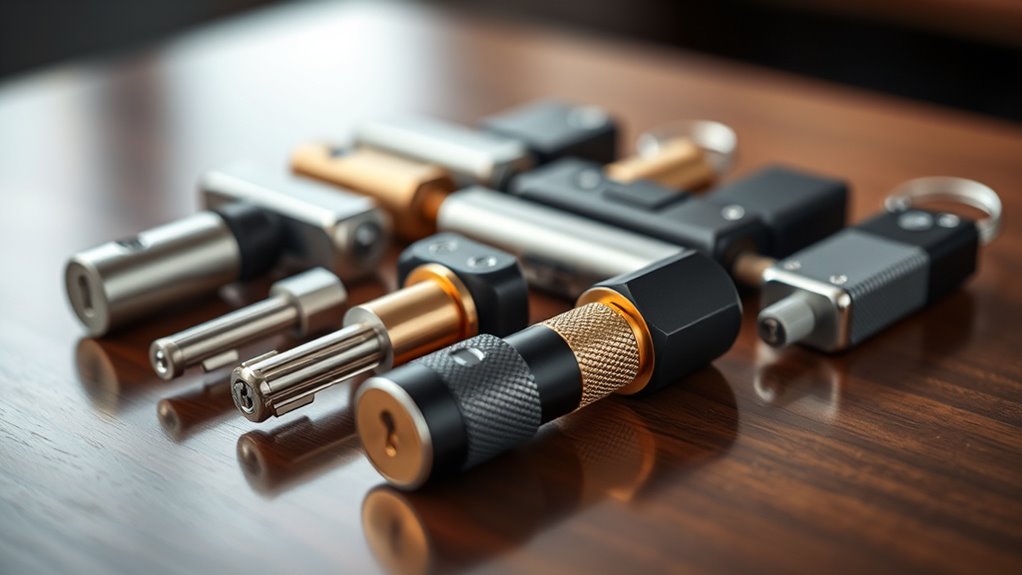

For anyone serious about securing online accounts, password manager hardware keys offer a robust layer of protection through hardware-based two-factor authentication. The Yubico YubiKey 5 NFC stands out as the best overall choice thanks to its broad compatibility and proven security. Alternatives like the OnlyKey provide offline management, while options such as the Thetis Nano-C excel in compact design. The main challenge lies in balancing security features, device compatibility, and cost. Keep reading for a detailed comparison of the best hardware keys for 2026, helping you make an informed decision.

Get business pricing on office and shipping supplies
- Business-only prices and quantity discounts
- Tax-exempt purchasing
- Multiple users, one account, clear invoices
Key Takeaways
- Top picks combine broad device compatibility with strong security standards like FIDO2 and U2F.
- Many high-quality options now include NFC for contactless authentication, enhancing convenience.
- The best hardware keys balance security features with ease of use, especially for non-technical users.
- Price varies significantly; premium models offer extra features but may not suit all budgets.
- Compatibility with multiple platforms (Windows, macOS, Linux, mobile) is a key factor for versatility.


More Details on Our Top Picks
OnlyKey FIDO2 / U2F Security Key and Hardware Password Manager
The OnlyKey stands out for its support of multiple authentication methods, including FIDO2, U2F, Yubico OTP, and TOTP, making it highly versatile for users managing various accounts and security protocols. Its durable, waterproof design suits on-the-go users who need reliability without sacrificing portability. Compared to the YubiKey 5 NFC, it offers open-source transparency, which appeals to security-conscious individuals seeking trustworthiness. However, its reliance on physical access and the potential learning curve for beginners make it slightly less user-friendly initially. This device is ideal for tech-savvy users who want flexible security options and open-source transparency, but those unfamiliar with hardware keys might find it intimidating at first.
Pros:- Supports multiple authentication methods for versatile security
- Portable and waterproof design ideal for travel
- Open source and verified for transparency
- Automatic login reduces password management hassle
Cons:- Requires physical access to authenticate, which can be inconvenient
- May have a learning curve for new users unfamiliar with hardware keys
Best for: Tech-savvy individuals seeking adaptable, open-source hardware security with multi-factor options
Not ideal for: Beginners or users who prefer plug-and-play simplicity without a learning curve
- Supported Platforms:Windows, Mac OS, Linux, Android
- Authentication Methods:FIDO2 / U2F, Yubico OTP, TOTP, Challenge-response
- Security Features:PIN protection, tamper resistant, data erasure after 10 failed attempts
- Material:Waterproof, durable
Our verdict“This pick suits experienced users who want a durable, multi-protocol hardware key with open-source trustworthiness.”
Yubico – YubiKey 5 NFC – Multi-Factor authentication (MFA) Security Key and passkey, Connect via USB-A or NFC, FIDO Certified – Protect Your Online Accounts
The YubiKey 5 NFC is renowned for its broad compatibility, supporting over 1000 accounts including Google, Microsoft, and Apple, making it a practical choice for users with diverse online services. Its USB-A and NFC connectivity enable quick, effortless authentication through a tap, with no batteries required. Compared to the OnlyKey, it offers a more straightforward, plug-and-play approach for users who prioritize ease of use over multi-protocol support. Its tough, waterproof construction ensures durability, but the focus on FIDO2 and U2F means it may lack some open-source transparency or support for less common protocols. This device makes the most sense for users seeking high compatibility, durability, and quick access across devices.
Pros:- Supports over 1000 accounts including major providers
- NFC and USB-A for quick, contactless authentication
- Waterproof and crush-resistant for durability
- No batteries required, always ready
Cons:- Less open-source transparency compared to some competitors
- Primarily focuses on FIDO2/U2F, limiting protocol diversity
Best for: Users with multiple accounts seeking a reliable, compatible security key for daily use
Not ideal for: Tech enthusiasts wanting open-source transparency or support for protocols beyond FIDO2 and U2F
- Hardware Interface:USB 2.0, NFC
- Additional Features:Crush resistant, Fits on keychain
- Connectivity Technology:NFC, USB Flash Memory Type USB
- Compatible Phone Models:Google Chrome Compatible Devices
- Item Dimensions:3.94″D x 3.94″W x 3.94″H
- Warranty & Support:30-day return, 1-year warranty
Our verdict“This is a highly versatile, durable security key ideal for users needing broad account support and quick access.”
Thetis Pro FIDO2 Security Key, Two Factor Authentication NFC Security Key FIDO 2.0, Dual USB A Ports & Type C for Multi layered Protection (HOTP) in Windows/MacOS/Linux, Gmail, Facebook,Dropbox,Github
The Thetis Pro FIDO2 offers a dual-port design with both USB-A and USB-C, providing flexibility for users with different devices. Its support for FIDO2, NFC, and HOTP makes it suitable for multi-platform environments, including Windows, MacOS, Linux, and mobile devices. Compared to the Thetis Pro-A, it emphasizes multi-port versatility, making it a better fit for users with a variety of hardware. Its robust, tamper-resistant build ensures durability, but the need to verify service support for hardware keys before purchase can be a hurdle. Additionally, NFC functionality is limited to mobile authentication, not on desktops. This device is aimed at users with diverse device ecosystems who need a flexible, multi-protocol security solution.
Pros:- Supports passwordless login across platforms
- Dual USB-A and USB-C ports plus NFC
- Durable, tamper-resistant design
- Supports multi-factor authentication with HOTP and TOTP
Cons:- Requires confirmation of service support for hardware keys
- NFC functionality limited to mobile authentication
Best for: Power users with multiple device types seeking flexible, multi-port security keys
Not ideal for: Beginners or those using only mobile devices without NFC support
- Connectivity:USB-A, USB-C, NFC
- Authentication Standards:FIDO2, Passkey, TOTP, HOTP
- Compatibility:Windows, macOS, Linux, iOS, Android
- Design:360° rotating metal cover
- Certification:FIDO Certified
- Item Dimensions:2.9″D x 0.72″W x 0.5″H
Our verdict“Ideal for multi-device users who need a versatile, multi-protocol key with dual ports and NFC capability.”
Thetis Pro-C FIDO2 (L2) Security Key with USB-C & NFC
The Thetis Pro-C emphasizes enterprise-ready security with FIDO2 Level 2 support, USB-C and NFC connectivity, and multi-factor authentication including TOTP and HOTP. Its durable, rotating metal cover makes it suitable for professional environments, and its compatibility with services like Gmail, Facebook, and Dropbox ensures broad usability. Compared with the Thetis Pro-A, it targets users requiring higher security standards, though verification of service support for hardware keys remains necessary. Its lack of included management tools or software limits advanced administration, but that is typical for hardware keys at this level. This device is designed for enterprise users prioritizing security, durability, and broad service compatibility.
Pros:- Supports passwordless FIDO2 Level 2 authentication
- USB-C and NFC for flexible device connectivity
- Durable, tamper-resistant metal body
- Supports multi-factor authentication with TOTP and HOTP
Cons:- Requires confirmation of service support for hardware keys
- No included management or enterprise tools
Best for: Enterprises or security-conscious professionals needing enterprise-level security features
Not ideal for: Casual users or those seeking software-based or managed solutions
- FIDO2 Level:2
- Connectivity:USB-C, NFC
- Compatibility:Windows, macOS, Linux, iOS, Android
- Authentication methods:FIDO2, TOTP, HOTP
- Battery:None
- Additional features:Keyring hole, portable
Our verdict“This is best suited for enterprise environments demanding high-standard security with versatile hardware compatibility.”
PasswordPocket Offline Hardware Password Keeper with Bluetooth Auto-Fill for iPhone and Android
This device stands out for its offline storage of up to 1,000 logins combined with Bluetooth auto-fill, making it a solid choice for users who prioritize security without relying on internet-connected devices. Unlike the Yubico YubiKey 5C NFC, which supports a broader range of security standards and offers more versatility with NFC and USB-C, the PasswordPocket focuses on simplicity and offline security, though it introduces potential pairing issues with Bluetooth. Its limited capacity of 1,000 logins may not suit heavy credential users, but it excels in secure, local storage and cross-platform compatibility. The reliance on Bluetooth can be a drawback, especially if pairing becomes problematic, and the capacity may be restrictive for power users with extensive credentials.
Pros:- Secure offline storage with military-grade AES-256 encryption
- Convenient auto-fill feature for mobile devices
- Supports both iOS and Android platforms
Cons:- Bluetooth connection may have pairing issues
- Limited to 1,000 logins, not suitable for extensive credential management
Best for: Individuals who want secure offline storage with easy Bluetooth auto-fill on both iOS and Android devices.
Not ideal for: Power users with more than 1,000 logins or those seeking the broadest compatibility and highest security standards.
- Storage Capacity:1,000 logins
- Encryption:AES-256
- Connectivity:Bluetooth
- Platform Compatibility:iOS and Android
Our verdict“This device is best for users seeking secure offline password storage combined with simple, wireless auto-fill on mobile devices.”
Yubico – Security Key C NFC – Basic Compatibility – Multi-Factor authentication (MFA) Security Key and passkey, Connect via USB-C or NFC, FIDO Certified
The Security Key C NFC provides a robust, straightforward solution for MFA, supporting over 1,000 accounts with FIDO2 and U2F standards—comparable in security scope to the YubiKey 5C NFC but with added convenience of NFC for contactless authentication. Its durability and waterproof design make it suitable for daily use in varied conditions, although it lacks advanced features like passkey support or TOTP. Compared with the PasswordPocket, it offers broader universal compatibility across desktops and mobile devices, but at the cost of being less specialized for offline storage. The need to buy a second device for backup is a common tradeoff across many security keys, including this one.
Pros:- Supports over 1,000 accounts with FIDO2 and U2F
- Waterproof and crush-resistant build
- Supports USB-C and NFC for flexible authentication
Cons:- No support for passkeys or passwordless login
- Requires a second device for backup security
Best for: Users needing a durable, broadly compatible MFA device for both desktop and mobile accounts with simple tap-in authentication.
Not ideal for: Those seeking advanced passkey or passwordless login features beyond MFA standards.
Our verdict“Ideal for users who want a reliable, universal MFA key with rugged durability and contactless convenience.”
Thetis Nano-C FIDO2 Security Key Hardware Passkey Device with USB Type C, TOTP/HOTP, FIDO2.0 Two Factor Authentication 2FA MFA, Works with Windows/mac/iOS/Android/Linux/Gmail/Facebook/GitHub/Coinbase
This ultra-compact USB-C key excels at providing passwordless login via passkeys, supporting FIDO2 and WebAuthn standards across a wide range of devices and services—including Google, GitHub, and Coinbase. Its small size makes it perfect for carrying on a keychain, unlike bulkier options like the YubiKey 5C NFC. Its support for TOTP/HOTP adds extra MFA flexibility, although it’s limited to services that support passkeys or 2FA. Compared with the PasswordPocket, it offers more universal compatibility and passwordless login options but lacks offline storage. Its support for multiple authentication standards makes it suitable for users who want a future-proof, multi-platform security solution.
Pros:- Supports passwordless passkey login via WebAuthn
- Compact, keychain-friendly size
- Supports multiple MFA methods including TOTP/HOTP
Cons:- Limited support for services not yet integrating passkeys
- Requires compatible services for full passwordless experience
Best for: Tech-savvy users seeking seamless passwordless and multi-factor authentication across desktop and mobile platforms.
Not ideal for: Users who need offline credential storage or have services that don’t support passkeys yet.
Our verdict“Perfect for those prioritizing universal, passwordless login with multi-factor options in a tiny, portable form.”
Yubico YubiKey 5C NFC – Multi-Factor Authentication Security Key
The YubiKey 5C NFC remains a staple for multi-factor authentication, supporting over 1,000 accounts with a broad array of standards including FIDO2, U2F, OpenPGP, and OATH-TOTP. Its support for both USB-C and NFC makes it adaptable for a variety of devices, from desktops to mobile phones, rivaling the flexibility of the PasswordPocket but with a more extensive security feature set. Its waterproof, crush-resistant build ensures durability, though it lacks passkey support for passwordless login. Its reliance on hardware standards makes it more future-proof than simpler devices, but it requires a second device for backup purposes, a common tradeoff among high-security keys.
Pros:- Supports over 1,000 accounts with multiple standards
- Durable, waterproof, crush-resistant design
- Supports USB-C and NFC for flexible use
Cons:- No integrated passkey or passwordless features
- Requires a second device for backup security
Best for: Security-conscious users needing a durable, multi-standard MFA device compatible with a wide range of services.
Not ideal for: Users looking for built-in passwordless or passkey login capabilities rather than traditional MFA.
Our verdict“Ideal for users seeking a highly durable, multi-standard MFA device with broad compatibility and proven reliability.”
FIDO2 U2F Security Key Passkey Two-Factor Authentication (2FA) USB Key PIN+Touch (Non-Biometric) USB-C Type TrustKey T120
The TrustKey T120 offers high-level security with FIDO2 and U2F standards, supporting a wide array of browsers and operating systems, including Windows, Mac, Linux, and popular browsers like Chrome and Firefox. Its PIN + Touch approach provides a simple, reliable, and non-biometric method of authentication, making it suitable for users wary of biometric data or hardware complexity. While it doesn’t support passkeys or passwordless login, its broad compatibility and easy one-touch login make it an excellent choice for securing online accounts without relying on batteries or complex setup. Compared to the PasswordPocket, it emphasizes high security with broad platform support but lacks offline credential storage and passkey features.
Pros:- Supports FIDO2 and U2F standards for broad browser compatibility
- PIN plus touch for simple, secure authentication
- Works with many major browsers and OS including Windows, Mac, Linux
Cons:- No support for passkeys or passwordless login
- Limited to online account authentication, no offline storage
Best for: Security-focused users who want a high-security, easy-to-use, cross-platform key without biometric reliance.
Not ideal for: Those seeking passkey or passwordless login features or offline credential management.
Our verdict“Best suited for users needing a straightforward, high-security, cross-platform security key without biometric or passkey features.”
Thetis Pro For Business – FIDO2 Security Key L2 MFA & NFC Passkey Access For School ERP, Employee Online Account, Compatible with Coinbase Google Workspace Apple ID Window Salesforce,Dual USB A +USB C
This model stands out for its enterprise-grade security certification, supporting FIDO2 Level 2 and passkey standards, making it ideal for organizations needing scalable, compliant multi-user deployment. Compared with the Thetis Nano-A, it offers broader management features and multi-protocol support, but this comes with a larger size and slightly more complexity. Its dual USB-A and USB-C connectors, along with NFC, provide flexible device compatibility, especially for mobile and desktop environments. The dedicated Manager App simplifies initial PIN setup, and its durable, tamper-resistant build ensures longevity in demanding environments. However, NFC support is limited to mobile device authentication, not desktop login, and Windows Hello functionality is restricted to Enterprise editions. This pick makes sense for businesses prioritizing security standards and enterprise integration over ultra-compact form factors.
Pros:- Supports FIDO2 Level 2 certification, ensuring high security standards
- Universal connectivity via USB-A, USB-C, and NFC for flexible device use
- Compatible with major management suites and passkey standards
Cons:- Requires initial setup via dedicated app, adding complexity for non-technical users
- Limited NFC functionality to mobile authentication, not desktop login
- Bulkier than smaller keys like the Nano series
Best for: IT teams needing scalable enterprise security with multi-protocol support
Not ideal for: Small businesses or individual users seeking simple, plug-and-play keys without management overhead
- Hardware Interface:USB-A, USB-C, NFC
- Certification:FIDO2 Level 2
- Compatibility:Major online services, enterprise management suites
- Connectivity Technology:USB and NFC
- Durability:Water, crush, tamper-resistant
- Management App:Yes
- Dimensions:2.9″D x 0.72″W x 0.5″H
- Weight:0.6 ounces
Our verdict“This is best suited for enterprises seeking a robust, standards-compliant hardware key with management features, despite its larger size.”
Yubico YubiKey 5C and Nano 5C Bundle – USB-C Two-Factor Authentication Security Keys
Compared with the Thetis models, the Yubico YubiKey 5C bundle offers broad device compatibility across over 1000 accounts, supporting protocols like FIDO2, U2F, OTP, and PIV, making it an excellent choice for users with diverse security needs. Its waterproof, crush-resistant body ensures durability in everyday and travel scenarios, which surpasses many plastic keys. Including two keys adds redundancy and security for critical accounts, and support for multiple protocols means it can replace several other security tokens. The main tradeoff is its larger, bulkier design compared to ultra-compact keys like the Thetis Nano-A, and it relies solely on physical contact, meaning no NFC for tap-based authentication. This bundle is ideal for users prioritizing multi-account support and durability over size or wireless convenience.
Pros:- Supports over 1000 accounts with multiple security protocols
- Waterproof and crush-resistant for long-lasting use
- Includes a spare key for added account security
Cons:- Bulkier than compact keys like the Nano series
- Requires physical contact for authentication, no NFC tap support
- May be overkill for users with only a few accounts
Best for: Power users managing numerous online accounts needing a durable, multi-protocol security solution
Not ideal for: Casual users who prefer pocket-friendly, single-protocol keys for minimal setup
- Compatibility:Over 1000 accounts including Google, Microsoft, Apple
- Connection:USB-C
- Protocols Supported:FIDO2, FIDO U2F, OTP, PIV, OpenPGP
- Material:Waterproof, crush-resistant
- Made in:Sweden
- Number of Keys:2
Our verdict“This bundle is ideal for users needing a rugged, multi-protocol security key to protect a wide array of accounts, despite its larger size.”
Thetis Nano-A FIDO2 Security Key – USB-A Hardware Passkey Device for 2FA/MFA
The Thetis Nano-A offers a minimalistic, portable design that easily attaches to your keychain, making it perfect for daily commuters. It supports FIDO2, WebAuthn, and TOTP/HOTP, providing passwordless login options across many platforms, including Google, GitHub, and Microsoft. Compared to bulkier keys like the Yubico bundle, the Nano-A sacrifices some protocol variety but excels in portability and simplicity. It’s compatible with Windows, Mac, iOS, Android, and Linux, making it versatile for most users. The main tradeoff is its limited support for passkeys on some websites, which can reduce its convenience for specific services. If you need a tiny, universal MFA device that fits on your keys, this is a solid choice, though some online services may not support all features fully.
Pros:- Extremely compact and lightweight, ideal for keychains
- Supports passwordless login and MFA on most platforms
- Universal compatibility with Windows, Mac, iOS, Android, Linux
Cons:- Limited passkey support on some websites, reducing convenience
- Supports fewer protocols compared to larger, more versatile keys
- Requires service support for full functionality
Best for: Users who want a small, portable security key for everyday use across multiple devices
Not ideal for: Power users needing support for a wide array of protocols or enterprise management features
- Size:0.75 x 0.74 x 0.25 inches
- Connectivity:USB-A
- Compatibility:Windows, Mac, iOS, Android, Linux
- Standards:FIDO, FIDO2, WebAuthn, CTAP2
- FIDO Passkey Slots:200
- OATH-TOTP Slots:50
Our verdict“This is best for individuals seeking a tiny, reliable MFA device for daily mobile and desktop security, though some services might have limited support.”

How We Picked
I evaluated each hardware key based on several criteria: security protocols supported (FIDO2, U2F, HOTP), compatibility across devices and operating systems, ease of use, physical build quality, and value for price. Devices that support multiple connection types (USB-A, USB-C, NFC) were prioritized for versatility. I also considered user feedback on reliability and setup simplicity, ensuring the selected options would suit both beginners and advanced users. Rankings reflect a balance between security features and practical usability, helping readers find the best fit for their specific needs.Factors to Consider When Choosing Password Manager Hardware Keys
Choosing the right password manager hardware key requires understanding several key factors. Beyond basic security, you should consider device compatibility, connection types, ease of use, and value. Making the wrong choice can lead to frustration or insufficient protection, so it’s important to weigh these factors carefully to match your specific security needs and technical comfort level.Compatibility and Device Support
Ensure the hardware key supports your primary devices and operating systems. Some keys work seamlessly with Windows, macOS, Linux, Android, and iOS, while others may have limitations. Multi-platform support reduces the risk of incompatibility when switching devices or operating systems. Check if the device supports popular authentication standards like FIDO2 or U2F to ensure future-proof security.
Connection Types and Convenience
Look for keys that offer multiple connection options such as USB-A, USB-C, and NFC. USB-C is increasingly common, but a device with NFC enables contactless authentication, adding convenience. Consider how you’ll use the device daily—if you need quick access on mobile, NFC might be essential. Devices with multiple connection types tend to be more versatile but may cost more.
Security Standards and Features
Focus on hardware keys that support established security protocols like FIDO2 and U2F, which are widely adopted and trusted. Some devices also include HOTP or TOTP support for additional two-factor options. Biometric features are rare in hardware keys but may be found in premium models. Remember, the device’s security standards directly impact how well your accounts are protected from phishing and hacking.
Build Quality and Durability
Since hardware keys are meant to be portable, durability matters. Look for devices made from sturdy materials that resist water, dust, and shocks. Compact designs are convenient but may compromise on ergonomics or screen visibility, if applicable. Investing in a well-built device ensures long-term reliability, especially if you plan to carry it everywhere.
Price and Value
Prices vary from budget options to premium devices with extra features like biometric sensors or multi-device support. Evaluate whether the added cost aligns with your security needs—if you only use a few accounts, a basic device might suffice. For high-security environments or multiple accounts, investing in a premium model can be justified for peace of mind and future-proofing.
Frequently Asked Questions
Can I use multiple hardware keys for the same account?
Yes, most online services that support hardware keys allow you to register multiple devices as backups. This setup provides redundancy in case one key is lost or damaged, ensuring continuous access to your accounts. When setting up, it’s wise to register at least two keys—one primary and one backup—to avoid lockouts. Always verify the platform’s support for multiple keys before purchasing.
Are hardware security keys compatible with smartphones?
Many hardware keys support NFC or USB-C to connect directly with smartphones, making them highly compatible with mobile devices. Additionally, some keys support Bluetooth, offering wireless use, which is ideal for convenience. Compatibility depends on the key’s connection types and your device’s support for specific standards. Always check the product specifications to confirm compatibility with your phone model and OS.
Is it worth paying extra for biometric features in a hardware key?
Biometric features, such as fingerprint sensors, are rare in hardware keys but can add an extra layer of security and convenience. If you value quick authentication and want to minimize the risk of losing your key, a biometric-enabled device might be worth the premium. However, these features can also introduce complexity and potential failure points, so weigh whether the added ease outweighs the cost and potential troubleshooting.
What should I do if my hardware key stops working?
Having a backup method is essential. Most platforms allow registering multiple hardware keys, so keep a spare in a safe place. If your primary key fails, you can use the backup key to access your accounts. It’s also wise to store recovery codes or enable alternative two-factor methods where possible. Regularly testing your keys and ensuring backups are updated helps prevent access issues.
Do hardware keys work with password managers?
Yes, most password managers support hardware keys for two-factor authentication, adding a physical layer of security beyond passwords. When you enable hardware key support, you authenticate by plugging in or tapping your device during login, making phishing and credential theft significantly harder. Always verify that your chosen password manager is compatible with your hardware key before purchasing.
Conclusion
For general security and broad device support, the Yubico YubiKey 5 NFC remains the best overall option, especially for users seeking reliable, cross-platform protection. Budget-conscious buyers or those new to hardware keys might prefer the Thetis Nano-A for its affordability and simplicity. Professionals or security enthusiasts who need advanced features and multiple device support will find the Yubico YubiKey 5C NFC or Thetis Pro For Business better suited. Consider your device ecosystem, security needs, and budget to make the right choice for your online protection in 2026.
Fall Picks
fall essentials
As an affiliate, we earn on qualifying purchases.