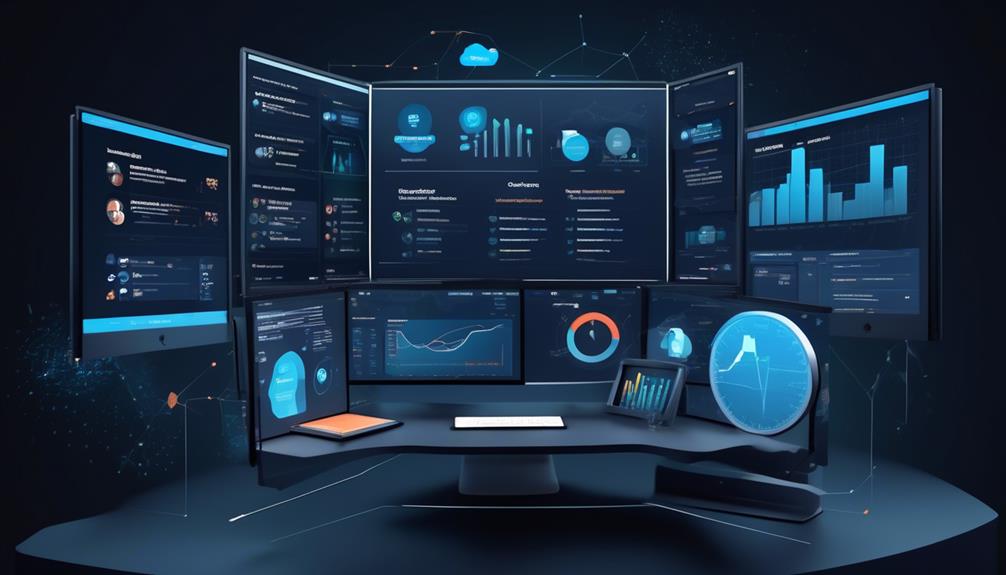

To successfully scale marketing automation across multiple channels, you need to focus on personalized messaging tailored to user behavior and preferences. Incorporate continuous analytics to track and optimize performance, ensuring consistency in your messaging and branding. Use automation tools that integrate data seamlessly and support ongoing testing to refine strategies. When you align these elements, you create a cohesive experience that drives growth—stick with it, and you’ll uncover more ways to maximize your automation efforts.
Key Takeaways
- Integrate analytics tools to unify data and track performance across all channels for informed decision-making.
- Personalize content based on user behavior and preferences for relevance in each channel.
- Ensure consistent messaging, branding, and tone across platforms to build trust and recognition.
- Use continuous A/B testing and iteration to optimize strategies and adapt to changing customer needs.
- Automate workflows that seamlessly coordinate multi-channel interactions, maintaining flexibility and scalability.

Are you ready to take your marketing automation efforts to the next level? Scaling your automation across multiple channels isn’t just about expanding your efforts; it’s about doing so intelligently and effectively. To truly succeed, you need to develop robust personalization strategies that resonate with your audience regardless of where they engage with your brand. Personalization isn’t a one-size-fits-all approach anymore; it requires tailoring content, messaging, and timing based on user behavior, preferences, and past interactions. When you implement strong personalization strategies across channels like email, social media, SMS, and website interactions, you create a seamless customer experience that feels personalized and relevant, boosting engagement and conversions.
However, expanding your automation isn’t just about customizing messages. It’s equally essential to leverage analytics optimization. By continuously analyzing data from all channels, you gain insights into what’s working and what’s not. Analytics optimization allows you to identify patterns, track user journeys, and measure campaign performance in real time. This information helps you refine your personalization strategies, making them more precise and impactful. The more data you gather, the better you can predict customer needs and respond dynamically, creating a more cohesive and targeted customer journey. When scaling automation, guarantee your analytics tools are integrated and capable of providing unified insights across platforms. This integration helps prevent data silos, giving you a holistic view of your audience’s behavior and preferences. Additionally, understanding the importance of projector contrast ratio in image quality can be applied metaphorically to balancing contrast in your marketing messages, ensuring clarity and impact.
As you expand your marketing automation efforts, it’s indispensable to maintain consistency across channels. This means aligning your messaging tone, branding, and value propositions to ensure a unified experience. Automation workflows should be designed to adapt to different channels without losing the core message or personalization elements. This consistency fosters trust and brand recognition, making it easier for customers to connect with your brand regardless of the platform they’re using.
Finally, don’t forget to test and iterate constantly. Use A/B testing and other experimentation methods to see which personalization tactics and channels perform best. With analytics optimization, you can quickly identify successful approaches and scale them further. Remember, automation is not a set-it-and-forget-it process; it’s an ongoing cycle of learning, optimizing, and expanding. By focusing on strong personalization strategies and leveraging analytics, you’ll create a scalable, effective marketing automation system that drives growth across all your channels.

The YouTuber's AI Playbook: Scripts, SEO, Automation & Multi-Channel Systems to Grow Faster and Work Less (The AI Playbook Series 1)
As an affiliate, we earn on qualifying purchases.
As an affiliate, we earn on qualifying purchases.
Frequently Asked Questions
How Do I Measure ROI Across Different Marketing Channels?
You measure ROI across different channels by using attribution models and campaign analytics. Attribution models help you assign credit to each touchpoint, revealing which channels drive conversions. Combine this with campaign analytics to track costs, engagement, and conversions for each channel. Regularly analyze this data to identify high-performing channels and optimize your spending. This approach provides clear insights into your marketing ROI, enabling smarter, data-driven decisions.
What Integration Challenges Arise When Scaling Automation?
When scaling automation, you’ll face integration challenges like data silos and technology compatibility issues. Data silos prevent seamless data flow between platforms, making it hard to get a thorough view of customer interactions. Meanwhile, technology compatibility problems can cause delays or failures in automation processes. To overcome these, make certain your tools support integration standards, prioritize unified platforms, and regularly update systems to maintain smooth, scalable automation across all channels.
How Can Personalization Be Maintained at Scale?
You can maintain personalization at scale by implementing effective personalization strategies and refining customer segmentation. Use data-driven insights to create detailed customer profiles, allowing you to tailor content and messages for each segment. Automate these processes with dynamic content and personalized workflows, ensuring each customer feels uniquely addressed. Regularly analyze engagement metrics to optimize your strategies, keeping personalization relevant and impactful across all channels.
What Are Common Pitfalls in Multi-Channel Automation?
You might think multi-channel automation is straightforward, but common pitfalls include neglecting segmentation strategies and losing content consistency. If you don’t tailor messages based on audience segments, you’ll see lower engagement. Similarly, inconsistent messaging across channels confuses your audience and diminishes trust. Keep segmentation strategies sharp and guarantee content remains aligned across platforms. This way, you maintain relevance, improve customer experience, and maximize your automation’s effectiveness across all channels.
How Do I Train My Team for Multi-Channel Marketing?
To train your team for multi-channel marketing, focus on fostering team collaboration and emphasizing content consistency. Provide hands-on workshops to familiarize them with different platforms and tools. Encourage open communication to share best practices and challenges. Regularly review campaigns together, highlighting the importance of maintaining consistent messaging across channels. This approach guarantees your team stays aligned, adapts quickly, and effectively manages multi-channel automation efforts.
Winning with AI Personalization: The Privacy-First Playbook for E-Commerce Growth
As an affiliate, we earn on qualifying purchases.
As an affiliate, we earn on qualifying purchases.
Conclusion
Now that you’re scaling your marketing automation across multiple channels, you’re about to unleash a marketing storm so powerful, it’ll make hurricanes look like gentle breezes! Your campaigns will reach every nook and cranny of your audience’s lives, turning your brand into an unstoppable force of nature. Get ready to watch your engagement skyrocket faster than a rocket to the moon—your competitors won’t know what hit ‘em! The future of marketing is yours to conquer!

Marketing Analytics: Strategic Models and Metrics
Used Book in Good Condition
As an affiliate, we earn on qualifying purchases.
As an affiliate, we earn on qualifying purchases.

PELLET B Study Guide: California POST Exam Secrets Study Guide, 4 Full-Length Practice Tests, Step-by-Step Review Video Tutorials for the California … Standards) (Mometrix Test Preparation)
As an affiliate, we earn on qualifying purchases.
As an affiliate, we earn on qualifying purchases.