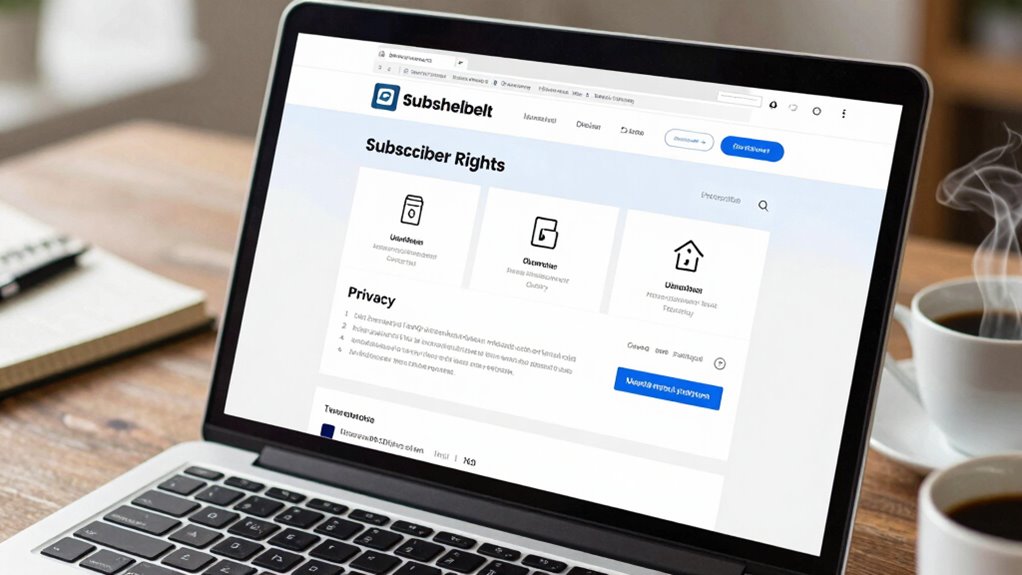

You need a clear, accessible subscriber rights page to build trust and demonstrate transparency with your audience. Make sure it explains how subscribers can manage their preferences, give or withdraw consent, and request data deletion or updates. Use simple language and provide easy access to privacy policies and tools. Address data security and breach procedures proactively. Want to know how to craft a page that fosters trust and stays compliant? Keep exploring for expert guidance.
Key Takeaways
- Clearly outline subscriber rights regarding data access, modification, and deletion to foster transparency and trust.
- Provide simple, accessible tools for managing communication preferences and consent.
- Include comprehensive privacy policies explaining data collection, usage, and protection measures.
- Communicate procedures for data breaches, complaints, and requests to demonstrate accountability.
- Use plain language and accessible design to ensure all subscribers understand their rights and options.

Understanding your subscribers’ rights isn’t just a legal obligation—it’s essential for building trust and loyalty. When you create a subscriber rights page, you’re showing your audience that you respect their privacy and are committed to transparency. This transparency can also help prevent misunderstandings or disputes related to data handling practices. This is why including comprehensive privacy policies is critical—they serve as the backbone of your data practices, explaining what data you collect, why you collect it, and how you protect it. When written clearly, they reassure subscribers that their information is safe with you, and they know exactly what to expect when engaging with your emails.
Building trust starts with transparent privacy policies and clear communication about data handling and user rights.
Consent management is equally important. It’s not enough to simply ask for permission once; you need ongoing, transparent control over how subscribers interact with your communications. Your subscriber rights page should inform them about how they can give, withdraw, or modify their consent at any time. Providing easy-to-use tools for managing preferences demonstrates respect and empowers your audience. When subscribers see they have control over their data, they’re more likely to feel comfortable engaging with your brand, knowing they can opt out or adjust their preferences without hassle.
Make sure your subscriber rights page is accessible and written in plain language. Avoid legal jargon that could confuse or alienate your readers. Instead, focus on clarity—explain precisely what rights they have, how they can exercise those rights, and the steps to do so. Include links to your privacy policies and consent management tools, making it simple for subscribers to find and use them. Transparency about your data practices not only complies with regulations like GDPR or CCPA but also builds credibility. When subscribers trust your honesty, they’re more likely to stay engaged and less likely to mark your emails as spam. Considering vetted recommendations ensures that your practices stay compliant and current with evolving standards.
You should also specify how you handle data breaches or requests for data deletion. Let your subscribers know they can contact you easily if they have concerns or questions. Proactively communicating about data breach protocols not only demonstrates your seriousness about security but also reassures your subscribers of your accountability. Being transparent about cookie management options and how cookies are used further enhances transparency and user control. Additionally, understanding projector technology and its impact on image quality can help you ensure that your visual content aligns with privacy and accessibility standards. Remember, this page isn’t just about legal compliance; it’s about cultivating a relationship based on trust. When subscribers feel confident that you prioritize their privacy and give them control, they’re more inclined to remain loyal and engaged with your brand. Ultimately, a well-crafted subscriber rights page sets the foundation for a respectful, transparent email marketing relationship that benefits both you and your audience.
privacy policy generator for email marketing
As an affiliate, we earn on qualifying purchases.
As an affiliate, we earn on qualifying purchases.
Frequently Asked Questions
How Often Should I Update My Subscriber Rights Page?
You should update your subscriber rights page whenever there are changes to your privacy policies or when new regulations emerge. Regular updates, at least annually, help maintain transparency and foster subscriber engagement. Keep an eye on evolving privacy laws and industry standards, and reflect those updates in your page. This guarantees your subscribers stay informed, trust your brand, and understand how their data is protected, strengthening your relationship with them.
Are There Legal Penalties for Not Having a Subscriber Rights Page?
Yes, not having a subscriber rights page can lead to legal penalties. Without clear privacy policies, you risk violating data protection laws, which can result in fines and legal liabilities. Ensuring you have an all-encompassing subscriber rights page helps demonstrate compliance and protects your brand. It also informs subscribers of their rights, reducing misunderstandings and potential legal issues. Regularly updating this page keeps you aligned with evolving regulations and best practices.
Can I Customize the Rights Page for Different Subscriber Segments?
Ever wondered if you can customize your subscriber rights page for different groups? Yes, you can! Personalization strategies and segmentation benefits allow you to tailor the content, making it more relevant to each segment. By customizing your rights page, you show respect for individual preferences and needs, boosting trust. This targeted approach enhances user experience, encourages engagement, and helps you meet legal requirements more effectively.
How Do I Measure Compliance With My Subscriber Rights Policies?
To measure compliance with your subscriber rights policies, you should monitor your email engagement metrics and regularly audit your processes for data transparency. Keep track of how quickly and effectively you respond to subscriber requests, ensuring consumer privacy is maintained. Use surveys or feedback channels to gauge subscriber satisfaction, and stay updated on regulations. Consistent auditing and transparent communication help you confirm that you’re respecting subscriber rights and maintaining compliance.
What Languages Should My Subscriber Rights Page Be Available In?
You should make your subscriber rights page available in the languages your audience speaks, ensuring broad language accessibility. Focus on accurate translation to prevent misunderstandings and maintain trust. Consider including key languages relevant to your subscriber base, especially if you operate internationally. Regularly review and update translations to reflect any policy changes, ensuring clarity for all users and demonstrating your commitment to respecting their rights across diverse language groups.
Conclusion
Understanding the subscriber rights page isn’t just good practice—it’s essential. By clearly informing your subscribers of their rights, you build trust and foster loyalty. Did you know that 70% of consumers say they’re more likely to engage with brands that respect their privacy? Make sure your rights page is transparent and accessible. When you prioritize your subscribers’ rights, you not only stay compliant but also create a stronger, more genuine connection with your audience.