
📊 Full opportunity report: Your Guide To AI Model Ownership: Tinker, Forge, And Microsoft’s Frontier Tuning on ThorstenMeyerAI.com — validation score, market gap, and execution plan.
TL;DR
This article compares three approaches to AI model ownership and customization—Tinker, Forge, and Microsoft’s Frontier Tuning. Each offers distinct benefits for regulated industries seeking control over their models amid growing compliance demands.
Three leading AI platform providers—Thinking Machines, Mistral, and Microsoft—have unveiled distinct approaches for AI model customization and ownership, targeting regulated industries such as healthcare, finance, and defense. These strategies address the increasing demand for control, compliance, and data sovereignty in high-stakes sectors, marking a significant shift from traditional API-based models.
Thinking Machines’ Tinker offers an open-source, fine-tuning API allowing users to control training processes and export model weights, making it ideal for research-heavy organizations with technical expertise. Its focus on open weights and low-level control caters to labs and enterprises that prioritize flexibility and data sovereignty.
Mistral’s Forge provides a managed, full-lifecycle program emphasizing data sovereignty within European jurisdictions. It enables domain-adaptive pre-training on client data, with models deployed on-premises or in-region, appealing to organizations with strict compliance and sovereignty requirements. Its heavier, enterprise-oriented approach involves embedded engineers and deeper integration.
Microsoft’s Frontier Tuning, announced at Build 2026, combines first-party models with the ability for users to tune weights inside Azure AI Foundry. It emphasizes enterprise-grade data lineage, seamless integration with existing Microsoft tools, and a unified governance console, aiming at regulated sectors seeking control within a familiar platform.
Three ways to own your model: Tinker vs Forge vs Frontier Tuning
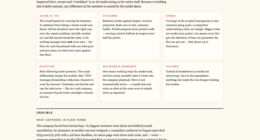
Inkling’s open weights were the headline; Tinker is the business. Three serious players now sell the same promise to the same buyer — a model that’s yours, not a rented API — in three different ways. For health, finance & defense, the differences are the whole decision.
For the regulated, defense or health buyer it reduces to one question: what do you most need to control — the weights, the jurisdiction, or the integration? None is strictly best; they’re bets on what you value. The meta-signal: three of the most sophisticated players independently concluded the future enterprise product isn’t a model you rent — it’s one you own and adapt, with your institutional knowledge as the moat. Tinker = portability & open base · Forge = depth & EU sovereignty · Microsoft = lineage & integration. The only wrong move left is renting a generic model and hoping.
Implications for Regulated Industries and Model Control
The three approaches reflect a broader industry shift toward giving organizations greater ownership and control over AI models, especially in sectors with strict legal and compliance requirements. This development could influence procurement decisions, data governance policies, and the future landscape of AI deployment in sensitive environments.
For organizations in healthcare, finance, defense, and other high-stakes fields, choosing the right platform impacts data privacy, model compliance, and operational security. The ability to fine-tune, own, and govern models internally reduces reliance on external APIs and mitigates risks associated with data leakage or non-compliance.

Fine-Tuning AI: Customizing Large Language Models
As an affiliate, we earn on qualifying purchases.
As an affiliate, we earn on qualifying purchases.
Rise of Model Ownership in High-Regulation Sectors
Historically, most organizations relied on API-based AI services from providers like OpenAI and Google, which limited control over models and data. Recent regulatory frameworks such as GDPR, HIPAA, and the EU AI Act have increased pressure for data sovereignty and model transparency. In response, vendors are developing platforms that enable organizations to own and customize models locally or within secure jurisdictions.
Thinking Machines’ open weights and fine-tuning API, Mistral’s sovereign program, and Microsoft’s integrated platform exemplify this trend. Each caters to different levels of technical maturity and regulatory needs, signaling a move toward more controlled, compliant AI deployment.
Unresolved Questions About Platform Adoption and Security
It remains unclear how widely these new platforms will be adopted outside early adopters and whether they will effectively address all compliance concerns, particularly in complex or highly sensitive environments. Details about long-term support, interoperability, and the actual security guarantees of these solutions are still emerging.
Upcoming Developments and Market Adoption Trends
Expect further announcements from vendors refining their offerings, along with increased pilot programs in regulated sectors. Regulatory bodies may also issue new guidelines affecting how these platforms are evaluated and certified for enterprise use. Monitoring adoption rates and real-world security and compliance outcomes will be key in assessing their impact.
Key Questions
How does Tinker differ from Forge and Frontier Tuning?
Tinker offers open weights and low-level control suitable for research and technical teams, while Forge provides a managed, sovereign deployment model for sensitive data, and Frontier Tuning offers enterprise integration with a focus on compliance and governance within the Microsoft ecosystem.
Which platform is best for highly regulated industries?
Forge and Microsoft’s Frontier Tuning are tailored for regulated sectors, with Forge emphasizing data sovereignty and on-prem deployment, and Microsoft offering integrated governance and compliance tools within Azure.
What are the main benefits of owning and fine-tuning models locally?
Ownership and local fine-tuning reduce reliance on external APIs, improve data privacy, enable compliance with strict regulations, and allow organizations to customize models for their specific domain needs.
Are these platforms ready for widespread enterprise deployment?
While early signs are promising, broader adoption depends on further validation, regulatory approval, and the development of best practices for secure, compliant deployment at scale.
What risks are associated with these new model ownership approaches?
Potential risks include data security vulnerabilities, misconfiguration, and the need for significant technical expertise to manage and maintain the models properly.
Source: ThorstenMeyerAI.com