Most teams overlook the importance of creating a detailed customer lifecycle email map that aligns your messages with each stage of the customer journey. Without it, your campaigns risk being generic and ineffective, missing opportunities to nurture relationships and boost conversions. Building this map helps you identify gaps, personalize content, and improve engagement over time. Keep exploring to discover how a strategic customer map can transform your email marketing efforts.

Get business pricing on office and shipping supplies
- Business-only prices and quantity discounts
- Tax-exempt purchasing
- Multiple users, one account, clear invoices
Key Takeaways
- Many teams overlook the importance of a detailed customer lifecycle email map, missing opportunities for targeted engagement.
- Building a comprehensive map clarifies communication gaps and guides personalized messaging at each customer stage.
- Without a mapped journey, campaigns risk being generic, reducing relevance and customer connection.
- Developing the map requires initial effort but significantly improves campaign effectiveness and ROI.
- Continuous refinement using data-driven insights ensures the customer journey remains aligned and impactful.
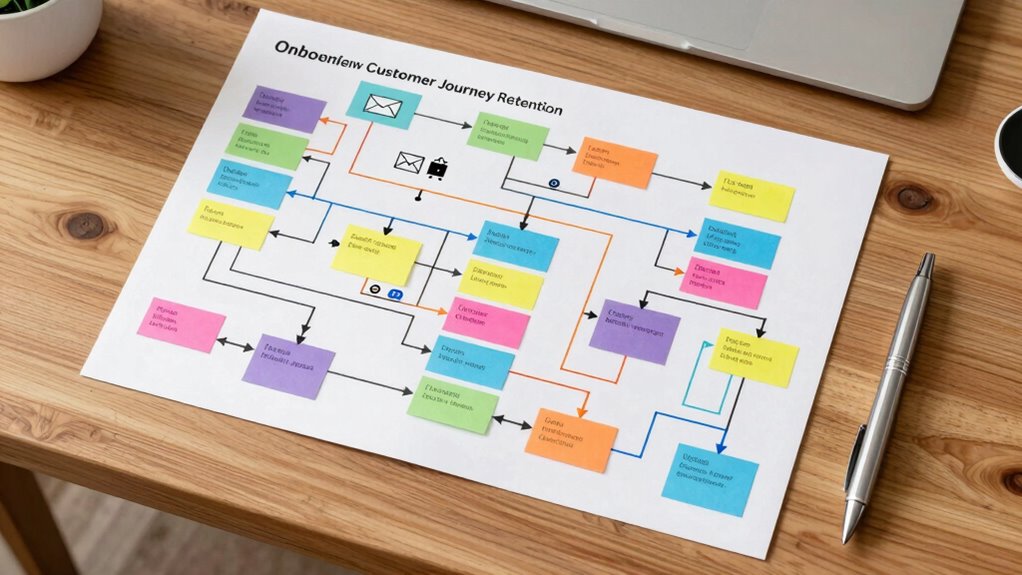
Understanding your customers’ journey is vital for crafting effective email marketing strategies, and a Customer Lifecycle Email Map helps you do just that. This map is a visual tool that outlines every stage your customer passes through, from awareness to loyalty, enabling you to tailor messages that resonate at each step. This approach ensures your messaging remains aligned with the customer’s evolving needs and preferences. Many teams overlook this key step because it requires upfront effort, but without it, your campaigns risk being generic and ineffective. When you build a well-structured map, you can align your personalization strategies directly with the specific needs and behaviors of your audience. Personalization isn’t just about inserting a name into an email; it’s about delivering the right message at the right moment, based on where they are in their journey. For instance, a new subscriber might respond better to introductory content, while a long-term customer could be more engaged by loyalty rewards. Tracking engagement metrics at each stage helps you refine these strategies, revealing what truly motivates your audience to act. Engagement metrics like open rates, click-through rates, and conversions provide real-time feedback, allowing you to adjust your messaging to improve relevance and effectiveness. Without a Customer Lifecycle Email Map, you’re fundamentally guessing what your customers want, which leads to wasted resources and missed opportunities. Instead, when you understand the different touchpoints and behaviors, you can craft targeted campaigns that nurture relationships, boost conversions, and foster brand loyalty. A map also helps you identify gaps in your communication flow, ensuring no stage is neglected. For example, you might realize that your onboarding emails lack personalization, causing new users to disengage early. Addressing such gaps with tailored content improves overall engagement and long-term retention. Building this map takes effort initially, but the payoff is significant: it offers a clear blueprint for your email marketing efforts, making your campaigns more strategic and customer-centric. When each message is aligned with the customer’s current phase, they’re more likely to find value in what you send, which increases engagement metrics and, ultimately, revenue. Furthermore, leveraging content formats within your map can enhance how you communicate across different stages, making your messaging more dynamic and engaging. Incorporating data-driven insights into your strategy allows for continuous optimization and better understanding of customer behaviors. Additionally, understanding the importance of content quality can significantly impact how your messages are perceived and acted upon. Without it, your emails risk feeling disjointed or intrusive, leading to higher unsubscribe rates and lower ROI. In fact, customer journey mapping is a foundational component of effective marketing that many teams underestimate or neglect altogether. Building this detailed map is akin to understanding the flat iron bike market; knowing the specifics helps you craft more targeted and effective campaigns. In short, most teams never build this detailed map, yet doing so can be a game-changer. It empowers you to develop smarter, more personalized campaigns that truly speak to your audience’s needs, guiding them seamlessly through the customer journey. By investing in this foundational step, you set the stage for a more effective, data-driven email marketing strategy that drives sustained growth and strengthens customer relationships.
customer lifecycle email marketing tools
As an affiliate, we earn on qualifying purchases.
As an affiliate, we earn on qualifying purchases.
Frequently Asked Questions
How Do I Start Creating My Customer Lifecycle Email Map?
Start by analyzing your customer data to identify key segments, focusing on customer segmentation. Map out the different stages of their journey, from awareness to loyalty. Then, craft personalized messaging strategies for each phase, applying personalization strategies that resonate. Use automation tools to deliver targeted emails at the right moments. Continuously review performance, refine your segments, and tailor content, ensuring your customer lifecycle email map effectively nurtures relationships and boosts engagement.
What Tools Are Best for Designing These Email Maps?
You should choose tools that excel at visual storytelling and mapping the user journey. Platforms like Lucidchart, Miro, or Figma allow you to create detailed, interactive diagrams that clearly illustrate each touchpoint. These tools help you visualize the customer lifecycle, identify gaps, and plan targeted email campaigns. Pick one that fits your team’s workflow, offers collaboration features, and makes it easy to adapt as your strategy evolves.
How Often Should I Update My Customer Lifecycle Email Map?
You should update your customer lifecycle email map regularly, ideally every few months, to align with evolving personalization strategies and segmentation techniques. This guarantees your messaging remains relevant and engaging as customer behaviors and preferences change. Keep an eye on analytics to identify when updates are needed, and test new segmentation approaches to improve engagement. Consistent updates help you stay connected with your audience and optimize your email marketing efforts effectively.
Can This Map Be Integrated With Existing Marketing Automation Platforms?
Yes, your customer lifecycle email map can be integrated with existing marketing automation platforms. You’ll want to focus on automation integration and platform compatibility to guarantee smooth syncing of data and workflows. Check if your platform supports API connections or native integrations with your email mapping tools. This way, you automate personalized messaging effectively across different stages, saving time and enhancing customer engagement without disrupting your current marketing setup.
What Common Mistakes Should I Avoid When Building the Map?
Avoid common pitfalls like neglecting customer segmentation and personalization strategies, which can make your map feel like a one-size-fits-all hat. Don’t overlook updating your map regularly or assuming one message fits all stages. Instead, tailor content for different segments and customer behaviors. Keep your approach flexible, avoiding rigid plans, so your emails truly resonate. Failing to do this risks losing engagement and missing out on valuable customer relationships.
Conclusion
So, you’d think most teams would prioritize mapping the customer lifecycle, right? After all, understanding your customers’ journey is the key to better engagement and loyalty. But ironically, many overlook this step entirely. Instead, they send generic emails and hope for the best. If you want to stand out and truly connect, building that email map isn’t just smart — it’s essential. Don’t be the team that’s left guessing.
Halloween Picks
halloween
As an affiliate, we earn on qualifying purchases.