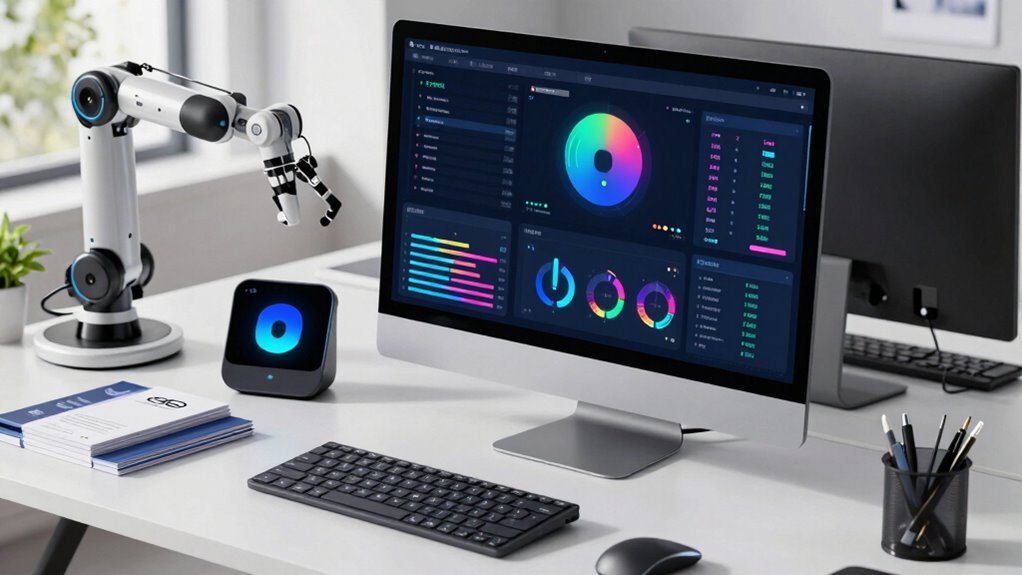

Smart brands start by automating customer engagement tools first, such as chatbots, email marketing, and CRM systems. These tools enable you to connect with your audience in real time, personalize messages, and gather valuable data on customer preferences. This focus helps you build stronger relationships, boost loyalty, and deliver tailored experiences quickly. If you keep exploring, you’ll discover how automating other areas like supply chain can further elevate your business.

Get business pricing on office and shipping supplies
- Business-only prices and quantity discounts
- Tax-exempt purchasing
- Multiple users, one account, clear invoices
Key Takeaways
- Prioritize customer engagement automation through chatbots, email marketing, and CRM systems for real-time personalized interactions.
- Automate supply chain processes like inventory management and order fulfillment to ensure faster delivery and reduce stock issues.
- Implement automation in sales and marketing workflows to nurture relationships and gather valuable customer data.
- Streamline backend operations to increase efficiency and free teams for strategic initiatives.
- Focus on automating core touchpoints that directly impact customer satisfaction and operational resilience.

In today’s fast-paced market, smart brands recognize that automation isn’t just a trend—it’s a necessity for staying competitive. You can’t afford to fall behind in customer engagement or supply chain management, especially when customers expect quick, personalized experiences and seamless service. The first thing you should automate is your customer engagement process. Automated tools like chatbots, email marketing, and CRM systems make it easier to connect with your audience in real-time, nurturing relationships without adding extra workload. These systems gather data on customer preferences, behaviors, and feedback, allowing you to tailor your messaging and offers more effectively. This not only improves customer satisfaction but also boosts loyalty and lifetime value.
Automate customer engagement with chatbots, email, and CRM to personalize experiences and boost loyalty effortlessly.
Next, look at your supply chain. Automating supply chain management is crucial for maintaining efficiency and reducing errors. With tools like inventory management systems, automated order processing, and real-time tracking, you get better visibility into stock levels, delivery statuses, and supplier performance. This means fewer stockouts, faster fulfillment, and lower operational costs. Automation in supply chain management also helps predict demand trends, so you can plan more accurately and adjust stock levels proactively. When your supply chain runs smoothly, your customers experience faster delivery times and fewer frustrations, reinforcing your reputation as a reliable brand.
While customer engagement and supply chain are top priorities, don’t forget that automation can and should support other areas like sales, marketing, and backend operations. However, starting with these two ensures you’re addressing the core touchpoints that directly impact customer satisfaction and operational success. Automating customer engagement allows you to deliver personalized experiences at scale, freeing up your team to focus on strategic initiatives. Meanwhile, streamlining your supply chain minimizes delays and costs, ensuring your products reach customers promptly and intact. These automations work together to create a more resilient, responsive business model.
Ultimately, the goal is to remove manual bottlenecks that slow down your growth. By automating customer engagement and your supply chain first, you’re setting a strong foundation for scalable success. Customers will appreciate the faster, more personalized service, and your operations will become more efficient and adaptable. As a smart brand, you recognize that automation isn’t about replacing human touch but enhancing it—allowing you to deliver better experiences and build stronger relationships, all while reducing costs and increasing agility. That’s how you stay ahead in a competitive landscape.
As an affiliate, we earn on qualifying purchases.
Frequently Asked Questions
How Do I Identify Which Processes to Automate First?
To identify which processes to automate first, start with a thorough process assessment. Look for repetitive, time-consuming tasks that cause bottlenecks or errors. Prioritize processes that will deliver quick wins and significant efficiency gains. Focus on areas where automation can improve accuracy and speed. By setting clear priorities based on potential impact, you guarantee your automation efforts maximize value and streamline your operations effectively.
What Tools Are Best for Small Business Automation?
Think of the right tools as your secret weapon. For small businesses, consider automation platforms like HubSpot or Mailchimp that excel in personalized marketing, helping you target customers effectively. For inventory management, tools like TradeGecko or Zoho Inventory streamline stock control. These solutions are user-friendly and affordable, making automation feel like a walk in the park while freeing you up to focus on growing your business.
How Does Automation Impact Customer Experience?
Automation enhances your customer experience by enabling personalization strategies, making interactions more relevant and timely. It allows you to quickly respond to customer feedback, addressing concerns faster and improving satisfaction. By automating routine tasks, you free up time to focus on building meaningful relationships. This seamless, personalized approach creates a positive impression, increases loyalty, and encourages repeat business, ultimately strengthening your brand’s reputation and customer trust.
What Are Common Pitfalls in Initial Automation?
You should watch out for common pitfalls like relying on manual workflows that aren’t optimized for automation, which can cause inefficiencies. Additionally, neglecting employee training often leads to mistakes and resistance. To avoid these issues, you need to streamline manual processes first and invest in thorough training so your team adapts smoothly. This approach minimizes errors and maximizes automation’s benefits, ensuring a successful shift.
How Can Automation Improve Team Productivity?
Automation can boost your team’s productivity by up to 30%, streamlining workflow optimization and reducing manual tasks. By automating repetitive processes, you free up employees to focus on strategic and creative projects, increasing engagement. This shift not only accelerates project completion but also enhances employee satisfaction. As a result, your team becomes more efficient, motivated, and better equipped to handle growth and challenges seamlessly.
Conclusion
By automating the essentials first, you’re not just streamlining your business—you’re launching it into the stratosphere of efficiency. Think of automation as your secret weapon, transforming mundane tasks into lightning-fast processes that save you hours each day. When you prioritize smart automation, you harness unstoppable momentum that leaves competitors in the dust. So, don’t wait—embrace automation now and watch your brand soar like a rocket heading straight for greatness!
Fall Picks
fall essentials
As an affiliate, we earn on qualifying purchases.