📊 Full opportunity report: Are Supplier Invoice Errors Affecting Your Restaurant’s Food Costs? on IdeaNavigator AI — validation score, market gap, and execution plan.

Get business pricing on office and shipping supplies
- Business-only prices and quantity discounts
- Tax-exempt purchasing
- Multiple users, one account, clear invoices
TL;DR
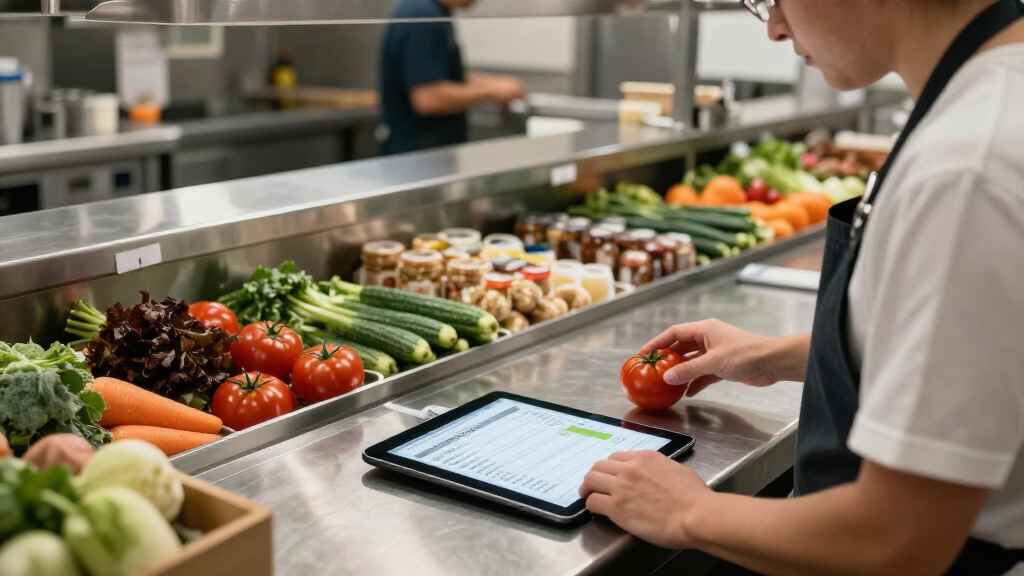
A proposal for independent multi-unit restaurant groups calls for software to compare supplier invoices with agreed prices, purchase orders and delivery records, then track credit requests. The workflow is an idea to validate, not a proven product or documented savings result; a proposed test would review 90 days of records from three groups.
IdeaNavigator AI has proposed an invoice-auditing workflow for independent multi-unit restaurant groups that would check supplier bills against contracts, orders and deliveries. The proposal identifies possible errors such as prices above agreed rates and full charges for short-shipped cases, but it provides no completed audit results or verified savings; it recommends testing the idea against 90 days of records from three restaurant groups.
The proposed tool is aimed at a purchasing director or controller at a group buying food and beverages from broadline and specialty suppliers. The problem description says such operators can process hundreds of supplier invoices a week. Errors may include contracted or quoted prices not being applied, substitutions billed at higher prices, and increases in line-item prices between orders. Those are the proposal’s identified risks, not measured findings about a particular restaurant group.
The suggested minimum product would accept electronic invoices where available and PDFs or photographs processed with optical character recognition. It would load supplier contracts or quote sheets and the restaurant group’s order guide, then compare each line’s ordered, received, billed and agreed-price details. The system would flag potential overcharges, short shipments billed in full, higher-priced substitutions and week-to-week price changes.
It would also draft credit requests for suppliers and track them until a credit appears on a later invoice. The proposed commercial model is a monthly fee per location, with an optional fee tied to recovered credits. Neither pricing nor recovery rates are supplied, and the proposal does not report that the product has been built or adopted.
How Billing Errors Could Affect Margins
If the flagged discrepancies occur, they could raise a restaurant group’s food costs without a corresponding change in menu prices or portions. An invoice that exceeds an agreed price, or bills for goods not received, can reduce the margin on affected purchases. Finding and documenting such cases may also take staff time, especially when invoices, order records and delivery checks are handled separately.
The proposal’s value to operators would depend on whether the credits actually recovered exceed the costs of using the service and reviewing exceptions. A flagged difference is not automatically an error: suppliers may have approved a substitution, updated a price, or applied terms not reflected in the data provided to the software. The operator would need records and supplier confirmation before treating a discrepancy as recoverable money.
For restaurant controllers and purchasing teams, the practical question is not simply how many lines the system flags, but how many are confirmed, credited and attributable to its review. Net recovered credits per location, after subscription and staff costs, would be a more useful measure of the proposal’s business case than raw alerts.
Popular right now

Philips 2200 Series Fully Automatic Espresso Machine with Classic Milk Frother, 2 Coffee Varieties, Intuitive Touch Display, Ceramic Grinder

Roborock Robot Vacuum and Mop Combo with Self-Empty Dock

eufy C28 Robot Vacuum Cleaner and Mop for Pet Hair, 15,000 Pa
As an affiliate, we earn on qualifying purchases.
The Proposed 90-Day Invoice Test
IdeaNavigator AI frames the product as a narrow first workflow for one buyer: an independent restaurant group with multiple locations and purchases from several food and beverage suppliers. Rather than beginning with a broad procurement platform, the suggested scope centers on comparing four records for each item: what was ordered, received, billed and agreed in the contract or quote.
The proposal cites a USDA Economic Research Service Food Price Outlook dated September 25, 2026 as its reason for timing. It says the outlook forecasts 2026 retail beef and veal prices to rise 9.4% and wholesale beef prices to rise 8.5%, while food-away-from-home prices are forecast to increase 3.5%. These are forecasts cited in the proposal, not reported final outcomes. The comparison is used to argue that rising protein costs could make it harder for restaurants to absorb additional purchasing costs.
To test demand and potential savings, the proposal recommends reviewing 90 days of paid invoices alongside contracts or quote sheets for three restaurant groups. The review would total over-agreed-price charges, short-shipped cases billed in full and price increases over time. The suggested decision rule is to proceed only if documented credits per location clearly exceed the planned subscription fee. No results from such a test are provided.
Savings and Adoption Remain Unproven
No audit outcomes are reported. The proposal does not establish how often supplier billing errors occur, how much money restaurant groups could recover, or whether credits would exceed software and labor costs. It also does not identify participating restaurant groups, suppliers, or a product currently operating in the market.
Several practical details remain open: how the system would handle inconsistent item names and units, how accurately it could read photographed invoices, and how it would distinguish an incorrect charge from an authorized price change or substitution. The proposal also does not specify how quickly suppliers typically resolve credit requests or whether disputed amounts would be credited on later invoices.
The USDA figures are forecasts, and the material does not establish that those price changes have occurred. Nor does a broader rise in food prices show that any particular supplier invoice is wrong. Whether the product can identify verifiable, recoverable discrepancies remains the central question.
Three-Group Audit Would Test Demand
The next step described is a 90-day retrospective review involving paid invoices and supplier contracts or quote sheets from three restaurant groups. The analysis would categorize potential discrepancies and calculate documented credit amounts by location. The proposal says development should proceed if those credits clearly outweigh the planned subscription price.
No timeline, participating groups or launch date is provided. If the test is carried out, useful reporting would distinguish amounts initially flagged from amounts confirmed by operators and suppliers, and from credits ultimately received. Until those results are available, the workflow should be treated as a proposed way to test invoice controls—not as a demonstrated source of savings.
Source: IdeaNavigator AI
Key Questions
What invoice problems would the proposed tool flag?
It is designed to flag charges above agreed prices, cases billed in full despite short shipment, substitutions charged at higher prices and line-item price increases between orders. A flag would need review before being treated as a confirmed error.
Has the system recovered money for restaurant groups?
The proposal reports no completed audits or recovered-credit totals. It recommends testing the idea using 90 days of records from three restaurant groups.
How would the proposed audit work?
It would compare invoice lines with supplier contracts or quotes, order guides, purchase orders and delivery records. The proposed system would then draft supplier credit requests and track whether credits appear on later invoices.
Why does the proposal focus on food prices?
It cites USDA ERS forecasts for 2026 that put retail beef and veal price growth at 9.4% and wholesale beef at 8.5%, compared with 3.5% for food-away-from-home prices. These are forecasts cited by the proposal, not final results or proof that an invoice is incorrect.
What would show that the idea is worth developing?
The proposed test would measure documented credits per location and compare them with the planned subscription fee. A stronger assessment would also account for review costs and separate suspected discrepancies from supplier-confirmed credits actually received.
Source: IdeaNavigator AI