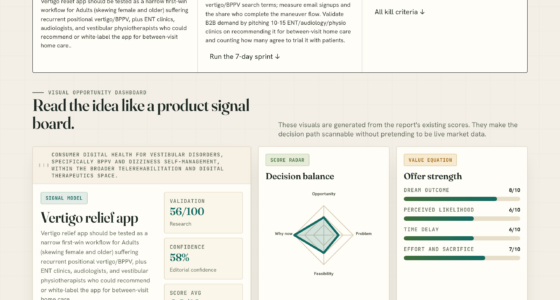
📊 Full opportunity report: QAtrial: Compliance That Shows Its Work on ThorstenMeyerAI.com — validation score, market gap, and execution plan.

Get business pricing on office and shipping supplies
- Business-only prices and quantity discounts
- Tax-exempt purchasing
- Multiple users, one account, clear invoices
TL;DR
QAtrial has developed a compliance platform that emphasizes provenance tracking for AI in regulated life sciences. It aims to address regulatory concerns by ensuring every AI-generated record is attributable and auditable, supporting validation efforts.
QAtrial has developed a compliance platform that enforces provenance tracking for AI-assisted activities in regulated life sciences environments. This development aims to help organizations align AI use with strict regulatory requirements, such as those outlined in 21 CFR Part 11 and EU Annex 11, by ensuring every AI-generated record is attributable, reviewed, and signed off by a human. The platform emphasizes transparency and auditability, addressing a key challenge in integrating AI into validated systems.
QAtrial’s platform is designed to support regulated QA workflows in the life sciences sector, including CAPA, electronic signatures, and traceability matrices. Its core feature is the provenance layer, which stamps each AI-assisted output with details about the model, version, purpose, and timestamp, making the process fully auditable. The system is built to be provider-agnostic, supporting models from OpenAI and Anthropic, and allows explicit routing to different models for different tasks.
According to the developers, QAtrial does not validate or certify compliance but supports organizations’ validation programs by providing transparent, attributable records of AI activity. The platform is developed privately and is not publicly available. It is intended to be integrated into existing regulated workflows, reducing the manual drudgery of traceability and documentation while maintaining human oversight and signatures.
QAtrial — compliance that shows its work
You can’t put an unaccountable black box into a regulated process. So every AI-assisted output records which model produced it — reviewed, e-signed, and traceable.
no validation risk
Independent commentary, produced with AI assistance under human editorial oversight. The views are the author’s own and may change. QAtrial is developed privately and is not publicly available. It is designed to align with frameworks including 21 CFR Part 11 and EU Annex 11 but is not validated, certified, or a guarantee of regulatory compliance, and is not legal or regulatory advice — computer-system validation and all regulatory obligations remain the user’s responsibility. AI-assisted outputs may contain errors and require qualified human review. Product and company names are trademarks of their respective owners; mention does not imply endorsement.
Implications of Provenance-First AI in Regulated QA
This development is significant because it addresses a fundamental barrier to AI adoption in regulated environments: trust and auditability. By ensuring every AI-generated record can be traced back to its origin, QAtrial provides a framework that could enable wider use of AI tools without compromising compliance. This approach may influence future standards for AI deployment in life sciences, potentially reducing manual effort and increasing confidence in AI-assisted decision-making.
As an affiliate, we earn on qualifying purchases.
Regulated QA Challenges and the Role of Provenance
In regulated industries like pharmaceuticals and biotech, quality assurance systems rely heavily on validated, traceable records. These systems must demonstrate, on demand, that every action and decision is attributable, unalterable, and properly signed off. The integration of AI introduces risks due to its opacity and version variability, raising concerns about compliance and audit readiness.
Historically, AI tools have been viewed skeptically in these environments because they lack inherent traceability. QAtrial’s focus on provenance aims to bridge this gap, aligning AI outputs with existing validation and audit standards.
“Provenance tracking is the key to making AI usable in regulated environments. Our platform ensures every AI-assisted action is attributable and auditable, meeting the strictest compliance standards.”
— Thorsten Meyer, QAtrial developer
Remaining Questions About QAtrial’s Regulatory Acceptance
It is not yet clear how regulatory agencies will view or evaluate QAtrial’s provenance approach in formal audits. While the platform supports compliance principles, formal validation and certification processes are still pending, and acceptance by authorities remains to be seen.
Additionally, the extent to which organizations will adopt and integrate this tool into their existing validated systems is still uncertain, as is the long-term support and community engagement around the platform.
Next Steps for QAtrial and Industry Adoption
QAtrial plans to continue developing its platform, incorporating user feedback, and demonstrating its effectiveness through pilot programs. Regulatory bodies and industry groups may begin evaluating the tool’s approach to provenance and auditability in upcoming reviews.
Organizations interested in deploying QAtrial will likely test its capabilities within their validation frameworks, and further validation studies or case reports may emerge to support broader acceptance.
Key Questions
Can QAtrial replace existing validation processes?
No, QAtrial is designed to support and enhance validation efforts by providing transparent provenance tracking. It does not replace validation but helps meet compliance requirements more efficiently.
Is QAtrial suitable for all regulated life sciences companies?
While designed with broad applicability, organizations must assess whether QAtrial fits within their specific validation and compliance frameworks. It is intended as a support tool, not a certified solution.
Will regulators accept provenance-based AI tools like QAtrial?
Regulatory acceptance is still developing. QAtrial’s approach aligns with existing standards, but formal approval or recognition by agencies has not yet been established.
Is the platform open-source and self-hostable?
QAtrial is developed privately and is not publicly available.
Source: ThorstenMeyerAI.com
Evergreen bestsellers Picks
bestsellers
As an affiliate, we earn on qualifying purchases.