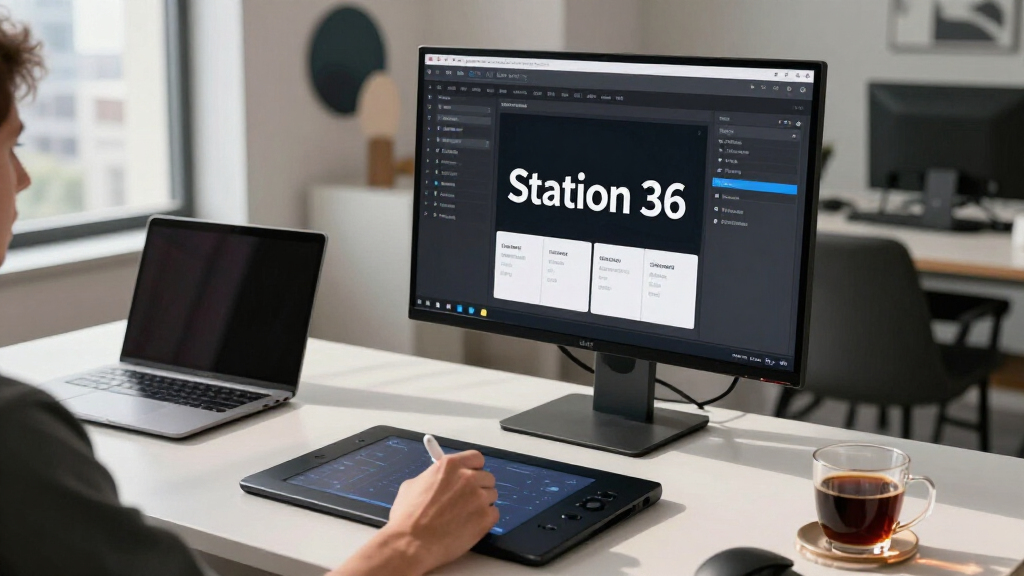
📊 Full opportunity report: How AI Transformed The Design Of Station 36’S Shortwave Numbers Platform on ThorstenMeyerAI.com — validation score, market gap, and execution plan.
TL;DR
Artificial intelligence has completely transformed the design of Station 36’s Shortwave Numbers Platform, creating an immersive, vintage radio listening experience. The site now features AI-crafted visuals, interactive controls, and authentic audio simulations, offering users a realistic glimpse into secret shortwave signals.
Artificial intelligence has fully redesigned the Station 36 Shortwave Numbers Platform, a web-based immersive experience that simulates a vintage radio listening post. This transformation introduces AI-crafted visuals, tactile controls, and authentic audio layers, offering users a realistic encounter with secret shortwave signals. The redesign aims to blend historical aesthetic with modern web technology, making the experience accessible and engaging for a broad audience.
The new design employs AI-generated SVG architecture, featuring a vintage bakelite control panel, a dynamically tuned dial, and a spectral waterfall visualization. The site uses Web Audio API to synthesize static hiss, carrier hum, heterodyne whistles, and Morse code signals, activated through a user-controlled power switch. The interface is built entirely with HTML, CSS, and JavaScript, with no external dependencies, ensuring a seamless, authentic experience. The visual elements include detailed gradients, pattern fills, and interactive controls that mimic real radio hardware, all crafted by AI based on a detailed art-direction brief.
According to the creators, the redesign emphasizes tactile interaction, allowing users to drag the tuning dial, watch the spectral waterfall scroll, and listen to authentic signals. The site also features an intercept log with redactions and a hidden frequency that reveals a secret message, adding an element of mystery. The entire project was developed in three phases: initial build, external critique, and artistic elevation, resulting in a highly polished, museum-quality digital artifact.
Revolutionizing Vintage Radio Experiences with AI
This redesign demonstrates how AI can elevate digital recreations of historical technology, blending authenticity with interactivity. It offers a new way for users to engage with Cold War-era radio culture, fostering educational and nostalgic interest. The project also showcases the potential for AI to assist in detailed, precise design work that traditionally requires manual craftsmanship, opening avenues for digital preservation and experiential learning.

Bluetooth Retro Radio for Classic Vehicles: Single Din Vintage Car Stereo
- Bluetooth Connectivity: Seamless wireless pairing and hands-free calls
- Built-in Microphone: Voice pickup for clear calls
- Multimedia Playback: USB and AUX inputs for various audio files
As an affiliate, we earn on qualifying purchases.
As an affiliate, we earn on qualifying purchases.
From Concept to Digital Reality: The Evolution of Station 36
Station 36 has been a web-based project since its inception, aiming to evoke the experience of a Cold War-era shortwave listening post. Previously, it existed as a static or semi-interactive site, but recent advancements in AI-driven design enabled a complete overhaul. The new platform integrates AI-generated SVG controls, realistic audio synthesis, and immersive visualizations, aligning with a broader trend of using AI to enhance digital recreations of historical artifacts. The project is part of a larger series of AI-crafted websites that explore different facets of history through innovative web interfaces.
Developed by a team following a strict art-direction brief, the platform now offers an unprecedented level of detail and interactivity, making it a model for future digital reconstructions of vintage technology.
“The AI-driven redesign of Station 36’s platform exemplifies how modern technology can faithfully recreate the tactile and auditory nuances of vintage radio equipment.”
— an anonymous researcher
Unresolved Aspects of AI-Driven Radio Recreation
It is not yet clear how the AI-generated elements will perform across different devices or browsers, or how users will respond to the realism and interactivity. The long-term durability of the AI-crafted SVG and audio components remains untested outside the initial deployment. Additionally, the extent to which this approach can be scaled or adapted for other historical reconstructions is still under exploration.
Future Developments and Broader Applications of AI Design
The creators plan to monitor user interactions and gather feedback to refine the platform further. They also intend to explore applying similar AI-driven design techniques to other vintage or complex technical interfaces, potentially expanding this approach into educational tools or digital museums. Continued development may include enhanced audio realism, expanded interactivity, and broader accessibility features.
Key Questions
How does AI contribute to the design of Station 36’s platform?
AI was used to generate detailed SVG controls, craft realistic visual textures, and synthesize authentic audio signals, creating a highly immersive experience that mimics vintage radio hardware and signals.
Can users interact with the platform without technical knowledge?
Yes. The platform features intuitive drag-to-tune controls, visual feedback, and switch-based audio activation, designed for broad accessibility and ease of use.
Is the audio experience fully authentic?
The audio employs Web Audio API to synthesize static, hums, whistles, and Morse code signals, aiming to replicate the sounds of a real shortwave receiver, though it is digitally generated.
Will this AI-driven approach be used for other projects?
Developers plan to explore applying similar AI techniques to recreate other vintage technologies and historical interfaces, expanding the scope of digital preservation and interactive education.
Source: ThorstenMeyerAI.com