📊 Full opportunity report: A New Approach To Grading Form In Youth Sports on IdeaNavigator AI — validation score, market gap, and execution plan.

Get business pricing on office and shipping supplies
- Business-only prices and quantity discounts
- Tax-exempt purchasing
- Multiple users, one account, clear invoices
TL;DR
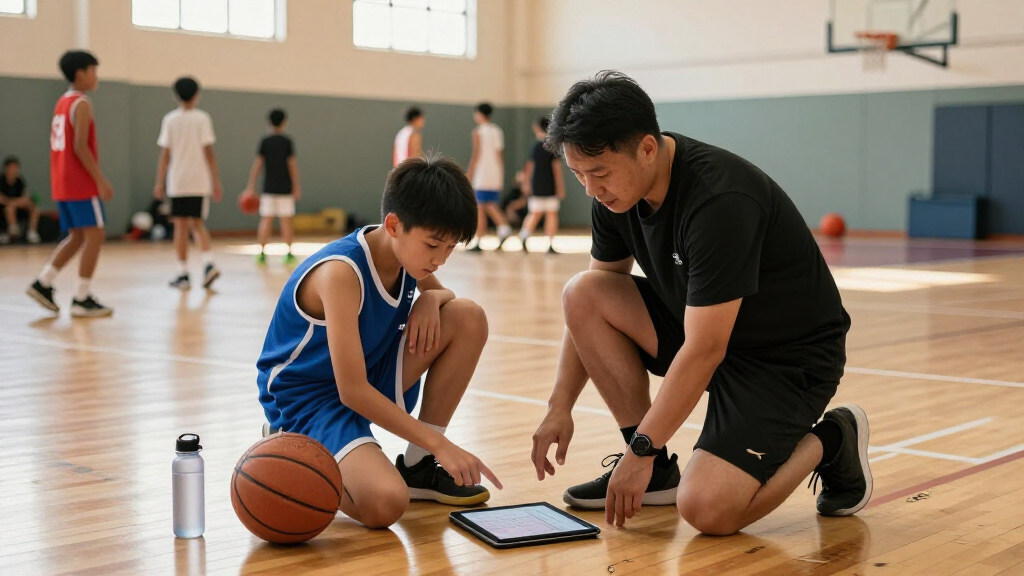
A product proposal calls for a phone-based app that grades young athletes’ movements against pro-derived reference mechanics and recommends one drill per session. It suggests testing baseball hitting with 100 children and having certified coaches check the app’s assessments; no pilot results or product launch are reported.
IdeaNavigator AI’s proposal outlines a phone-based form-grading app for young athletes who practice without private coaches, with an initial test focused on baseball hitting. The concept would compare a child’s recorded movement with pro-derived reference mechanics, grade selected checkpoints and recommend one drill; the proposal calls for certified coaches to review the app’s assessments across 100 children.
According to IdeaNavigator AI’s proposal, the suggested workflow is to film a repetition, then show how the athlete’s motion compares with a reference profile for the skill. The app would grade a limited set of checkpoints, with examples including hip rotation, release angle and stride. It would then identify the largest gap and prescribe one drill for that session, rather than provide a long list of corrections.
The proposal frames the initial product around baseball hitting, not a broad launch across youth sports. To test it, IdeaNavigator AI recommends comparing the app’s grades with assessments by certified coaches for 100 children. The proposal does not report that the test has taken place or provide accuracy results.
IdeaNavigator AI suggests a family subscription for each sport, with a separate coach tier for team use. These are proposed revenue options, not confirmed pricing or an announced commercial product. The proposal specifies no company launch, development schedule or customer uptake.
A Lower-Cost Option for Practice
IdeaNavigator AI’s proposal identifies a practical gap for families whose children repeat movements without a private coach watching each session. It cites private coaching costs of $75 to $150 per session and argues that app-based feedback could make some form guidance available through a free tier. The stated price range is part of the proposal’s rationale, not a survey of coaching costs across all locations.
If the tool can identify useful corrections reliably, it could give parents and players a way to focus practice between lessons. But grading movement is not the same as establishing that an athlete is safe, improving, or ready for competition. The proposed coach audit matters because a misleading score could direct a child toward an unhelpful correction. The product’s value would depend on whether its feedback is accurate and understandable for children and families.
The idea also has implications for coaches and teams. IdeaNavigator AI proposes a coach-focused tier that might support use across a group, but the proposal does not explain how coaches would review recordings, manage individual differences or fit the app into training. Those questions affect whether the product complements instruction or risks being treated as a substitute for it.
As an affiliate, we earn on qualifying purchases.
Phone-Based Motion Analysis
IdeaNavigator AI’s proposal says pose-estimation models can now run on phones with enough accuracy to compare a young athlete’s mechanics with reference motion profiles. It presents this claim as the reason a free-tier product may be feasible. The proposal names no model, technical benchmark or independent validation, so the claimed level of accuracy remains to be demonstrated for this use.
Rather than begin with several sports, IdeaNavigator AI recommends narrowing the first test to baseball hitting and a defined group of 100 children. The proposal says coaches could compare their assessments with app-generated grades before the concept expands. It offers no prior pilot findings and does not describe how the pro-derived reference profiles would be selected or adapted for athletes of different ages and abilities.
Accuracy and Safety Still Unproven
IdeaNavigator AI reports no product or pilot results. Its proposal does not identify a developer, a release date, an existing app or coaches who have agreed to take part. It also provides no evidence that phone-based analysis can consistently assess the named checkpoints in children’s movements under ordinary recording conditions.
Key design questions remain unanswered in the proposal: how reference mechanics would account for a child’s age, size, experience or physical development; how the app would handle poor camera angles; and how it would distinguish a genuine technique issue from normal variation. The proposal also does not explain how recordings of minors would be stored, protected or shared. Until testing addresses those points, claims about reducing injury risk or preventing flaws from becoming habits should be treated as rationale for the idea, not established outcomes.
Coach Review Is the Proposed Test
IdeaNavigator AI proposes a baseball hitting pilot involving 100 children, with certified coaches auditing the app’s grades against their own assessments. The proposal gives no timing, participating coaches or recruitment plan, so it is not clear when or whether the evaluation will begin.
A useful report of any future test would need to explain how children were selected, what standards coaches used, how disagreements were handled and whether results differed by age or experience. It would also need to describe how the app presents corrections and protects young users’ video. Until those details or pilot findings are available, the proposal remains an untested product concept rather than a validated training service.
Source: IdeaNavigator AI proposal
Key Questions
What would the proposed app do?
According to IdeaNavigator AI’s proposal, it would analyze a filmed repetition, compare movement with pro-derived reference mechanics, grade selected checkpoints and suggest one drill aimed at the largest identified gap.
Which sport would be tested first?
The proposal recommends starting with baseball hitting. It does not describe a completed test or plans for other sports.
How would the app’s grades be checked?
IdeaNavigator AI proposes a pilot in which certified coaches review assessments for 100 children and compare them with the app’s grades. No results or schedule are reported.
Is the app available now?
The information from IdeaNavigator AI describes a product proposal, not a confirmed launch. It gives no release date, developer details or evidence that the pilot has begun.
Source: IdeaNavigator AI
Halloween Picks
halloween
As an affiliate, we earn on qualifying purchases.