🔍 Read the full analysis: Inside The Interactive SVG Work “TURBINE — WERK 9” on ThorstenMeyerAI.com

Get office and shipping supplies delivered free — and shop member deals
- Fast, free delivery on millions of items
- Access to Prime Big Deal Days deals on October 6–7
- Prime Video, Amazon Music and more included
TL;DR
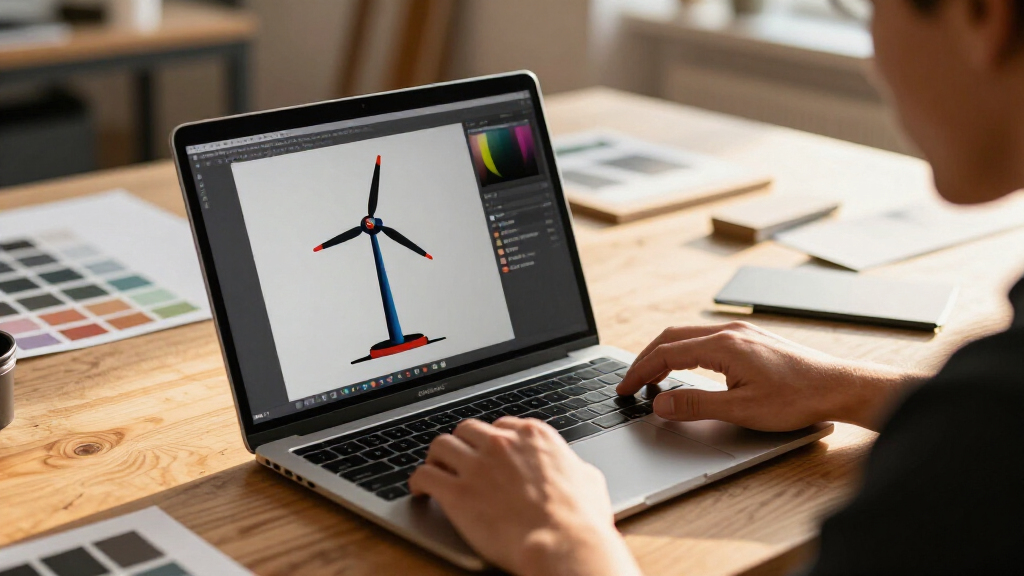
TURBINE — WERK 9 is presented as an interactive web field guide where scrolling drives the motion of an SVG rotor. The project description highlights its industrial visual style and browser-based interaction, but does not provide technical implementation details, launch timing or performance data.
TURBINE — WERK 9 is an interactive web field guide built around a scroll-driven SVG rotor, according to the original project presentation on ThorstenMeyerAI.com. The project makes a visitor’s movement through the page part of the visual experience, using scrolling to connect the browser interface with the mechanics suggested by its industrial setting.
The project is described as an alternative to a conventional brochure-style webpage. Instead of presenting information as a static sequence, it invites visitors to move through an interactive field guide whose central rotor responds to scrolling. The description frames that input as a simple way to make the page feel connected to a physical machine, while keeping the visual object legible as a designed composition.
The interaction is built around SVG vector paths and browser input, an approach also explored in AI-driven SVG animation. ThorstenMeyerAI.com says the case study examines how the team shaped the rotor’s motion, organized the visual system and translated a physical-feeling space into a browser experience. The presentation does not identify the people involved or provide the underlying code, so the account supports a high-level description of the design but not a detailed technical reconstruction.
The project is presented both as a live experience and as a design teardown. Its description points readers toward the live room and a fuller case study, suggesting that the work is intended to be explored directly rather than understood only through a static image. The available details do not establish when it first launched, whether the live version has changed, or what devices and browsers it supports.
Inside the Interactive SVG Work “TURBINE — WERK 9”
A browser-based field guide turns scrolling into a visual control for an SVG rotor. Its industrial atmosphere and machine-like interaction are central to the presentation; implementation details and measured outcomes remain undisclosed.
A page designed to move like a machine
The project is presented as an alternative to a conventional brochure-style webpage.
TURBINE — WERK 9 is described by ThorstenMeyerAI.com as an interactive web field guide built around a scroll-driven SVG rotor. As visitors move through the page, their scrolling connects navigation with the industrial setting and its visual mechanism.
The field-guide format gives exploration a purpose: visitors are invited to move through a designed space and observe its visual system. The presentation frames this as a design proposition, not as evidence of measured audience response.
Three ideas connect the interface to its industrial theme
The summary describes intent and visual direction without reconstructing the underlying technology.
Scroll to advance
A familiar browser gesture is given a second role: it moves visitors through the content and is linked to the rotor’s motion.
Vector at the center
The rotor is described as an SVG object, keeping the machine-inspired form legible as a designed composition.
Field guide, not brochure
The framing invites visitors to explore a space and notice its visual organization instead of only reading promotional copy.
From a browser gesture to a visual reading
This is the relationship described by the project overview, not a technical animation specification.
Scroll the page
Browser movement
SVG rotor motion
Machine-like exploration
A design teardown is signposted, but its evidence has limits
The presentation points to a live room and a fuller case study for readers who want to explore further.
“The interface invites exploration, while its field-guide framing gives that exploration a sense of purpose.”
ThorstenMeyerAI.com · Describing the interaction
Technical details still unreported
The available description supports a high-level account, not a detailed technical reconstruction.
No animation code, technical stack, or exact rotor response behavior is specified.
Creators, commissioning context, development process, and launch timing are not identified.
Touchscreen behavior, browser support, reduced-motion settings, and current live availability are unconfirmed.
No accessibility review or testing results are included in the material summarized.
No performance measurements, visitor counts, or usability findings are reported.
Claims about clarity and exploration are design framing, not measured business or audience results.
What can be said with confidence?
Answers below stay within the limits of the available project description.
What is TURBINE — WERK 9?
An interactive web field guide presented by ThorstenMeyerAI.com, centered on an SVG rotor linked to scrolling.
How does the interaction work?
The description says scrolling drives rotor motion. It does not detail the animation code or its precise behavior.
Can visitors explore it?
The presentation points readers to a live room, but does not confirm current availability, device support, or browser compatibility.
Who created the project?
The description does not name its creators. It says the case study covers how the team shaped motion and organized the visual system.
What remains unknown?
Launch timing, technical implementation, accessibility testing, performance, and audience response are not specified.
Where can readers learn more?
ThorstenMeyerAI.com points readers toward the live room and fuller design teardown for direct exploration and additional context.
How Scrolling Shapes the Experience
The project illustrates one practical way that web interaction can carry meaning: a visitor’s scroll is not only a means of advancing through content but also the control for a visual mechanism. That choice connects the page’s navigation to its industrial theme, giving the movement through the interface a role in how the work is understood.
For readers interested in interactive design and SVG, the stated approach is relevant because it combines a familiar browser gesture with vector animation. The description emphasizes that the experience aims to remain clear as a designed object, rather than letting motion overwhelm the page. Whether the actual implementation meets that aim across different screens and accessibility needs cannot be judged from the project summary alone.
The work also shows how a field-guide format can provide a rationale for exploration: visitors are invited to move through a space and observe its visual system, rather than simply read a promotional page. That is a design proposition, not evidence of measured audience results. No visitor numbers, usability findings or business outcomes are reported.
As an affiliate, we earn on qualifying purchases.
From Industrial Theme to Browser
The project’s framing begins with a question about whether a webpage can behave less like a brochure and more like a machine visitors can move around. TURBINE — WERK 9 answers that prompt through a rotor rendered with SVG and motion tied to scrolling. The field-guide framing supplies a reason to explore, while the industrial atmosphere establishes the visual setting.
ThorstenMeyerAI.com describes the work as a design case study that looks at motion, visual organization and the translation of a physical-feeling environment into a browser. The material available here does not name the site or physical location behind “WERK 9,” explain the project’s commissioning or development history, or give a release date. Those points should not be inferred from the industrial styling or the project title.
“What if a web page behaved less like a brochure and more like a machine you could walk around?”
— ThorstenMeyerAI.com, describing TURBINE — WERK 9
Technical Details Still Unreported
The project description does not specify the release date, creators or development process. It also does not explain how the SVG animation is implemented, whether the rotor responds continuously or in set increments, or how the experience behaves on touchscreens and with reduced-motion settings. The mention of a live room indicates that an interactive version is offered, but the available information does not establish its current availability or compatibility.
There are also no reported accessibility tests, performance measurements or audience results. Claims about how the work feels or what its interaction accomplishes are presented as design framing, not as findings from user research. The fuller case study may supply more detail, but those specifics are not included in the material described here.
The Live Room and Case Study
Readers can explore the live room and consult the fuller design teardown highlighted by ThorstenMeyerAI.com. Those materials are the stated next step for anyone seeking to see how the rotor responds in practice or to learn more about the visual system and motion design.
Until further details are published, the project can be described only at the level provided: a browser-based field guide with an SVG rotor linked to scrolling. Any account of its technical stack, launch history, accessibility support or reception would require additional information from the project team or a more detailed case study.
Source: ThorstenMeyerAI.com
Key Questions
What is TURBINE — WERK 9?
It is an interactive web field guide presented by ThorstenMeyerAI.com, centered on an SVG rotor whose motion is linked to scrolling.
How does the interaction work?
The project description says that scrolling drives the rotor’s motion. It does not provide technical details about the animation code or its exact behavior.
Is the project available to explore?
The presentation points readers to a live room, but the available information does not confirm its current availability, device support or browser compatibility.
Who created TURBINE — WERK 9?
The project description does not name its creators. It says the case study covers how the team shaped the rotor’s motion and organized the visual system.
What remains unknown about the project?
Its launch timing, technical implementation, accessibility testing and audience response are not specified in the available description.
Source: ThorstenMeyerAI.com
Halloween Picks
halloween
As an affiliate, we earn on qualifying purchases.