
If you’re carrying thousands of dollars in glass, a camera bag’s generic dividers aren’t real protection — they’re a suggestion. A premium lens storage case exists to solve one problem: keeping expensive optics safe from impact, moisture, and the chaos of travel, while still letting you grab the right lens fast. After comparing the current field, two picks stand out to me. The NANUK 918 is my top choice overall thanks to its IP67 waterproof rating, adjustable-depth foam, and carry-on-friendly size. For photographers protecting a full six-lens cinema set, the Rokinon XNCASE XEEN adds wheels and pressure-equalization that make heavy cine kits genuinely portable. The main tradeoffs in this category come down to hard protection versus soft flexibility, fixed foam cutouts versus adjustable cavities, and whether you need one bombproof case or a modular set of padded pouches like the ARVOK four-pack. I’ve ordered these picks from maximum protection down to maximum flexibility, so the ranking logic follows how much punishment your gear actually faces.

Get business pricing on office and shipping supplies
- Business-only prices and quantity discounts
- Tax-exempt purchasing
- Multiple users, one account, clear invoices
Key Takeaways
- The NANUK 918 wins overall because it’s the only pick with a true IP67 waterproof and dustproof rating plus adjustable-depth foam that fits both short primes and 70-200mm-class glass.
- The Rokinon XNCASE XEEN is the pick for cine lens owners because of its wheels, pressure-equalization valve, and FAA carry-on compliance — but its foam is cut specifically for Xeen housings.
- The Rokinon 6 Lens Carry-On Case is the value hard case, offering similar six-lens capacity and airline-friendly dimensions at a lower price, without the waterproof seal or latching refinement of the NANUK.
- The ARVOK four-pack is the only flexible option here: four padded pouches in graduated sizes that clip onto any bag, ideal for photographers who shoot from a backpack rather than a hard case.
- Fixed-cut foam (both Rokinon cases) means a lens swap can leave you with empty holes; the NANUK’s removable discs and the ARVOK pouches both adapt as your kit changes.
| NANUK 918 Waterproof Camera Lens Case with Custom Foam Insert for 6 Lenses |  | Best Overall | Capacity: Up to 6 lenses | Exterior Dimensions: 16.9 x 12.9 x 9.3 in | Waterproof Rating: IP67 | VIEW ON AMAZON | See Our Full Breakdown |
| Rokinon XNCASE XEEN Heavy Duty 6-Lens Hard Case with Rolling Wheels |  | Best for Cine Lens Kits | Capacity: Up to 6 Rokinon Xeen cine lenses | Shell: Waterproof, crushproof hard shell | Wheels: Durable polyurethane roller-blade style | VIEW ON AMAZON | See Our Full Breakdown |
| Rokinon 6 Lens Carry-On Case for Cine DS and Lenses |  | Best Value Hard Case | Capacity: Up to 6 Rokinon Cine DS / Cine lenses | Exterior Dimensions: 22.0 x 14.0 x 9.0 in | Weight: 11.6 lbs / 5.3 kg | VIEW ON AMAZON | See Our Full Breakdown |
| ARVOK Camera Lens Case, Water Resistant Protective Pouch 4-Pack |  | Best Flexible Pouch System | Quantity: 4 pouches (S, M, L, XL) | Sizes (Diameter x Height): S: 2.6×3.5 in; M: 3.3×5.1 in; L: 3.5×7.1 in; XL: 3.5×9.4 in | Padding: 15mm total (nylon, foam, pearl cotton, velvet lining) | VIEW ON AMAZON | See Our Full Breakdown |
| premium lens storage case for photographer | Capacity | Exterior Dimensions | Weight | Locking |
|---|---|---|---|---|
| NANUK 918 Waterproof Camera Le | Up to 6 lenses | 16.9 x 12.9 x 9.3 in | 7 lbs | Reinforced stainless-steel padlock eyelets (locks sold separately) |
| Rokinon XNCASE XEEN Heavy Duty | Up to 6 Rokinon Xeen cine lenses | — | — | Metal-reinforced padlock holes |
| Rokinon 6 Lens Carry-On Case f | Up to 6 Rokinon Cine DS / Cine lenses | 22.0 x 14.0 x 9.0 in | 11.6 lbs / 5.3 kg | — |
| ARVOK Camera Lens Case | — | — | — | — |
More Details on Our Top Picks
NANUK 918 Waterproof Camera Lens Case with Custom Foam Insert for 6 Lenses
This is the case I’d trust with my most expensive glass, and the reason comes down to engineering details the others skip. The IP67 waterproof and dustproof rating means the NANUK survives a downpour or a drop into shallow water — the Rokinon hard cases offer water resistance, but neither carries a certified submersion rating. It’s also tested to perform from -67°F to 160°F, which matters if you shoot winter landscapes or leave gear in a hot vehicle between locations.
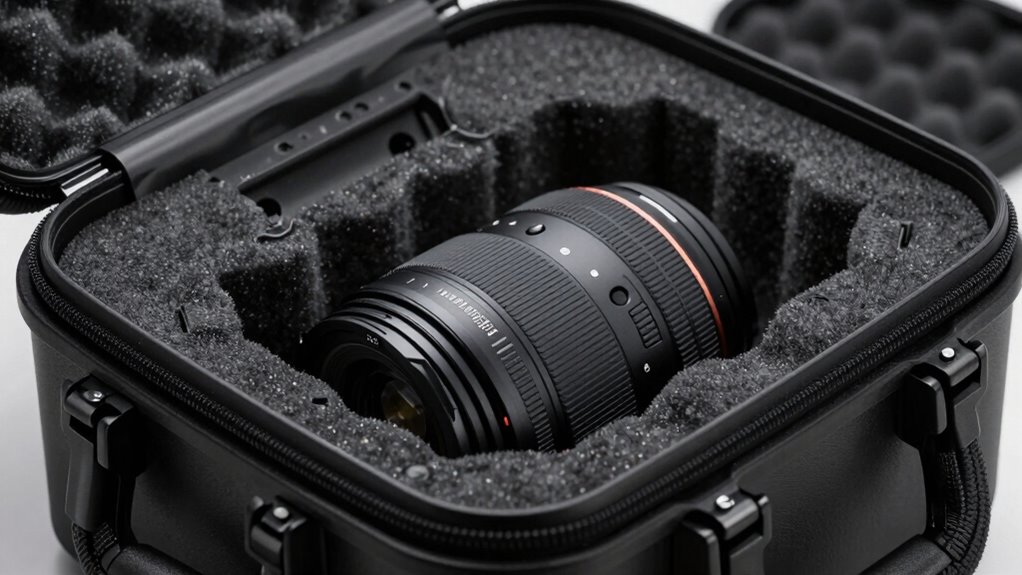
The interior is where it separates itself from the Rokinon 6 Lens Carry-On Case. Instead of foam cut for one specific lens family, the NANUK uses custom foam cavities with removable depth discs, accommodating lenses from 44.5mm to 146.1mm in length. That means a 24-70mm f/2.8, an 85mm prime, and a 100mm macro can all share the same case, and finger notches make extraction quick. Compare that to the Rokinon cases, where swapping brands or sizes can leave you with ill-fitting holes and loose glass. At 7 lbs, it’s also noticeably lighter than the Rokinon carry-on case despite offering a higher protection rating.
The tradeoffs are real, though. It’s the most expensive option here by a wide margin, the padlock eyelets are ready for TSA locks but the locks themselves are sold separately, and six cavities is a hard ceiling — if you carry a seventh lens, you’re buying a second case. Still, if protection per dollar of gear protected is the metric, this is the strongest pick in the lineup.
Pros:- IP67 waterproof and dustproof seal with extreme-temperature tolerance
- Adjustable-depth foam cavities fit a wide range of lens sizes and brands
- 7 lb weight is lighter than most six-lens hard cases
- TSA-ready padlock eyelets and carry-on compliant dimensions
Cons:- Highest price in this comparison by a significant margin
- TSA locks sold separately
- Fixed six-lens capacity with no expansion option
Best for: Working photographers and videographers who want maximum certified protection for a six-lens stills kit and need one case that adapts as lenses change.
Not ideal for: Buyers on a budget, photographers who carry more than six lenses, or anyone whose lenses live inside a backpack rather than a dedicated case.
- Capacity:Up to 6 lenses
- Exterior Dimensions:16.9 x 12.9 x 9.3 in
- Waterproof Rating:IP67
- Weight:7 lbs
- Foam System:Custom cavities with removable depth discs
- Lens Fit Range:44.5–146.1 mm length; up to 101.6 mm diameter
- Temperature Range:-67°F to 160°F
- Locking:Reinforced stainless-steel padlock eyelets (locks sold separately)
- Origin:Made in Canada
Our verdict“The most complete protection package here — if your gear justifies the price, nothing else in this lineup matches its waterproofing and foam flexibility.”
Rokinon XNCASE XEEN Heavy Duty 6-Lens Hard Case with Rolling Wheels
Where the NANUK is built for stills shooters, this case is purpose-built for the cine lens owner, and its biggest advantage is mobility. Six Xeen-class cinema lenses can easily weigh more than the camera they attach to, and the XNCASE’s polyurethane roller-blade style wheels plus pull handle with thumb release mean you’re rolling that weight through airports instead of wrenching your shoulder. Neither the NANUK 918 nor the Rokinon carry-on case offers wheels, which is a genuine differentiator once your kit crosses the 25-pound mark.
Protection credentials are serious: it’s waterproof, crushproof, and lightweight, with an automatic pressure equalization valve that prevents the case from sealing shut after altitude changes — a small feature that pays for itself on the first flight. The soft-touch latching system and metal-reinforced padlock holes feel like deliberate upgrades over generic hard-case hardware. Like the NANUK, it complies with FAA carry-on regulations, so your glass stays with you in the cabin.
The catch mirrors the other Rokinon case: the foam is cut specifically for Xeen lens housings. If you own the matching Rokinon cine set, the fit is essentially perfect — premium high-density foam with a protective top overlay and removable discs for longer lenses. If you don’t, you’re paying for cutouts that don’t match your glass, and at this price that’s a real problem. It also lacks an IP rating on paper the way the NANUK advertises one, and the wheel-and-handle assembly adds failure points a simple hard shell doesn’t have.
Pros:- Roller wheels and pull handle make heavy cine kits genuinely portable
- Automatic pressure equalization valve prevents vacuum-sealing after flights
- Crushproof, waterproof shell with metal-reinforced padlock holes
- FAA carry-on compliant with removable foam discs for longer lenses
Cons:- Foam cutouts are sized for Xeen cine lenses specifically
- Wheels and handle add bulk and potential failure points
- Priced close to the better-certified NANUK without an IP67 rating
Best for: Owners of Rokinon Xeen or similarly sized cine lens sets who travel frequently and need to move a heavy six-lens kit without carrying it.
Not ideal for: Stills photographers with mixed-brand lenses, or anyone whose lenses don’t match the Xeen foam cutouts.
- Capacity:Up to 6 Rokinon Xeen cine lenses
- Shell:Waterproof, crushproof hard shell
- Wheels:Durable polyurethane roller-blade style
- Handle:Pull handle with thumb release
- Foam:High-density foam with top overlay and removable discs
- Pressure Valve:Automatic pressure equalization
- Locking:Metal-reinforced padlock holes
- Travel Compliance:FAA carry-on regulations
Our verdict“The right case if you own the lens family it was cut for — the wheels and pressure valve make it the traveler’s choice for cine sets.”
Rokinon 6 Lens Carry-On Case for Cine DS and Lenses
Think of this as the sensible middle of the lineup: hard-shell protection for six lenses at a meaningfully lower price than the NANUK or the wheeled XEEN case. The hard shell exterior handles impacts the soft ARVOK pouches simply can’t, and the custom-cut foam interior keeps lenses from shifting during transport — which is the failure mode that actually scratches front elements and bends mounts.
Its travel credentials are solid. At 22 x 14 x 9 inches, it’s sized to meet most airline carry-on restrictions, and at 11.6 lbs it’s still liftable, though it’s over four pounds heavier than the NANUK despite offering less weather protection. Compared with the XNCASE XEEN, you give up the wheels and pressure valve but keep the organized six-lens layout — a fair trade if your kit rarely leaves the car trunk and the studio.
The honest downside is precision. The foam is cut for Rokinon Cine DS lenses, so mixed-brand stills glass may sit loosely or not fit at all, and there’s no adjustable-depth system like the NANUK’s removable discs to work around it. There’s also no IP67-style sealed rating, so I’d treat this as impact protection rather than immersion protection. For a photographer who wants a no-frills hard case for a matched lens set without premium-case pricing, those compromises are easy to accept.
Pros:- Hard shell and custom foam at a lower price than premium competitors
- Carry-on compliant 22 x 14 x 9 inch exterior
- Snug six-lens organization keeps glass immobilized in transit
- Straightforward design with fewer parts to break
Cons:- Foam cut specifically for Rokinon Cine DS lenses
- Heavier than the NANUK 918 despite less weather protection
- No certified waterproof or dustproof rating
Best for: Budget-conscious photographers with a matched Rokinon Cine DS lens set who want hard-shell organization for studio and car-based work.
Not ideal for: Anyone with mixed-brand or stills lenses that don’t match the cutouts, or shooters who need certified waterproofing.
- Capacity:Up to 6 Rokinon Cine DS / Cine lenses
- Exterior Dimensions:22.0 x 14.0 x 9.0 in
- Weight:11.6 lbs / 5.3 kg
- Shell:Hard shell impact-resistant exterior
- Interior:Custom-cut foam
- Travel Compliance:Meets most airline carry-on size limits
- Use Case:Transport and storage
Our verdict“The best value route to real hard-case protection — as long as your lenses match its cutouts and you don’t need a waterproof seal.”
ARVOK Camera Lens Case, Water Resistant Protective Pouch 4-Pack
This pick answers a different question than the other three. Instead of one rigid box, you get four padded pouches in graduated sizes — small through extra-large — that protect lenses from 2.6 inches in diameter and 3.5 inches tall up to 3.5 by 9.4 inches, which covers everything from a nifty fifty to a 70-200mm-class telephoto. For photographers whose lenses live inside a backpack or shoulder bag, this is a far more practical system than a dedicated hard case you’ll leave at home.
The construction punches above its price: a four-layer build of water-repellent nylon, 2mm foam, 8mm pearl cotton, and a soft velvet lining adds up to 15mm of padding, which handles bumps, dust, sand, and scratches admirably. The metal zipper and carabiner buckle let you clip pouches to a belt loop or pack exterior, and a bundled lens cloth is a nice touch. Compared with the Rokinon carry-on case, you’re getting modular flexibility and a tiny fraction of the weight and bulk — the tradeoff being that no amount of padding substitutes for a hard shell when something heavy lands on it.
The limitations are structural. This is water resistance, not waterproofing — a rain shower, yes; a drop in a lake, no. There’s no crush protection at all, so checked-baggage scenarios are off the table, and sizing requires careful measurement before purchase since fit is fixed per pouch. For around-the-town and trail work, though, this four-pack often makes more sense than any hard case in this guide.
Pros:- Four graduated sizes cover primes through telephoto zooms
- 15mm total padding with water-repellent outer layer
- Carabiner clip and metal zipper for bag or belt attachment
- Extremely light, compact, and inexpensive per lens protected
Cons:- No hard shell — zero crush protection
- Water resistant only, not waterproof
- Requires careful size matching before purchase
Best for: Backpack-based photographers and travelers who want padded, grab-and-go protection for individual lenses at a low price.
Not ideal for: Anyone shipping or checking lenses, cine lens owners, or photographers who need certified waterproof and crush protection.
- Quantity:4 pouches (S, M, L, XL)
- Sizes (Diameter x Height):S: 2.6×3.5 in; M: 3.3×5.1 in; L: 3.5×7.1 in; XL: 3.5×9.4 in
- Padding:15mm total (nylon, foam, pearl cotton, velvet lining)
- Water Resistance:Water-repellent outer fabric
- Closure:Metal zipper
- Attachment:Carabiner buckle
- Extras:18x15cm lens cloth included
- Compatibility:Sony, Nikon, Pentax, Olympus, Panasonic and more
- Support:18-month replacement warranty
Our verdict“The flexible, budget-friendly alternative to hard cases — ideal for lenses that ride in a bag rather than a dedicated case.”
How We Picked
Since I couldn’t test every case in a wind tunnel, I focused on the factors that actually decide whether a lens survives: impact protection, moisture resistance, foam design, and portability. I compared manufacturer specs for shell construction, waterproof ratings, and interior dimensions against what real photographic work demands — airport handling, car trunks, dusty locations, and rainy exterior shoots. I also weighed capacity flexibility heavily, because a case with fixed cutouts loses value the moment your lens lineup changes, while adjustable foam or soft pouches adapt with your kit. Finally, I factored in travel practicality: carry-on compliance, weight, wheels, and how easily a case can be locked or inspected by TSA. Price played a role too — premium doesn’t mean paying twice as much for features you’ll never use.
| premium lens storage case for photographer | Capacity | Locking | Shell | Travel Compliance |
|---|---|---|---|---|
| NANUK 918 Waterproof Camera Le | Up to 6 lenses | Reinforced stainless-steel padlock eyelets (locks sold separately) | — | — |
| Rokinon XNCASE XEEN Heavy Duty | Up to 6 Rokinon Xeen cine lenses | Metal-reinforced padlock holes | Waterproof, crushproof hard shell | FAA carry-on regulations |
| Rokinon 6 Lens Carry-On Case f | Up to 6 Rokinon Cine DS / Cine lenses | — | Hard shell impact-resistant exterior | Meets most airline carry-on size limits |
| ARVOK Camera Lens Case | — | — | — | — |
Factors to Consider When Choosing Premium Lens Storage Case For Photographers
Before choosing, it helps to understand what actually separates a premium lens case from a padded bag — and which of those differences matter for the way you shoot.Hard Shell vs. Soft Pouch Protection
A hard case like the NANUK 918 or either Rokinon option protects against crushing forces — a falling stand, a jammed overhead bin, a stack of gear in a car trunk. Soft pouches like the ARVOK four-pack protect against bumps, scratches, dust, and moisture but flex under load. If your lenses travel in controlled conditions inside a bag you carry, pouches are usually enough. If they get checked, stacked, or shipped, only a hard shell makes sense.
Waterproof Ratings Explained
Water-resistant fabric sheds rain; an IP67 rating means the case survived dust and temporary submersion in testing. Only the NANUK carries that certification here. Both Rokinon cases describe themselves as waterproof in marketing terms without a published IP rating, so I’d treat them as highly weather-resistant rather than submersion-safe. Match the rating to your real conditions — desert dust and ocean spray justify the premium more than studio work does.
Fixed Foam vs. Adjustable Interiors
Fixed-cut foam fits like a glove until your lens lineup changes, at which point you’re paying to re-foam or improvise. The Rokinon cases assume you own their lens families. The NANUK’s removable depth discs and the ARVOK’s graduated pouch sizes both adapt as your kit evolves, which extends the useful life of your purchase considerably. If you buy and sell lenses regularly, flexibility is worth paying for.
Travel and Airline Compliance
All three hard cases here are designed to meet carry-on size limits, keeping glass in the cabin with you. Beyond dimensions, look for padlock-ready hardware (the NANUK and the wheeled XEEN case both have metal-reinforced eyelets) and pressure-equalization valves if you fly often — a vacuum-sealed case that won’t open at baggage claim is a real problem the XEEN case specifically solves.
Weight and Wheels
Six lenses plus a case adds up fast. The NANUK keeps weight down at 7 lbs, while the Rokinon carry-on case runs 11.6 lbs before you add glass. Once total load approaches 30 lbs, wheels stop being a luxury — that’s the XEEN case’s core advantage. If you mostly move gear from car to studio, weight matters less than it does for airport-heavy shooters.
Frequently Asked Questions
Is a hard case really necessary, or are padded pouches enough?
It depends entirely on how your lenses travel. Padded pouches like the ARVOK four-pack handle everyday bumps, dust, and light moisture well, and for lenses that live inside a backpack you carry yourself, they’re often the more practical choice because they add flexibility without bulk. A hard case becomes necessary when your gear faces crushing forces or uncontrolled handling — checked baggage, shipping, gear stacked in a vehicle, or work in severe weather. The honest framing: pouches protect against accidents you see coming, while hard shells protect against the ones you don’t.
Can I bring these cases as airline carry-on luggage?
All three hard cases in this roundup are designed around carry-on limits. The NANUK 918 at 16.9 x 12.9 x 9.3 inches and the Rokinon carry-on case at 22 x 14 x 9 inches both fit typical domestic size restrictions, and the XEEN case is stated to comply with FAA carry-on regulations. Keep in mind that regional carriers and international budget airlines sometimes enforce smaller limits or strict weight caps — a loaded six-lens case can exceed a 15-pound carry-on weight limit even when dimensions pass. I’d check your specific airline before flying with any fully loaded case.
What does an IP67 rating actually mean for my gear?
IP67 certifies two things: complete protection against dust ingress and protection against temporary submersion, typically up to one meter of water for around thirty minutes. In practice, that means rain, ocean spray, sand storms, and an accidental drop into shallow water won’t reach your lenses. Cases without a published rating may still resist weather well — both Rokinon cases are marketed as waterproof — but you’re relying on manufacturer claims rather than third-party testing. For photographers who shoot outdoors in unpredictable conditions, that certification is the difference between peace of mind and hope.
Can I use a case with custom foam cutouts for different lenses than intended?
Sometimes, but it’s a gamble. Foam cut for Rokinon Cine DS or Xeen housings assumes specific diameters and lengths, so similarly sized lenses from other brands may fit acceptably, while anything smaller will shift around and anything larger simply won’t go in. Loose foam contact is worse than it sounds — movement in transit is what causes scratches and mount stress. If you own mixed-brand glass, you’re better served by the NANUK’s adjustable-depth cavities or by replacing the foam with a customizable pick-and-pluck set, which is a common and inexpensive upgrade for hard cases.
How many lenses should a premium case hold?
Six is the standard here because it roughly matches a professional zoom-plus-primes kit, but capacity should follow your actual workflow, not the other way around. A case that’s too small means leaving lenses in less protected storage, which defeats the purpose; a case that’s too large adds weight, cost, and empty rattling space. Also consider future growth — if you expect to add lenses, an adjustable interior like the NANUK’s or a modular pouch system like the ARVOK’s scales with you, whereas fixed six-slot foam locks you into that exact count.
Conclusion
The right pick depends less on price and more on how your lenses actually live and travel. If you want one case that protects a six-lens stills kit against nearly everything and adapts as your glass changes, the NANUK 918 is worth its premium price — it’s my recommendation for most serious photographers. Cine lens owners with a matching Xeen set should go straight to the Rokinon XNCASE XEEN, because its wheels and pressure valve solve problems specific to heavy traveling kits. If you need hard-shell organization on a budget and your lenses match its cutouts, the Rokinon 6 Lens Carry-On Case delivers most of the protection for less money. And if your lenses ride in a backpack rather than a dedicated case, skip the hard shells entirely — the ARVOK four-pack gives flexible, padded protection for a fraction of the cost. Whichever route you take, the worst option is the one you leave at home because it’s too heavy or too rigid for how you shoot.
Halloween Picks
halloween
As an affiliate, we earn on qualifying purchases.