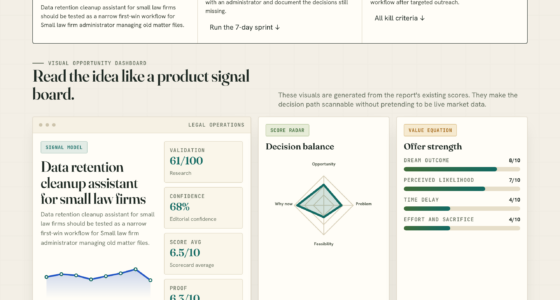
📊 Full opportunity report: Your Licensing Gateway For Voice AI And Rights Management on IdeaNavigator AI — validation score, market gap, and execution plan.
TL;DR
A licensing and approval hub for voice actors’ AI clones is in testing, aiming to simplify rights management and enforceable licensing. This development responds to the rise of commercial AI voice cloning and legal concerns over consent and compensation.
A new licensing and approval platform for voice actors’ AI voice clones is being tested to provide a structured, auditable process for managing usage rights, payments, and consent. This development addresses a significant gap in the current market, where licensing often occurs through informal channels, and aims to facilitate enforceable agreements for AI voice use.
The platform is designed specifically for professional voice actors who create AI clones of their voices. It allows them to set clear licensing terms, including permitted use cases, banned categories, and project-specific rates. Buyers can submit project requests, which can be approved or rejected with a single click, and all approved uses are logged with associated payment terms. The initial testing involves recruiting ten voice actors with existing AI clones, who will set licensing terms and route five real project requests through the system to evaluate its effectiveness and willingness to route paid deals via the platform.
This initiative is driven by the increasing commercial viability of AI voice cloning and mounting legal and union attention to issues of consent, scope, and fair compensation for synthetic voices. Currently, licensing often relies on informal email agreements lacking clear scope or enforceability, creating risks for both voice actors and clients. The new platform aims to provide a transparent, auditable, and enforceable licensing process, potentially transforming rights management in the voice AI industry.
Implications for Voice Actors and the Industry
This licensing gateway could significantly improve how voice actors control the use of their AI clones, ensuring they receive fair compensation and legal clarity. It could set a new standard for rights management in the rapidly evolving voice AI market, reducing disputes and increasing trust among creators and clients. As AI voice cloning becomes more widespread, such structured licensing tools are likely to become essential for sustainable industry practices.
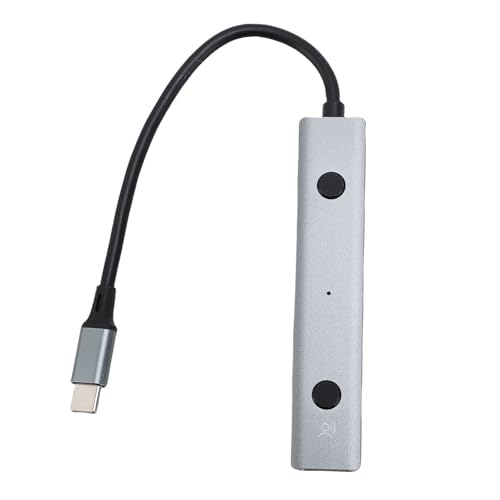
Yunseity AI Voice Hub, Real Time Voice to Text Transcription, Multilingual Translation, Voice Control USB Adapter for Laptops Desktops Tablets, Plug and Play
- AI-Powered Voice Hub: Real-time voice to text and translation
- Accurate Voice Control: Captures speech with accents accurately
- Practical and Free Tools: Generate PPTs, documents, and convert files
As an affiliate, we earn on qualifying purchases.
As an affiliate, we earn on qualifying purchases.
Growing Need for Structured AI Voice Licensing
The rise of AI voice cloning has created new revenue opportunities but also legal and ethical challenges. Currently, many voice actors lack a straightforward way to manage licensing, leading to ad hoc agreements that are difficult to enforce. Recent union statements and legal discussions highlight the importance of clear consent, scope, and fair compensation for synthetic voices. The development of this licensing platform responds to these issues, aiming to formalize the process and provide a reliable workflow for both creators and clients.
“Structured licensing workflows are increasingly urgent as AI voice cloning becomes more commercially viable and legally scrutinized.”
— an anonymous researcher
What Aspects of the Platform Are Still Unclear
It is not yet clear how widely adopted the platform will become after testing, whether voice actors and clients will fully embrace it, or how it will integrate with existing licensing practices. The effectiveness of the approval and logging system in real-world scenarios remains to be validated, and potential legal or technical hurdles could influence its future development.
Next Steps and Future Developments for Licensing Platform
The platform is currently in the testing phase with ten voice actors and five project requests. The next steps include analyzing user feedback, refining the workflow, and expanding recruitment to assess scalability. If successful, the developers plan to launch a broader pilot, seek industry partnerships, and explore integration with existing rights management systems. Widespread adoption will depend on demonstrated effectiveness and industry acceptance.
Key Questions
How will this licensing platform benefit voice actors?
It provides a structured, enforceable way to set licensing terms, track usage, and receive payments, reducing reliance on informal agreements.
Can clients approve or reject licensing requests easily?
Yes, the platform allows clients to approve or reject project requests with a single click, streamlining the process.
Will this platform be adopted industry-wide?
Its adoption depends on the outcomes of initial testing, industry acceptance, and how well it integrates with existing workflows. Widespread use is not yet confirmed.
Are there legal implications for using this licensing system?
The platform aims to provide enforceable licensing agreements, but legal validation and compliance will depend on jurisdiction and implementation.
When will the platform be publicly available?
There is no confirmed launch date yet; it is currently in the testing phase, with broader availability likely after further validation.
Source: IdeaNavigator AI