📊 Full opportunity report: Legal Drafting Made Easy: Grammarly For Non-Lawyer Justice Seekers on IdeaNavigator AI — validation score, market gap, and execution plan.
TL;DR
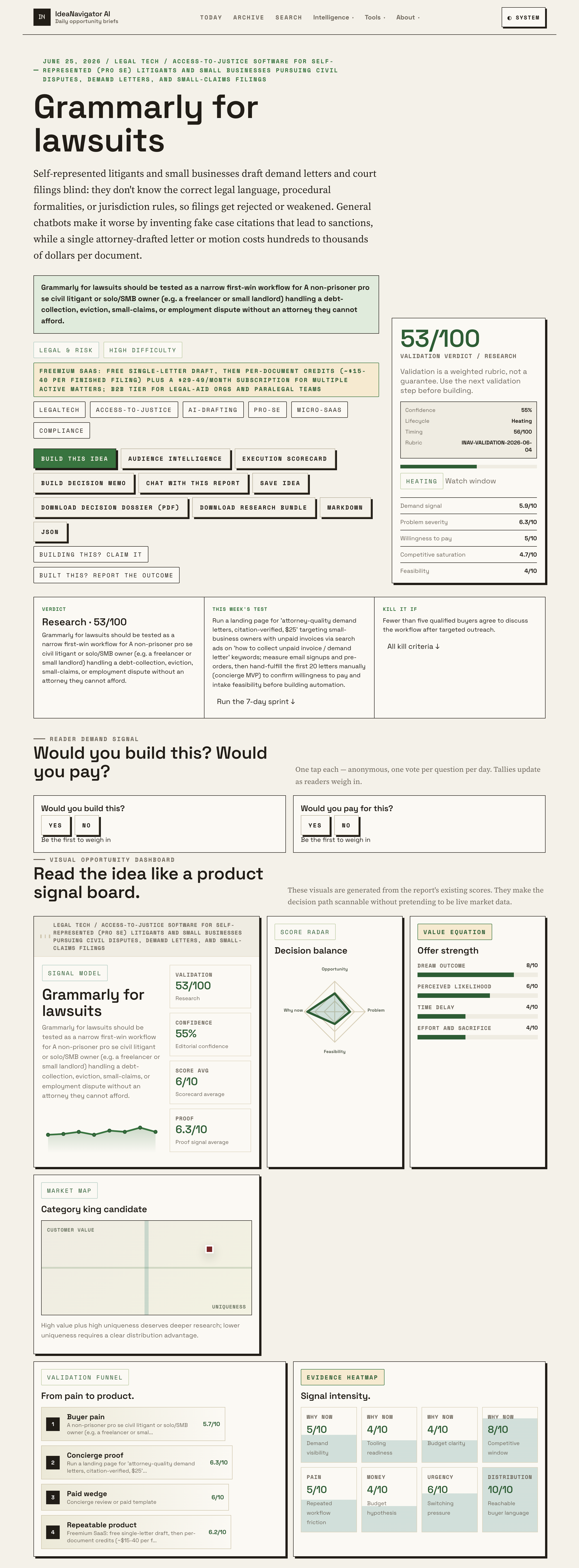
A prototype AI tool is being developed to assist non-lawyers in drafting legal documents, including demand letters and small-claims filings. It verifies citations and ensures proper formatting, addressing a major gap in access to justice. The project aims to reduce errors and costs for self-represented litigants and small businesses.
A new AI-driven web app is being developed to assist non-lawyers, such as small-business owners and self-represented litigants, in drafting court documents with verified legal citations and proper formatting. This tool aims to address the widespread challenges faced by individuals handling civil disputes without legal representation, providing a more accessible and accurate drafting process.
The project focuses on creating a user-friendly platform that guides users through structured intake questions about their dispute—covering parties, amounts, contract details, and jurisdiction. It then generates court-formatted demand letters or small-claims filings, which are checked by an integrated verification system. This system flags weak or missing elements and cross-checks all legal citations against a real database, preventing hallucinated or inaccurate references often produced by general chatbots.
According to the developers, the initial MVP will target small-business owners and landlords dealing with unpaid invoices or eviction notices. Users will be able to access a free draft and pay per document (around $15-40), with subscription options for multiple filings. The goal is to create a reliable, court-ready document that minimizes rejection risks and legal sanctions caused by citation errors. The platform also aims to be accessible to organizations such as legal aid groups and paralegal teams through B2B offerings.
Market research indicates that around 60% of civil cases in the U.S. now involve self-represented parties, and the number of pro se filings has increased significantly over recent years. Despite this, existing AI tools often produce hallucinated citations, creating a risk of sanctions or case rejection. The new app seeks to fill this gap by emphasizing verification and formal compliance, making legal drafting more accessible and less error-prone for non-experts.
Why Verified Legal Drafting Matters for Access to Justice
This development could significantly improve the quality of legal documents prepared by non-lawyers, reducing rejection rates and legal sanctions caused by citation errors. It addresses a critical need for affordable, reliable tools that democratize access to legal processes, especially for small-business owners and individuals who cannot afford traditional legal services. By ensuring citations are accurate and documents are properly formatted, the tool could help prevent cases from being dismissed or delayed due to technical mistakes, ultimately expanding access to justice and reducing the burden on courts.
As an affiliate, we earn on qualifying purchases.
Growing Demand for Self-Help Legal Tools Amid Rising Civil Disputes
Over the past decade, the number of civil cases filed without legal representation has increased sharply, with approximately 60% of federal civil cases involving pro se parties. This trend is driven by the high costs of legal services and the limited availability of affordable legal aid. Existing AI tools and chatbots have been used to generate legal documents, but many produce hallucinated citations and lack formal compliance, leading to potential sanctions or case dismissals. The development of a verification-first drafting layer aims to address these issues by combining AI assistance with real-time legal citation validation, making self-drafted documents more reliable.
This initiative comes amid concerns over the proliferation of AI-generated legal content that contains inaccuracies, especially hallucinated case citations, which have led to hundreds of reported errors and sanctions. The need for court-formatting-aware tools that prioritize verification over raw generation has become urgent, particularly as courts grapple with an influx of pro se filings and AI-assisted documents.
“Our goal is to create a tool that not only helps users draft documents but also ensures every legal citation is verified against a trusted database, preventing hallucinated references that can cause sanctions.”
— an anonymous developer
Uncertainties Around Development and Adoption Timelines
It remains unclear how soon the platform will be fully developed and tested at scale. The prototype is expected to undergo testing in late 2024, but adoption by users and legal organizations will depend on its reliability, ease of use, and cost-effectiveness. Additionally, regulatory and court acceptance of AI-generated filings with verified citations has yet to be established, and potential legal challenges could influence its deployment.
Next Steps for Prototype Testing and User Feedback
The development team plans to launch a pilot phase in late 2024, focusing on small-business demand letters and eviction notices. They will gather user feedback to refine the verification system and user interface. Following successful testing, the platform aims to expand to other types of civil filings and seek partnerships with legal aid organizations and court systems. Monitoring user adoption and legal compliance will be crucial in the coming months to validate the tool’s effectiveness and scalability.
Key Questions
How will the AI verify legal citations?
The platform will cross-check all citations against a trusted legal database, ensuring each reference is accurate and relevant to the jurisdiction and case type.
Will this tool replace lawyers?
No, it is designed to assist non-lawyers in drafting documents more accurately and efficiently, not to replace legal professionals. It aims to democratize access to legal document preparation.
What types of documents will the platform support initially?
The initial focus will be on demand letters, small-claims statements, and eviction notices tailored for small-business owners and individual litigants.
Is this tool legally compliant and court-approved?
While designed to produce court-formatted, verified documents, regulatory approval and court acceptance will depend on ongoing testing and legal standards, which are still being developed.
How much will it cost to use?
The platform will offer a free draft option, with paid options ranging from $15 to $40 per document, and subscription plans for multiple filings, aiming to keep legal assistance affordable.
Source: IdeaNavigator AI