
📊 Full opportunity report: Build vs Buy a Prebuilt AI Workstation on ThorstenMeyerAI.com — validation score, market gap, and execution plan.
TL;DR
In 2026, prebuilt AI workstations often match or beat DIY prices due to shortages and bulk buying. Buying offers faster deployment and reliability, while building provides maximum control. A hybrid approach may be optimal.
In 2026, prebuilt AI workstations now frequently match or surpass the cost-effectiveness of custom-built systems due to global component shortages and rising prices, making buying a more attractive option for many users.
Recent market shifts, including chip shortages and price spikes, have caused prebuilt AI workstations from vendors like Lambda and Puget to become competitively priced, often exceeding the cost savings of DIY builds. These prebuilt systems come fully assembled, with validated thermals, warranties, and support, enabling rapid deployment within 1-2 weeks. In contrast, building an AI workstation from scratch can take several weeks or more, requiring sourcing parts, assembly, and extensive testing.
Cost comparisons reveal that DIY setups, previously cheaper, now often incur higher expenses due to increased component prices and hidden costs such as time, troubleshooting, and ongoing maintenance. Support contracts and warranties offered with prebuilt systems reduce operational risks and downtime, which are critical for mission-critical AI workloads. The choice between build and buy hinges on priorities: quick deployment and reliability favor prebuilt systems, while control and customization favor building.
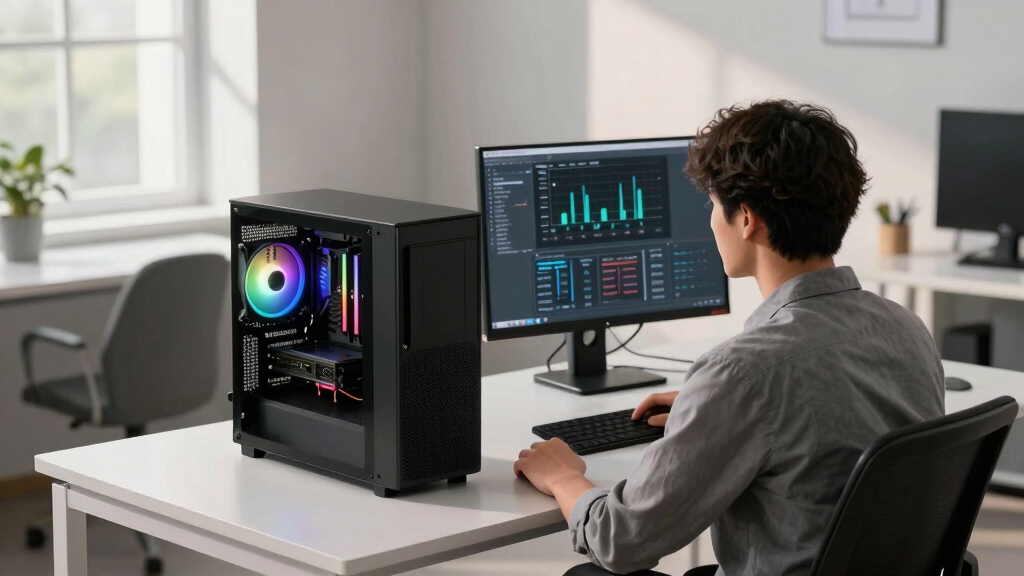
Build vs buy
an AI workstation.
The real question behind this whole series: do you pull the five heat-and-noise levers yourself, or buy a prebuilt where the vendor pulled them for you? And in 2026, the old “building is cheaper” rule has broken. Match your situation in Part 3.
Why Market Trends Impact AI Deployment Strategies
The shift toward prebuilt AI workstations in 2026 influences how organizations plan their AI infrastructure. Faster deployment reduces project delays and time-to-market, giving businesses a competitive edge. Additionally, the reliability and support offered by prebuilt systems lower operational risks, especially important amid ongoing supply chain disruptions. For organizations with limited technical expertise, prebuilt options simplify setup and maintenance, allowing focus on core AI tasks. Conversely, those requiring tailored hardware or security controls may still prefer building, despite higher complexity and longer timelines.

HP OmniDesk Desktop, AI PC w/ 16 NPU Tops, 8-Core AMD Ryzen 7-8700G CPU (upto 5.1GHz), 16GB DDR5 RAM, 1TB SSD, USB-C, Wi-Fi 6, Dual Monitor Support, Bluetooth, Windows 11 Pro, Wireless Keyboard &Mouse
- Powerful AMD Ryzen 7 CPU: 8-core up to 5.1GHz with AI acceleration
- High-Speed DDR5 RAM: Up to 64GB for smooth multitasking
- Fast PCIe SSD Storage: 512GB to 4TB options for quick access
As an affiliate, we earn on qualifying purchases.
As an affiliate, we earn on qualifying purchases.
Market Conditions and Hardware Supply Challenges in 2026
The global chip shortage and supply chain disruptions that began in 2020 persisted into 2026, driving up component costs and causing delays in sourcing parts for DIY systems. As a result, the price gap between custom builds and prebuilt systems has narrowed or reversed, with prebuilt vendors leveraging bulk purchasing to offer competitive prices. Additionally, prebuilt vendors now extensively validate hardware configurations, optimizing thermals and noise levels, which reduces the need for troubleshooting and tuning by end users. These developments have shifted the traditional build versus buy calculus significantly.
"Speed and reliability are critical. Prebuilt systems allow us to deploy AI models faster, with less risk of hardware failures."
— Jane Doe, CTO of TechSolutions
Remaining Questions About Long-term Upgradability
It is still unclear how well prebuilt AI workstations will adapt to future hardware upgrades or evolving AI workloads. While current systems are validated for immediate performance, long-term flexibility and upgrade paths are less transparent, especially as component availability continues to fluctuate.
Expected Trends in AI Hardware Procurement for 2026 and Beyond
Manufacturers are likely to continue refining prebuilt systems with modular designs to facilitate upgrades. Market dynamics may also influence pricing and support offerings, with hybrid solutions gaining popularity. Organizations should monitor vendor developments and supply chain updates to optimize their hardware strategy throughout 2026.
Key Questions
Is it cheaper to build or buy an AI workstation in 2026?
Due to component shortages and price increases, prebuilt systems often match or beat DIY costs in 2026, especially when factoring in support and time savings.
How long does it take to deploy a prebuilt AI workstation?
Most prebuilt AI workstations can be delivered and set up within 1–2 weeks, whereas building from scratch can take several weeks or more.
What are the main advantages of buying a prebuilt system?
Prebuilt systems offer validated hardware, support, warranties, and rapid deployment, reducing operational risks and setup time.
Can I upgrade a prebuilt AI workstation later?
Many prebuilt systems are designed with some modularity, but long-term upgradability can vary. It’s advisable to check with vendors about future upgrade options.
Source: ThorstenMeyerAI.com