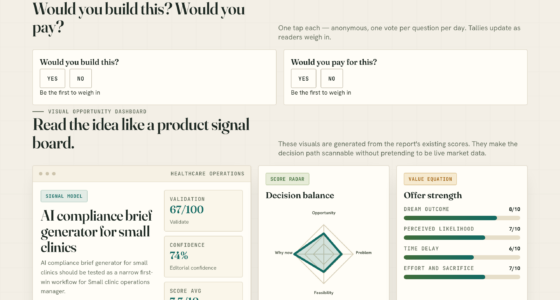
📊 Full opportunity report: Anonymous Daily Check-ins For 12-Step Sponsors on IdeaNavigator AI — validation score, market gap, and execution plan.
TL;DR
Developers are testing a pseudonymous app that allows 12-step sponsors to conduct daily check-ins with multiple sponsees without revealing identities. The goal is to enhance privacy and support sobriety tracking while respecting anonymity traditions.
Developers are testing a new app feature that enables anonymous daily check-ins for 12-step sponsors supporting multiple sponsees, aiming to improve privacy and accountability. This development addresses longstanding challenges in recovery support, where sponsors track sobriety and progress without exposing identities, amid shifting communication habits.
The proposed system involves a pseudonymous check-in thread where a sponsor invites a sponsee with a one-time code. Sponsees then report their daily status using a simple green or red check, optionally adding notes, all without sharing real names or phone numbers. This approach aims to uphold the tradition of anonymity while providing sponsors with a clear view of their sponsees’ engagement.
According to an anonymous researcher involved in the development, the prototype is designed to be a low-cost, subscription-based tool that sponsors can use to manage multiple sponsees more effectively. The system does not store real names or contacts, relying instead on unique codes for each sponsee. The initial testing involves recruiting eight active sponsors to run the app with their sponsees over a two-week period, measuring retention and whether anonymity expectations are maintained.
Recovery support tools are increasingly moving onto mobile platforms, but existing messaging apps often leak personal information, conflicting with the core principle of anonymity in twelve-step programs. This new approach seeks to fill that gap by offering a privacy-focused alternative tailored specifically for sponsor-sponsee interactions.
Potential Impact on Privacy and Support in Recovery
This initiative could significantly improve privacy for individuals in recovery by providing a secure way to track daily sobriety and engagement without risking exposure of personal identities. For sponsors, it offers a streamlined method to monitor multiple sponsees, potentially increasing accountability and consistency in support. If successful, the app could influence the development of dedicated recovery tools that respect the traditions of anonymity while leveraging modern technology.
As an affiliate, we earn on qualifying purchases.
Shift Toward Mobile Support in 12-Step Programs
As digital communication becomes central to recovery support, traditional methods like phone calls and texts face limitations in maintaining anonymity. Existing messaging apps often require sharing personal contact details, which can undermine confidentiality. The development of specialized tools, such as the proposed pseudonymous check-in system, reflects a broader trend to adapt twelve-step support to the digital age while respecting established traditions.
Previous efforts to digitize recovery support have included online meetings and apps, but many lack privacy safeguards for sponsor-sponsee relationships. The new prototype aims to address this gap by offering a dedicated, privacy-preserving platform for daily check-ins, which could enhance engagement and accountability.
“This system is designed to provide a simple, private way for sponsors to support multiple sponsees without exposing their identities or contact details.”
— an anonymous researcher
Unconfirmed Aspects of App Effectiveness and Adoption
It is not yet clear how well sponsors and sponsees will adopt or accept the new system, or whether it will effectively replace existing check-in methods. The long-term impact on privacy, engagement, and accountability remains to be seen, as the prototype is still in early testing stages.
Next Steps in Validation and Potential Expansion
Following the two-week pilot with eight sponsors, developers plan to analyze retention rates, user feedback, and the system’s ability to maintain anonymity. If results are positive, broader testing and potential commercialization could follow, with possible integration into existing recovery support platforms or standalone apps.
Key Questions
How does the pseudonymous check-in system protect privacy?
The system assigns each sponsee a one-time code, with no storage of real names or phone numbers, ensuring that personal identities remain confidential while allowing sponsors to monitor progress.
Can this system replace traditional check-ins?
It is too early to say whether it will replace or supplement existing methods. The initial goal is to test its effectiveness and acceptance among sponsors and sponsees.
Will this app be available to all recovery programs?
Currently, the prototype targets AA and NA sponsors, but if successful, developers may consider expanding to other support groups or customizing for different needs.
What are the main benefits of this approach?
The system aims to enhance privacy, streamline sponsor-sponsee communication, and improve accountability without compromising anonymity principles.
When will the app be commercially available?
It is too early to specify a release date. The next steps involve completing the pilot study and analyzing results before considering broader rollout.
Source: IdeaNavigator AI