
TL;DR
A pilot program is testing daily postpartum check-ins for first-time mothers discharged before their 6-week follow-up. The initiative aims to improve recovery support and early warning detection, with promising initial validation plans.
A pilot program is underway to test daily postpartum check-ins for first-time mothers during the first two weeks after hospital discharge. The initiative aims to address gaps in postpartum care by providing personalized, daily support, which could improve recovery outcomes and early warning detection, especially as current practices often leave new mothers without contact until their 6-week follow-up.
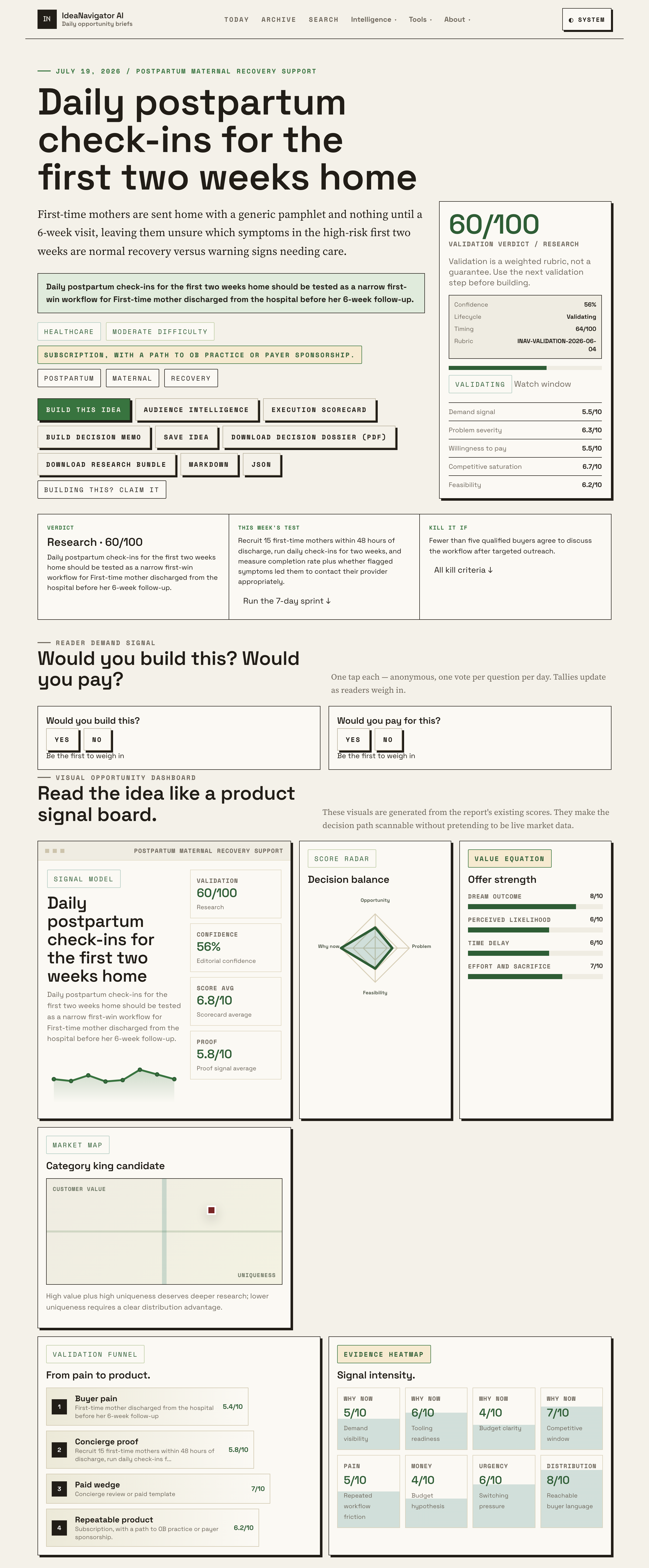
The program targets first-time mothers discharged before their 6-week postpartum visit, a period identified as high-risk for complications. Currently, these women typically receive only a generic pamphlet and have limited contact with healthcare providers until their scheduled follow-up. The pilot involves an onboarding process that creates a recovery profile based on delivery details, feeding method, and mental health baseline. This profile then guides daily check-ins via smartphone, delivering tailored recovery tips and prompting mothers to contact their providers if specific symptoms are flagged.
According to an anonymous researcher involved in the project, the goal is to validate this approach by recruiting 15 first-time mothers within 48 hours of discharge. The study will measure check-in completion rates, the appropriateness of flagged symptoms, and subsequent contact with healthcare providers. The model is designed to be monetized through subscriptions, with potential sponsorship from OB practices or payers.
Potential Impact on Maternal Postpartum Care
This initiative could fill a critical gap in postpartum care, reducing the risk of undetected complications during the vulnerable first two weeks after childbirth. Early identification of warning signs may lead to timely interventions, potentially decreasing maternal morbidity and improving overall recovery experiences. The program also leverages smartphone technology to provide scalable, personalized support, aligning with increasing maternal health awareness campaigns and the push for more continuous postpartum monitoring.
As an affiliate, we earn on qualifying purchases.
Addressing the Postpartum Care Gap
Research indicates that the first two weeks postpartum are the most critical for detecting complications such as infections, bleeding, or mental health issues. Currently, most mothers are discharged with minimal guidance and only scheduled for a follow-up at six weeks, which may be too late for some issues to be effectively managed. Maternal health advocates have called for more immediate, accessible postpartum support, especially as the use of smartphones and digital health tools has grown. This pilot builds on these trends, aiming to test a structured, daily check-in approach as a first step toward broader implementation.
“This approach could significantly improve early detection of postpartum complications by providing daily, personalized support when mothers need it most.”
— an anonymous researcher
Uncertainties About Pilot Outcomes and Scalability
It is not yet clear how effective the daily check-ins will be in practice, or whether mothers will consistently engage with the program. The pilot’s small sample size and short duration limit conclusions about long-term benefits or scalability. Additionally, questions remain about integration with existing healthcare systems and reimbursement models, which are still being explored.
Next Steps for Validation and Expansion
The pilot plans to recruit 15 first-time mothers within the next month, with ongoing monitoring over two weeks. Results will determine the check-ins’ usability, engagement levels, and whether flagged symptoms lead to appropriate provider contact. If successful, the program could expand to larger trials and seek broader adoption through healthcare providers and payers, with further research into long-term outcomes and cost-effectiveness.
Key Questions
How will the daily check-ins be personalized for each mother?
The onboarding process will gather delivery details, feeding method, and mental health baseline to tailor daily recovery tips and symptom prompts.
What symptoms will trigger a prompt to contact healthcare providers?
Specific symptoms such as heavy bleeding, fever, severe pain, or signs of depression are among those flagged for prompt contact.
Is this program intended to replace in-person postpartum visits?
No, it aims to supplement existing care by providing additional support during the critical first two weeks at home.
How will the program be funded or monetized?
It is designed as a subscription service, with potential sponsorship from OB practices or insurance payers.
When will results from the pilot be available?
Results are expected after the two-week monitoring period, likely within a few months following recruitment.
Source: IdeaNavigator AI